
Dear Friend,
Trump’s second term is taking a different path than expected—tariffs, not just tax cuts, are now the backbone of his economic strategy.
With $1.4 trillion in imports covered, the goal is clear: strengthen American manufacturing and reduce reliance on foreign supply chains.
Businesses are adapting, and while some uncertainties remain, deregulation and targeted tax cuts could create new opportunities.
Meanwhile, consumer debt is rising, and lenders are watching closely to see if Americans can keep driving economic growth.
And over at Tesla, Elon Musk just pledged to double U.S. production, sending the stock soaring 7.6 percent as investors bet on a major comeback.
Let’s dive into this edition of the Everlasting Wealth Insider Report.
Jeremy Blossom
Editor in Chief, Everlasting Wealth
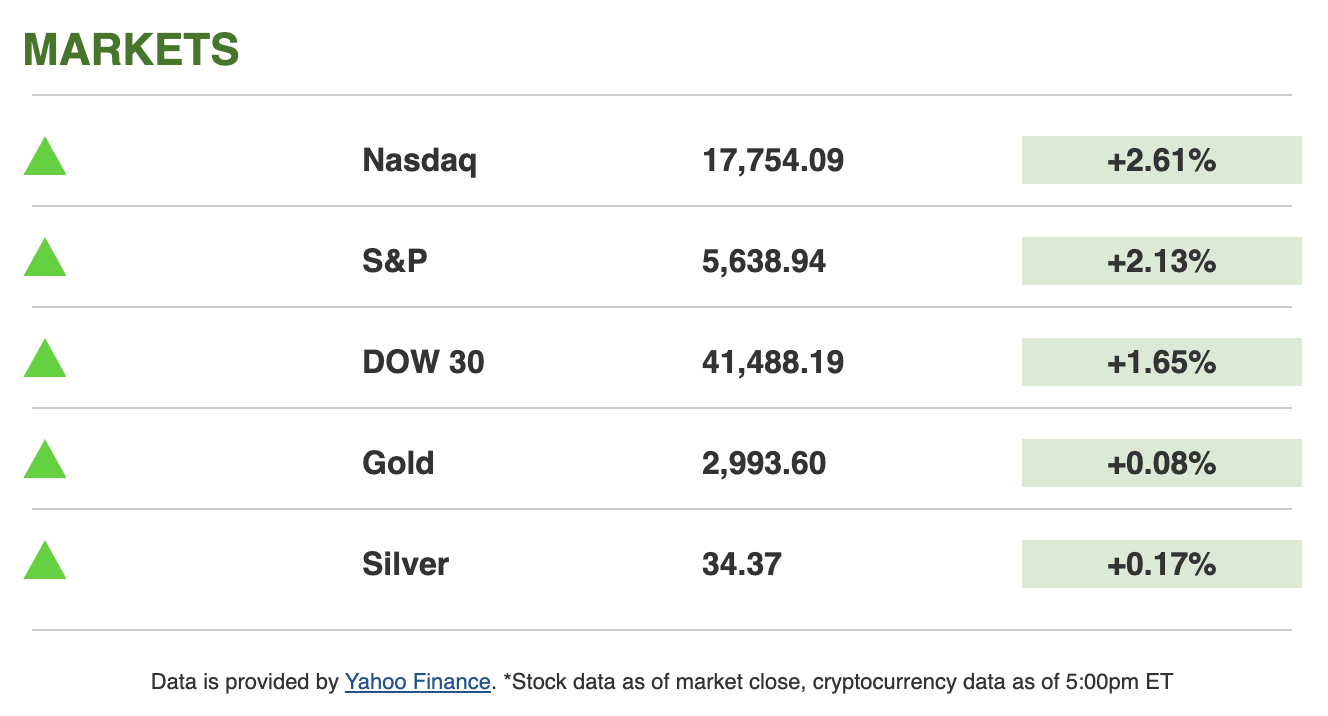
MARKET HEADLINES
📉 Adobe stock falls as strong earnings fail to impress investors amid AI concerns and economic uncertainty.
🚀 Nvidia stock rises as Foxconn’s AI server revenue outlook reassures investors about sustained demand.
🥇 Gold surpasses $3,000 per ounce, reaching new highs as strong demand and global economic trends drive momentum.
📉 T-Mobile stock downgraded as Citi warns its strong run may be nearing an end without new growth drivers.
🚗 Tesla stock continues to slide as declining sales and brand controversies weigh on investor confidence.
📈 Docusign stock jumps on strong earnings and growing adoption of its AI-powered agreement platform.
📉 Palantir, Super Micro, and Tesla lead the S&P 500 correction as AI and consumer-driven stocks tumble.
💰 Trump tariffs trigger market correction, pressuring the Fed to clarify its response to rising inflation risks.
₿ XRP outperforms Bitcoin as traders anticipate a positive resolution to Ripple’s long-standing SEC lawsuit.
🚗 Li Auto stock drops as weak revenue guidance fuels concerns over slowing Chinese EV demand.
Wall Street Adjusts as Trump’s Trade Agenda Takes Center Stage
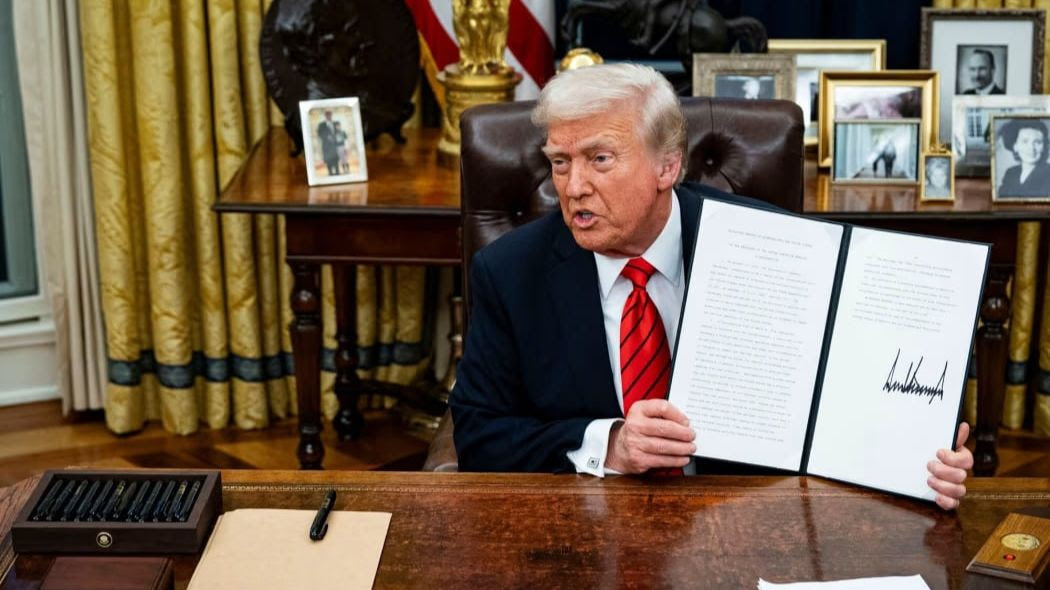
Many investors expected Trump’s second term to resemble his first—focused on tax cuts, deregulation, and economic growth.
Instead, his administration has prioritized tariffs at an unprecedented scale, covering nearly $1.4 trillion in imports.
While some expected tariffs to be a negotiating tool, they’ve become a central pillar of Trump’s economic policy, aimed at reshoring production and addressing trade imbalances.
Businesses now face both opportunities and uncertainties—corporate tax cuts remain likely, but they may be more targeted, favoring domestic production over broad investment incentives.
Deregulation efforts are in full swing, though Trump’s willingness to wield regulatory power for political leverage is keeping corporate leaders on edge.
With economic policy uncertainty at levels comparable to past crises, investors and businesses must navigate a rapidly shifting landscape where decisions are driven less by market signals and more by Trump’s personal vision for America’s economic future.
STOCKS TO WATCH
↗️ Tesla: The EV maker cautioned U.S. officials about potential retaliatory trade actions against automakers—an issue that could be especially tricky given that its CEO, Elon Musk, has quasi-administration ties. Shares are up moderately in premarket trading but have still lost half their value in under three months.
↗️ Ulta: Investors were on edge, but the cosmetics retailer delivered a flawless holiday quarter. Shares are rising in premarket trading.
↗️ DocuSign: The e-signature company’s stock is surging premarket after reporting strong earnings Thursday afternoon. A key driver? Increased adoption of its AI-powered tools.
↗️ Peloton: After sinking 30% this year, the fitness-equipment maker is getting a much-needed boost in today’s premarket rally. As a discretionary purchase, its sales have likely been impacted by stock-market fluctuations.
↗️ Gold: The ultimate safe-haven asset keeps climbing, breaking above $3,000 an ounce for the first time yesterday. For context, gold first surpassed $1,000 in March 2008 as the global financial crisis loomed.
This Day in the Markets
📉 On this day in 2020, the Dow Jones Industrial Average plummeted nearly 3,000 points—its worst single-day point drop in history—amid escalating fears over the COVID-19 pandemic, nationwide lockdowns, and economic paralysis, as investors scrambled to sell off risk assets despite emergency Federal Reserve measures to stabilize markets.
ECONOMY
Consumer Spending Remains Strong, but Signs of Strain Emerge

Americans have been the backbone of economic resilience, but rising debt and uncertainty surrounding tariffs are raising concerns about how long that can last.
Consumer lenders like American Express and Capital One have seen stock declines as investors worry about increasing delinquencies, particularly among higher-income borrowers.
Credit card debt per household has surpassed pre-pandemic levels, and with tariffs potentially pushing prices higher, consumers may begin tightening their wallets.
The Trump administration remains confident in long-term economic benefits, even as Treasury Secretary Scott Bessent signals a “detox period” may be necessary to curb reliance on government spending.
For now, household balance sheets remain relatively strong, but if economic stress continues, spending cutbacks could impact broader growth.
Consumer lenders will be a key barometer of whether Americans can keep fueling the economy or if a slowdown is ahead.
ECONOMY HEADLINES
🇨🇦 Mark Carney takes over as Canada’s prime minister, but his economic expertise may be tested in a Trump trade war.
💸 Trump’s second term was expected to boost mergers and acquisitions, but uncertainty over tariffs has stalled dealmaking.
✂️ Trump’s government downsizing efforts echo past presidents, but history shows cutting bureaucracy is easier said than done.
📉 Stock market turmoil and economic uncertainty raise questions about when Trump fully “owns” the economy.
🛑 Democrats won’t block the spending bill, preventing a government shutdown but raising concerns over Trump’s unchecked spending cuts.
⚖️ A judge orders thousands of fired federal employees to be rehired, dealing a legal blow to Trump’s downsizing plans.
🚗 Even Tesla opposes Trump’s tariffs, warning they could hurt U.S. auto exports and supply chains.
📉 Trump’s market downturn could test MAGA loyalty, as stock declines and trade wars shake investor confidence.
💳 Consumer sentiment remains shaky, raising concerns that economic uncertainty could slow spending.
🚀 SpaceX’s dominance in satellite internet sparks geopolitical concerns, as European operators seek alternatives to Starlink.
Trivia
Which U.S. government program is the largest in terms of federal spending?
A. Medicaid
B. Social Security
C. National Defense
D. Federal Student Aid
E. Infrastructure Investment
Scroll for the answer
BUSINESS
Tesla Surges as Musk Pledges to Double U.S. Production

Tesla stock jumped 7.6% after Elon Musk announced plans to double U.S. production within two years, calling it “an act of faith in America” alongside President Trump at a White House event.
The move is a bold response to Tesla’s recent struggles, including declining sales in Europe and growing competition in the EV market.
After a rough start to the year—losing over 40% of its value—Tesla aims to regain momentum with new products spanning cars, robotics, and AI.
Musk’s alignment with Trump has sparked mixed reactions among consumers, but Wall Street is betting on Tesla’s ability to innovate and expand.
With the stock rebounding, investors are watching closely to see if this ambitious pledge will translate into sustained growth.
Answer
Which U.S. government program is the largest in terms of federal spending?
B. Social Security
Social Security is the largest federal program in terms of government spending, accounting for about 20-25% of the total federal budget.
It provides benefits to retirees, disabled individuals, and survivors of deceased workers.
The program is funded primarily through payroll taxes under the Federal Insurance Contributions Act (FICA).
While Medicaid and national defense represent significant portions of the budget, they do not exceed Social Security in total spending.
Federal student aid and infrastructure investments are important but make up a much smaller share of government expenditures.