Weak jobs push markets higher—Powell may finally cave

Dear Friend,
Well, look who finally blinked—Wall Street’s throwing a rate-cut rave because job numbers flopped harder than an AI-written eBay listing.
The Fed might actually cut, Trump’s sneaking his guy into the central bank, and somehow, gold, tech, and Amazon’s space dreams are all soaring like it’s Christmas in September.
Meanwhile, the economy’s “growing”… because businesses are panic-buying before tariffs hit.
And yes, eBay now thinks it’s an AI company. (Bless their heart.)
Keep reading this week’s Insider Report for all the juicy details.
Jeremy Blossom
Editor in Chief, Everlasting Wealth
MARKETS
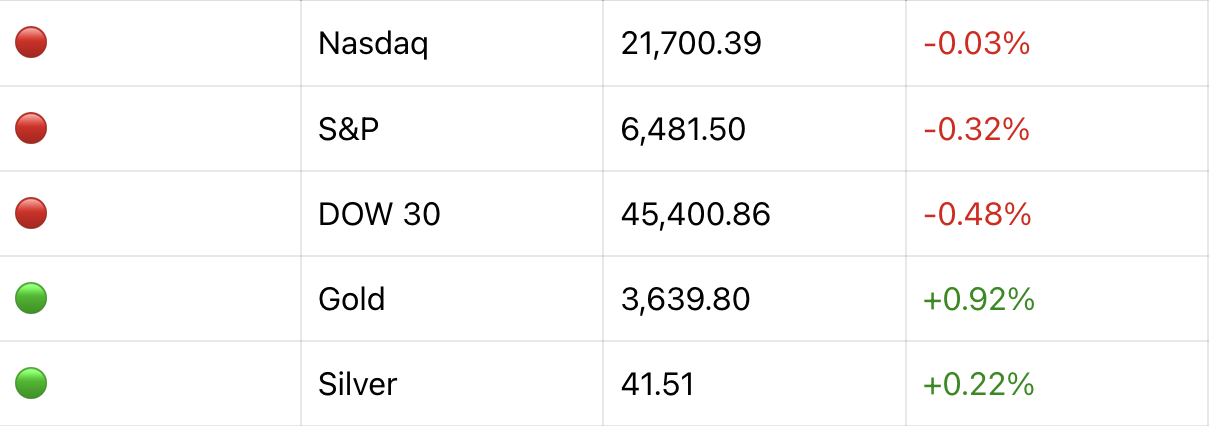
MARKET HEADLINES
📈 Samsara stock surged 12% after beating earnings expectations and adding a record number of $1 million-plus ARR customers, boosting its full-year outlook.
💰 Tesla shares rose as the board proposed a $1 trillion pay package to retain Elon Musk, tying his incentives to a massive market cap milestone.
🍽️ Top tech CEOs dined with Trump to discuss AI policy and trade, signaling the strategic importance of political alliances in shaping the tech landscape.
🪙 Bitcoin hit a one-week high ahead of U.S. jobs data, as traders eye potential rate cuts that could boost risk assets like crypto.
🌍 As doubts grow over U.S. dominance, investors are urged to diversify globally, with foreign stocks outperforming amid a weakening dollar and rising global skepticism.
⚡ Celsius stock nearly doubled in a year thanks to booming energy drink sales, a smart acquisition, and strategic alignment with PepsiCo.
🥤 Activist investor Elliott took a $4B stake in PepsiCo, calling for a leaner business model to revive struggling beverage and snack sales.
🏠 Trump may declare a national housing emergency, but experts warn that meaningful affordability solutions will require deep, long-term structural changes.
🍁 Canada is using Trump’s tariffs as a wake-up call to boost economic self-reliance, positioning its stock market for long-term strength in mining, energy, and infrastructure.
📉 A weakening U.S. job market fueled hopes for Fed rate cuts, sending stocks higher in a classic case of ‘bad news is good news’ for Wall Street.
Wall Street Rallies as Fed Might Finally Take Its Foot Off Our Necks
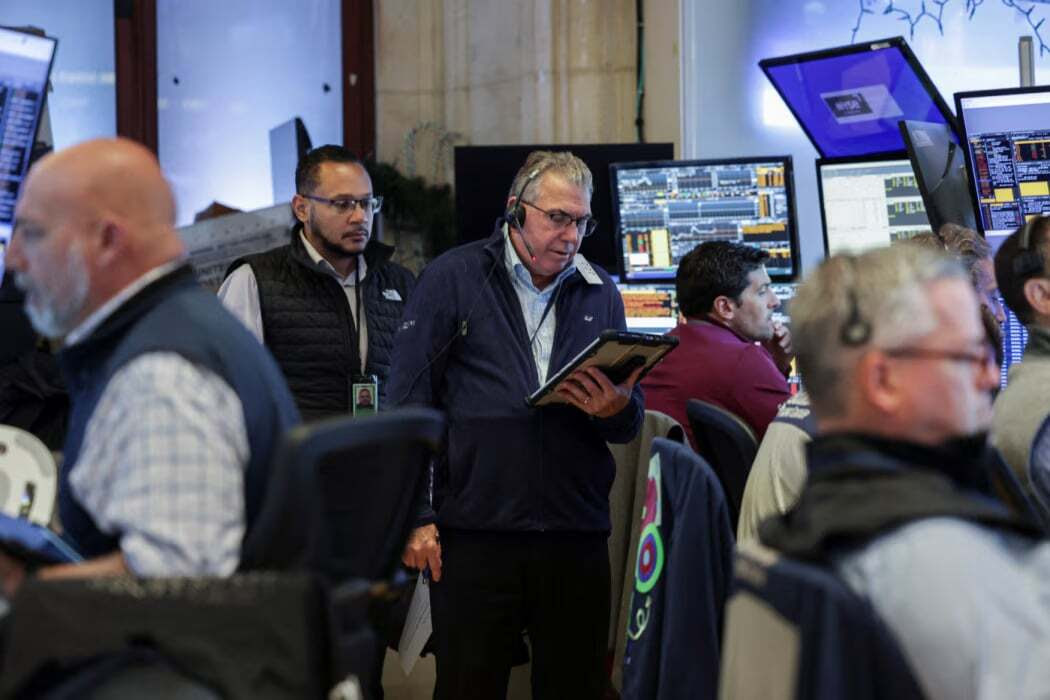
Well, would you look at that—Wall Street had itself a little party because everyone’s suddenly betting the Fed might finally cut interest rates.
Shocker: job numbers came in weaker than expected (because Bidenomics is just killing it, right?), and now everyone’s acting like it’s a green light for the Fed to stop pretending the economy’s overheating.
Meanwhile, Trump’s got his guy Stephen Miran moving through Senate hearings to join the Fed, and of course, the left is already clutching their pearls about “independence.”
Miran says he’ll be totally impartial—because we all know how neutral Lisa Cook has been (funny how there’s now a criminal probe into her, huh?).
Markets soared—tech, housing, even Amazon’s satellite dreams got a boost—and the S&P hit a new record while the Dow flirted with one too.
Oil’s still sliding, gold’s hanging on, and the Chinese market is acting up again, because what else is new.
The market’s betting Powell might blink, and Trump’s slowly getting his fingers on the Fed’s steering wheel—pass the popcorn.
STOCKS 2 WATCH
↘️ Lululemon: The athletic apparel brand trimmed its forecast after U.S. market weakness weighed on its Q2 results, sending shares tumbling 17% before the opening bell.
↗️ Broadcom: The chip and software giant returned to profitability and beat Wall Street expectations for its latest quarter, prompting a 7% premarket share jump.
↗️ DocuSign: Shares of the e-signature platform surged 8.5% in premarket action after the company raised its annual guidance, citing momentum in its AI initiatives.
↗️ UiPath: The automation software specialist lifted its full-year revenue forecast thanks to growing demand for its AI-driven solutions, pushing the stock up 5% before the market opened.
🔎 Smith & Wesson Brands: The firearms manufacturer reported stronger-than-anticipated sales and earnings, fueled by robust interest in its new product lineup.
Fact of the Week
The U.S. dollar is so dominant that nearly 60% of the world’s foreign exchange reserves are held in it, which means when countries save for a rainy day, they’re essentially stashing away greenbacks—making Uncle Sam the planet’s unofficial piggy bank and the dollar the closest thing we have to a global super-currency!
ECONOMY
Tariffs, Tinsel, and Temporary Growth: August’s Economic “Win” Isn’t What It Seems

So apparently the services side of our economy—y’know, the big chunk that actually employs most Americans—grew in August.
But don’t get too excited. It wasn’t because business is booming; it’s because everyone’s scrambling to stockpile goods before Trump’s tariffs kick in and make Christmas more expensive.
The ISM index ticked up to 52%, which technically means “growth,” but it’s like saying you’re rich because you maxed out your credit card buying sale items.
Businesses are still dragging their feet on hiring, because costs are climbing and sales aren’t exactly setting the world on fire.
Inflation’s still hanging around too—prices-paid index is stuck near pandemic-era highs, but sure, let’s act like everything’s fine.
Retailers and banks flat-out admitted to ISM that every decision now revolves around tariffs.
And yet, somehow, the markets rose anyway—because Wall Street’s living in its own fantasy land where the Fed just cuts rates and magically fixes everything.
Economic Headlines
🎓 University municipal bonds are offering attractive yields amid funding uncertainty, making elite institutions like Harvard and UT solid tax-exempt income plays.
💵 U.S. 10-year Treasury yields have fallen while global yields rise, as Treasury Secretary Bessent’s vocal strategy and investor confidence in U.S. debt drive a divergence.
🇺🇸 Trump’s tariffs may face reversal from the courts, but a renegotiation of the USMCA in 2026 could reshape North American trade, with big implications for autos and minerals.
🤖 Despite rising AI adoption, most companies are retraining staff instead of laying them off, with little overall impact on employment so far.
🇮🇳 India is slashing consumer taxes and warming ties with China as it recalibrates its economic strategy in response to damaging U.S. tariffs.
⚙️ Texas Instruments stock dropped after executives said customers pulled forward chip orders to avoid tariffs, clouding the outlook for a demand rebound.
🇧🇷 Brazilian markets are thriving despite political turbulence, but Bolsonaro’s trial and Trump’s tariffs have added uncertainty to the country’s economic future.
🏦 Markets are confident that Fed rate cuts are coming soon, but debate continues over how deep the cuts will go amid signs of economic slowing and tariff inflation.
🛍️ Despite gloomy sentiment, U.S. consumers—especially higher-income ones—are saving, spending, and paying down debt at rates stronger than before the pandemic.
🇫🇷 France’s worsening debt crisis could trigger global bond market volatility, potentially dragging U.S. finances into focus and fueling the gold rally.
Trivia
Which major U.S. stock index is heavily weighted toward technology companies and includes over 3,000 listings?
A. S&P 500
B. Dow Jones Industrial Average
C. Nasdaq Composite
D. Russell 1000
E. Wilshire 5000
Scroll for the answer
BUSINESS
eBay’s Big AI Makeover: From Online Flea Market to Tech Titan?
So eBay—yes, that eBay—is suddenly trying to convince the world it’s an AI powerhouse.
Apparently, they’re tired of being the digital garage sale and want to rub elbows with Amazon and Walmart.
Their big plan? Toss some AI into everything—writing code, fixing old systems, and even auto-filling item listings when sellers take a photo (because nothing screams quality like a robot guessing your baseball card’s value).
CEO Jamie Iannone swears this will put them on the “leading edge” of innovation, but considering they’ve been trailing for years, this feels more like a Hail Mary than a game plan.
They’ve built their own supercomputer, hired a Chief AI Officer (because titles fix everything), and are hoping decades of buyer/seller data will give them an edge.
Problem is, while they’re patching up their 30-year-old tech, Amazon and Shein are already sprinting.
eBay’s banking on “focus categories” like trading cards and car parts—so basically the stuff you forgot you needed.
Answer
Which major U.S. stock index is heavily weighted toward technology companies and includes over 3,000 listings?
C. Nasdaq Composite
The Nasdaq Composite index includes more than 3,000 companies, making it one of the broadest market indices in the U.S. It is known for its heavy concentration in technology and growth-oriented firms, including giants like Apple, Microsoft, Amazon, and Meta.
Unlike the Dow Jones or S&P 500, which are more selective, the Nasdaq Composite reflects a wider range of tech-focused and innovation-driven companies, many of which are newer or more volatile.
Its performance is often viewed as a proxy for the health of the technology sector.