Inflation climbs, jobless claims spike, but the Dow’s dancing past 46K like nothing’s wrong

Dear Friend,
The Dow finally hit 46,000 like it just won the Olympics—never mind that inflation’s heating up and jobless claims just spiked to 2021 levels.
But hey, if the Fed’s handing out rate cuts like holiday coupons, who’s complaining?
Meanwhile, the Labor Department casually admitted they overcounted 911,000 jobs—because apparently math is optional in Biden’s economy.
And over in AI-land, Oracle just added $100 billion to Larry Ellison’s fortune in a day, proving that all you need to win in 2025 is hype, contracts, and Elon’s phone number.
The rest of this week’s Insider Report has the details you don’t want to miss.
Jeremy Blossom
Editor in Chief, Everlasting Wealth
MARKETS
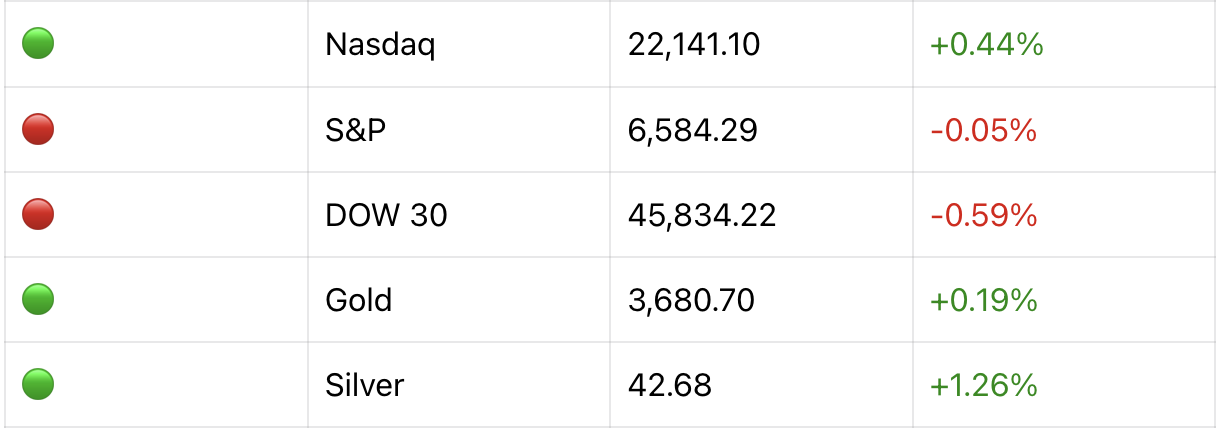
MARKET HEADLINES
🚗 Tesla stock is surging toward $384 as investors grow optimistic about rate cuts and short-term momentum drives a technical breakout.
🤖 Nvidia gains as partner Super Micro begins shipping next-gen AI servers globally, boosting revenue prospects despite challenges in China.
📉 Markets rallied on weak jobs data and hopes for rate cuts, but rising tariffs and stagflation risks could quickly reverse that optimism.
📺 New FDA rules may force drug ads to disclose full safety warnings, threatening billions in TV ad revenue for networks and broadcasters.
✈️ GE Aerospace is just shy of its all-time high, fueled by strong jet engine demand, improved margins, and CEO Larry Culp’s leadership.
🏦 Fannie Mae and Freddie Mac stocks are rallying on hopes of release from conservatorship, but major dilution risks make them volatile bets.
🌎 Emerging-market bonds are gaining appeal as developed nations’ fiscal stability falters and investors chase higher yields and currency plays.
🌯 Chipotle is expanding into Asia amid domestic sales struggles, aiming for international growth while retrofitting U.S. operations for efficiency.
⚠️ Investors may soon stop cheering bad economic news if job data worsens, as weak growth could outweigh the benefits of rate cuts.
Dow Breaks 46K — Because Who Cares About Inflation When We’ve Got AI and Rate Cut Hopes?
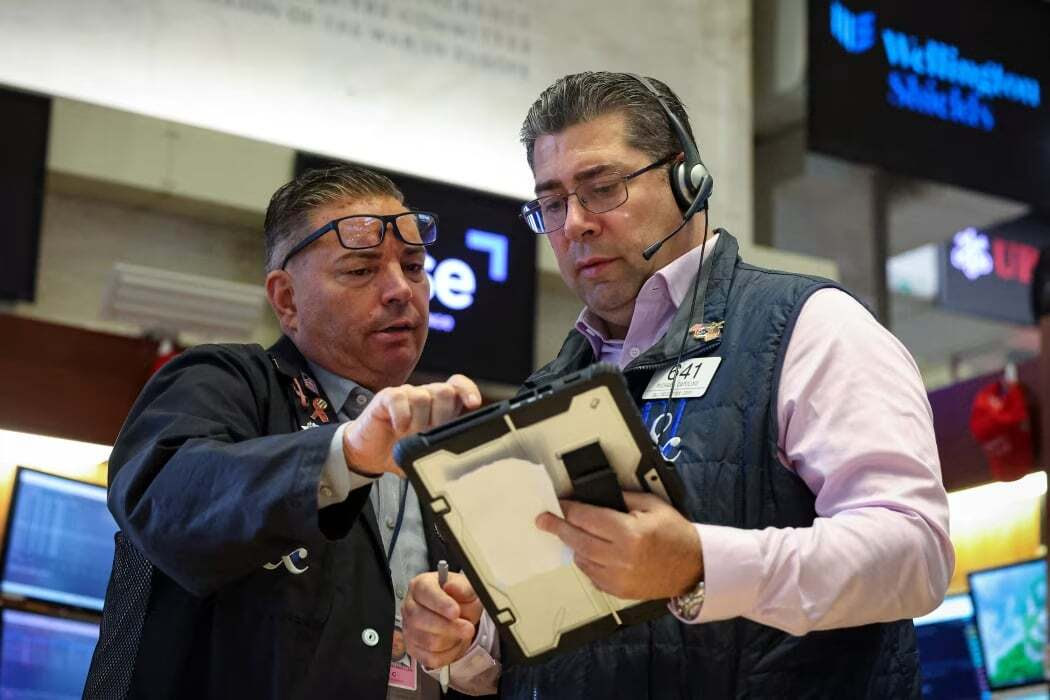
Well, the Dow finally strutted across the 46,000 finish line like it just won a gold medal—because nothing says “economic strength” like rising inflation and jobless claims in the same breath.
Took 191 trading days, but hey, who’s counting when the Fed looks ready to cut rates like it’s Black Friday? Inflation hit 2.9%, jobless claims jumped to their highest since 2021, and yet Wall Street’s throwing a party like it’s 1999.
Apparently, investors are flipping a coin: heads we get rich off AI, tails we get cheap money from the Fed—win-win, right? Even bonds joined the fun, with 10-year yields dipping below 4% again.
Meanwhile, meme stocks are back (Opendoor soared 79% because… reasons), and investors are pretending tech companies that now act like oil rigs are still “innovative.”
But sure, let’s keep piling into the market while the labor force buckles—what could possibly go wrong?
STOCKS 2 WATCH
↘️ RH: The high-end furniture retailer reduced its full-year guidance, citing rising tariff costs and ongoing market uncertainty, leading to an 8.5% drop in premarket trading.
↗️ SK Hynix: The chipmaker and key Nvidia supplier soared 7% to an all-time high in South Korea after announcing it’s ready to begin mass production of next-gen memory chips.
↗️ Adobe: The creative software powerhouse lifted its annual forecast for the second time this year, helping its stock rise 4% before the market opened.
↗️ Alibaba: The Chinese tech titan unveiled a new AI model and announced plans to issue convertible bonds to bolster its cloud infrastructure, driving shares up 5.4% in Hong Kong.
↗️ Microsoft: Shares gained 1.5% premarket after the company finalized a renewed agreement with OpenAI, solidifying its deep investment in the AI space.
↗️ Warner Bros. Discovery: Shares continued their rally in early trading after reports that Skydance and Paramount are preparing a buyout offer, following a 29% surge the previous session.
Fact of the Week
The U.S. economy powers roughly a quarter of global GDP, so when America sneezes it doesn’t just make the rest of the world catch a cold—it can shake stock markets from Tokyo to London, rattle commodity prices, and even influence how central banks across continents set their policies, essentially rewriting the global economic weather forecast in real time!
ECONOMY
Turns Out Biden’s Economy Was Even Worse Than We Thought—Job Growth Overstated by 911,000

Well surprise, surprise—the Biden-era job numbers were off by a casual 911,000 jobs.
Yep, according to the Labor Department, we actually added half as many jobs as they claimed between early 2024 and this past March.
That’s the biggest downward revision ever in raw numbers, and the worst percentage drop since the 2009 financial mess.
Sectors like hospitality, retail, and manufacturing were hit hardest—because nothing says “booming economy” like waiters and welders getting canned.
Even Fed Chair Powell quietly admitted last month this was coming (because of course he did, in a footnote).
Trump’s already called out the BLS for cooking the books, and honestly, who’s shocked at this point?
The White House says this just proves why new leadership is needed to fix the data swamp.
But hey, at least we’ve got AI stocks and meme traders to keep Wall Street smiling while Main Street gets gutted—what could possibly go wrong?
Economic Headlines
🏦 Bank mergers are surging under Trump-era regulatory rollbacks, with Wall Street eyeing a wave of consolidation among regional lenders like Comerica amid activist pressure and dealmaking momentum.
🍅 Grocery prices jumped 0.6% in August, driven by produce, meat, and coffee, with tariffs, labor shortages, and weather disruptions keeping food inflation stubbornly high.
💸 Social Security benefits are projected to rise 2.8% in 2026, but the modest increase may be offset by higher Medicare premiums and rising living costs, leaving many retirees disappointed.
🤝 Commerce Secretary Howard Lutnick says a trade deal with India is likely despite oil-related penalties, while also hinting that TikTok could avoid a ban if ByteDance agrees to sell.
🏠 Mortgage rates dropped to 6.35%, their lowest in nearly a year, potentially reviving buyer interest—but the true test will come with next week’s Fed meeting and economic data.
📉 Despite expected Fed rate cuts, stocks could still face near-term turbulence, though AI-driven optimism and long-term easing may keep the rally alive.
🇪🇺 The ECB held rates steady as expected, diverging from a likely Fed cut, which could weaken the U.S. dollar further and increase pressure on global currency markets.
💼 With bond yields falling, retirees may still find 5% income from high-quality corporate and foreign bonds, but taking on risk requires strategic caution in a shifting market.
📊 Lower mortgage rates could revive the housing market this fall if they hold, but job insecurity and inflation could quickly reverse any budding momentum.
🚁 Russian drones entering Poland’s airspace spiked defense stocks, as rising geopolitical threats and unmanned tech demand fuel global military investment.
Trivia
Which U.S. government agency regulates and oversees the nation’s monetary policy, including setting interest rates?
A. U.S. Department of the Treasury
B. Federal Deposit Insurance Corporation (FDIC)
C. Securities and Exchange Commission (SEC)
D. Federal Reserve System
E. Office of the Comptroller of the Currency (OCC)
Scroll for the answer
BUSINESS
Oracle Rakes in AI Billions While Larry Ellison Prints Money and Joins the Tech Gods
Well, Larry Ellison just hit the jackpot—Oracle stock exploded 36% in one day after the company revealed it’s swimming in multibillion-dollar AI contracts.
That little pop added $100 billion (yes, with a “b”) to Ellison’s net worth, putting him in spitting distance of Elon.
Oracle now has $455 billion in backlogged business and expects that to hit $500 billion soon, thanks to cozy deals with AI giants like OpenAI, xAI, Meta, and SoftBank.
Turns out, missing the first wave of cloud computing might’ve been a happy accident—now they’re riding the AI wave like it’s the second coming of the dot-com boom.
The funny part?
They still missed revenue expectations this quarter… but no one cares because they’re booking future AI money like it’s already in the bank.
Even if their margins are thinner than a Biden speech, Wall Street’s drooling over those long-term projections.
Get rich, invest in AI, and be besties with Elon Musk.
Answer
Which U.S. government agency regulates and oversees the nation’s monetary policy, including setting interest rates?
D. Federal Reserve System
The Federal Reserve System, often simply called “the Fed,” is the central bank of the United States.
It is responsible for setting monetary policy, which includes managing the federal funds rate, conducting open market operations, and regulating the money supply.
Its dual mandate is to promote maximum employment and stable prices.
The Federal Reserve operates independently of the executive and legislative branches but remains accountable to Congress.