
Dear Friend,
Nvidia’s down 17 percent this year, but Wall Street isn’t panicking—just waiting for clarity on Trump’s AI chip export rules, set to drop in May.
With only 10 percent of revenue tied to China and the administration leaning into America-first innovation, this might just be a pit stop before Nvidia hits the gas again.
Meanwhile, global trade battles are heating up, but Trump’s strategy is anything but random—it’s a calculated push to rebuild U.S. industry, and it’s already forcing other nations to adjust.
And in the defense sector, Lockheed just took a hit on the F-47 jet and is now feeling pressure from both Trump and Elon Musk over the F-35’s price tag—while Northrop Grumman quietly rises.
Let’s break it all down in this edition of the Everlasting Wealth Insider Report.
Jeremy Blossom
Editor in Chief, Everlasting Wealth
MARKET HEADLINES
📉 Bitcoin and XRP prices continue their slide amid broader market volatility and Trump’s tariff plans, dampening hopes that crypto-friendly policies will buoy digital assets.
🚗 Tesla stock climbs nearly 10% this week, likely ending its 9-week losing streak, as investor sentiment stabilizes ahead of key delivery data.
🧾 Trump’s sweeping 25% car tariffs spark confusion over trade classifications, with auto part suppliers and consumers bracing for price hikes.
🌍 Europe’s push for tech independence faces steep challenges as it scrambles to reduce reliance on U.S. giants and fund its own digital ecosystem.
🛢️ BP aims to boost investor confidence with profitable Gulf of Mexico production, facing pressure from activist investor Elliott Management.
🧘 Lululemon shares drop after cautious 2025 guidance, as CEO cites consumer pullback and tariff impacts despite strong Q4 earnings.
🏡 Privatizing Fannie Mae and Freddie Mac could lift mortgage rates and hit homebuilders, but analysts say homeowners and the economy should stay resilient.
🍔 Restaurant stocks slump as consumer sentiment sours, though global fast-food giants like McDonald’s and Domino’s hold up better than domestic peers.
💣 Uncertainty over Trump’s tariffs is dragging down consumer confidence and market sentiment, with fears of disrupted supply chains and inflation.
🎮 GameStop stock plunges as it pivots toward Bitcoin investments, sparking investor skepticism over its long-term strategy and meme-driven value.
Nvidia Hits Pause—But Trump’s China Policy Could Hit Play Again Soon
Nvidia stock has been stuck in neutral lately, down 17% this year, mostly thanks to uncertainty over AI chip exports and tensions with China.
But with President Trump’s administration still finalizing how it’ll handle the so-called “AI diffusion” rules before they kick in on May 15, Wall Street sees this as more of a speed bump than a roadblock.
Right now, about 10% of Nvidia’s revenue ties back to Chinese data centers, and any clarity from the White House could help lift the fog—and the stock price.
Analysts like BofA’s Vivek Arya are staying bullish, saying this dip is a rare chance to buy in at a discount before the dust settles.
With Trump’s America-first strategy likely to favor domestic innovation and security, there’s cautious optimism that Nvidia could get a boost once the administration sets its direction.
Bottom line? If Trump plays this right, Nvidia might just be revving its engine for a comeback.
STOCKS TO WATCH
↘️ GameStop: The OG meme stock soared on news of a crypto investment—then quickly reversed course. Shares plunged after the company revealed it would fund the venture with a large convertible bond offering, potentially leading to heavy dilution if the gamble flops in five years.
↘️ H&M: The fast fashion retailer’s stock dropped after a disappointing earnings release. It blamed Red Sea shipping delays—caused by attacks from an Iran-allied militia—as well as unfavorable exchange rates.
↘️ Mercedes-Benz: Shares of the German luxury carmaker continued to slide, dragged down by President Trump’s call for a 25% tariff on all imported vehicles—hurting automakers with global exposure.
↘️ Jefferies Financial: The investment bank’s shares declined premarket after missing earnings expectations, citing weaker performance in its asset management division.
↗️ Concentrix: The customer-experience outsourcing company impressed investors with stronger-than-expected quarterly results, sending shares higher before the market opened.
This Day in the Markets
📈 On this day in 2020, U.S. stocks rallied sharply, with the Dow Jones Industrial Average jumping over 690 points, as investors grew more optimistic that massive fiscal and monetary stimulus—including the recently passed $2 trillion CARES Act and Federal Reserve emergency measures—would help stabilize the economy amid the worsening COVID-19 pandemic, marking a moment of relief during one of the most volatile market periods in modern history.
ECONOMY
Global Trade Tensions Hit Boiling Point, But Trump’s Hardball Strategy Has a Purpose

Trade battles are erupting around the globe faster than we’ve seen in decades, with the U.S., China, Europe, and Canada slapping tariffs on each other like it’s the 1930s all over again.
But this isn’t just chaos for chaos’ sake—President Trump’s administration is driving a bold strategy to restore U.S. manufacturing, close trade deficits, and bring jobs back home.
With 25% tariffs on key imports and more reciprocal levies on the way, the White House is signaling it won’t sit back while American industries get hollowed out.
Critics warn of higher inflation and slower growth, and yes, stock markets have taken a hit—but supporters argue it’s a necessary reset after decades of one-sided “free trade.”
Meanwhile, countries from Mexico to Germany and even Russia are scrambling to shield their own markets, proving that Trump’s America First trade doctrine is reshaping the global order whether the world likes it or not.
ECONOMY HEADLINES
📉 Bitcoin and XRP prices dip as broader market sentiment reacts to recent tariff announcements, despite expectations of pro-crypto policy support.
🚗 New 25% tariffs on imported cars and parts spotlight the importance of trade classifications, as investors and automakers assess long-term impacts.
🧠 A look at historical market regimes suggests today’s portfolios may be underprepared for potential long-term inflation and high debt cycles.
📊 February’s inflation data is expected to remain elevated, which may influence the Federal Reserve’s timing on potential interest rate adjustments.
🏠 Proposed privatization of Fannie Mae and Freddie Mac could raise mortgage costs for new buyers, while leaving most homeowners unaffected.
🔧 Tariffs on foreign auto imports are seen as a strategic move to boost U.S. manufacturing, though automakers are evaluating cost impacts.
🛠️ Auto parts retailers benefit as consumers lean toward maintaining existing vehicles, with tariff-related price increases making new cars less appealing.
📉 Earnings forecasts may face short-term downward revisions due to tariff-related cost increases, though long-term growth prospects remain tied to policy outcomes.
😐 Ongoing tariff discussions have introduced uncertainty into consumer sentiment, as businesses and markets await further policy clarification.
🛢️ While energy executives welcome support for fossil fuels, some express a desire for greater stability around trade policy to aid planning.
Trivia
Which U.S. state is the leading producer of crude oil?
A. Texas
B. Alaska
C. California
D. North Dakota
E. Oklahoma
Scroll for the answer
BUSINESS
Lockheed’s Jet Setback Sparks Worries as Trump, Musk Eye Cheaper Alternatives
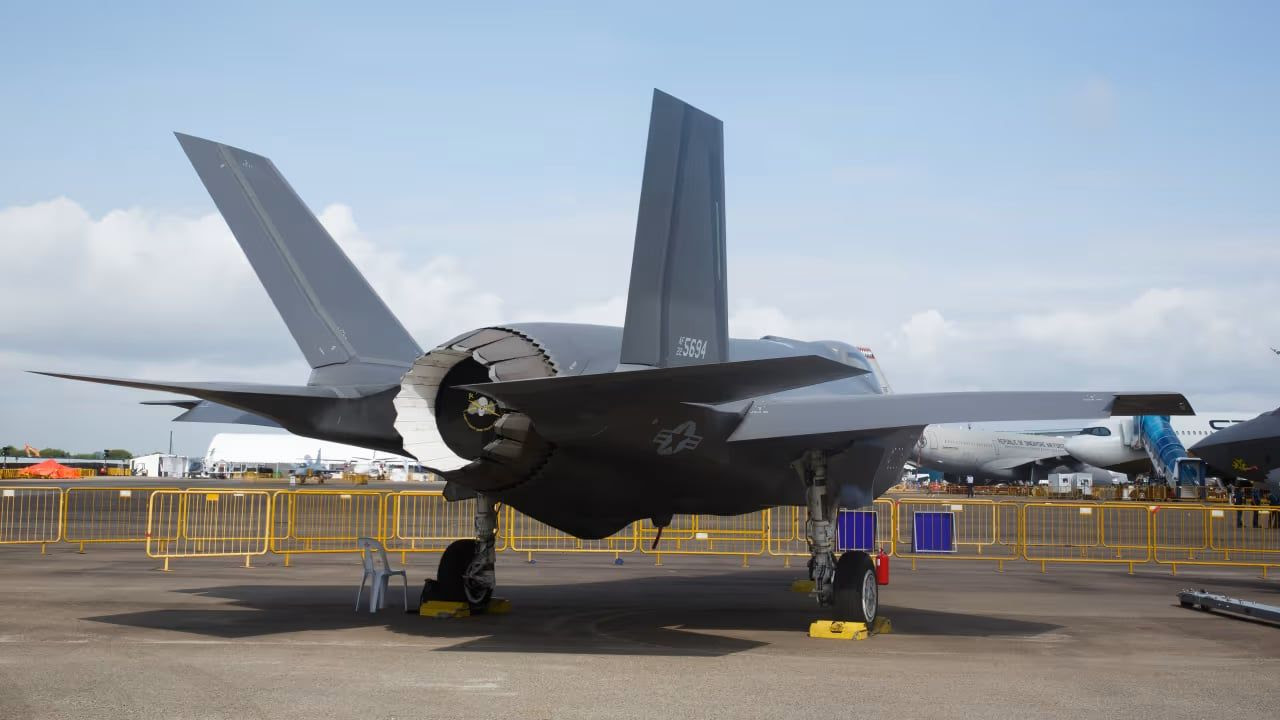
Lockheed Martin just took another hit after losing out to Boeing on the Air Force’s next-gen F-47 jet—and Wall Street isn’t shrugging it off.
The defense giant’s stock has now been downgraded twice since the March 21 loss, but analysts say that may be the least of its worries.
The real heat is coming from the F-35 program, which is now facing scrutiny from two very loud voices in Washington: President Trump and Elon Musk.
Both are questioning the fighter jet’s massive $2 trillion lifetime price tag, with Musk—now leading the revamped DOGE—publicly pushing for unmanned drones over pricey manned aircraft.
Toss in rising nationalism among international buyers wanting to build their own defense industries, and Lockheed’s once-untouchable F-35 program might be flying into headwinds.
Meanwhile, Northrop Grumman’s stock is soaring as it gains momentum on other stealth programs and positions itself as a potential frontrunner for the Navy’s upcoming F/A-XX contract.
With Trump and Musk now shaping procurement priorities, defense giants are quickly learning this new era comes with a new playbook.
Answer
Which U.S. state is the leading producer of crude oil?
A. Texas
Texas is the leading producer of crude oil in the United States, contributing approximately 40% of the nation’s total crude oil production.
The state’s prolific oil output is primarily due to vast reserves in regions like the Permian Basin and the Eagle Ford Shale.
Texas’s oil industry has a long history and continues to play a pivotal role in both the state and national economies.
While North Dakota has seen significant increases in production due to the development of the Bakken formation, and Alaska has substantial reserves in areas like Prudhoe Bay, their outputs are considerably less than that of Texas.
California and Oklahoma also contribute to U.S. oil production but do not approach the levels seen in Texas.