
Dear Friend,
Affirm’s bagged another $750 million from Liberty Mutual to fund its buy-now-pay-later loans, aiming for $34 billion in 2025. With insurers chasing returns and AI lending in the spotlight, Affirm’s non-bank approach is reshaping consumer finance—who needs late fees when you’ve got algorithms?
Meanwhile, Trump’s got his eye on energy prices to fight inflation, hinting he’ll “educate” the Fed if needed.
And CNN is shedding 200 jobs as it pivots to streaming—because nothing says reinvention like a $3.99 subscription to Wolf Blitzer on demand.
Stay tuned—this week’s headlines are just heating up.
Jeremy Blossom
Editor in Chief, Everlasting Wealth
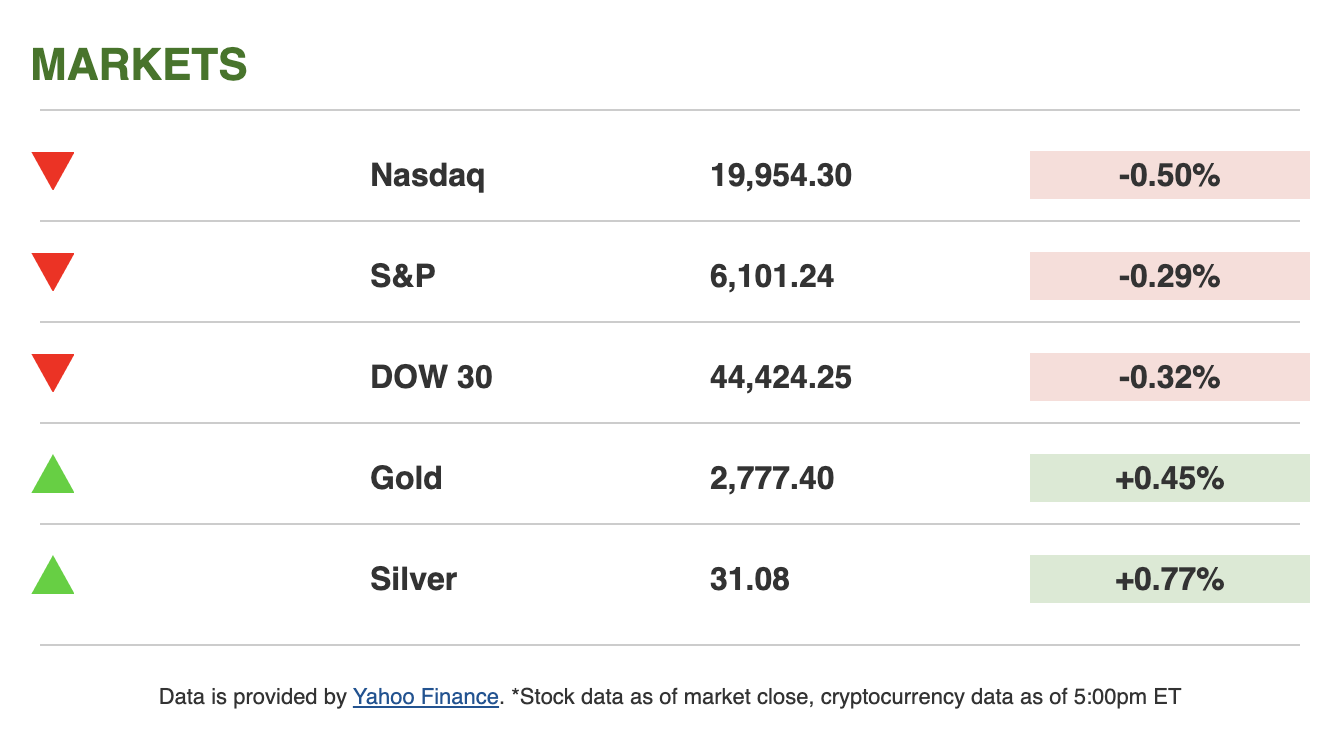
MARKET HEADLINES
📈 Tesla’s stock rose after revealing a redesigned Model Y with a higher price, fueling speculation about a lower-cost Model 2 to meet its ambitious 2025 sales targets and maintain growth.
📉 Verizon’s stock slipped despite an earnings beat as its modest 2025 guidance tempered investor enthusiasm, even with gains from price hikes and strong mobile subscriber growth.
💰 Bitcoin and XRP failed to hit new highs despite Trump’s crypto-friendly policies, as disappointment over the lack of a national Bitcoin reserve and profit-taking weighed on the market.
📉 Stocks like Texas Instruments and Boeing faced declines due to weak earnings guidance and production issues, while Novo Nordisk surged on promising weight-loss drug results and Twilio jumped after reporting positive operating income for the first time.
💊 Novo Nordisk’s stock soared after clinical trial results showed its new weight-loss drug, Amycretin, significantly outperformed existing treatments, positioning the company as a leader in the growing obesity treatment market.
Affirm Gets $750M Boost to Power Its Buy-Now-Pay-Later Push

Affirm secured a $750 million funding commitment from Liberty Mutual’s asset-management unit, adding to recent deals with Sixth Street ($4 billion) and Prudential Financial ($500 million), as it aims to hit $34 billion in loans for 2025—a 25% increase from last year.
Unlike traditional banks, Affirm relies on private investors to fund its buy-now-pay-later loans, which use algorithms to assess debt and don’t charge late fees.
Liberty’s cash will recycle into $5 billion worth of loans over the life of the deal, building on its growing partnership with Affirm.
With private-credit markets booming as insurers and pensions chase higher returns, and enthusiasm around AI-driven lending fueling Affirm’s stock recovery after a tough 2022-2023, non-bank lenders like Affirm are filling the gap left by regulated banks and reshaping consumer finance.
STOCKS TO WATCH
↗️ Burberry: The luxury fashion brand’s shares soared in Europe after it reported better-than-expected financial results. The news also boosted shares of Gucci owner Kering, LVMH, and Richemont.
↘️ Texas Instruments: The chipmaker’s shares dropped about 5% premarket after its quarterly outlook fell short of expectations.
↘️ CSX: The railroad company reported lower revenue, driven by reduced fuel surcharge and coal income, leading to a 3% decline in shares before the market opened.
🔎 Monte dei Paschi and Mediobanca: Italy’s Monte dei Paschi launched a $14 billion takeover bid for Mediobanca, resulting in a 7% drop in Monte dei Paschi’s shares and a 5% rise for Mediobanca in Milan trading.
↘️ Intuitive Surgical: Despite exceeding quarterly earnings estimates, the medical-device maker disappointed investors with its outlook for the new year, causing shares to fall in off-hours trading.
This Day in the Markets
📈 On this day in 2018, the Dow Jones Industrial Average reached a significant milestone by closing above 26,500 for the first time in its history, finishing the trading session at 26,616.71. The record high reflected growing investor optimism fueled by strong corporate earnings reports, robust economic growth, and the impact of recently enacted tax reform legislation.
STOCK PICK OF THE WEEK
Brownstone Research
Elon Musk’s Next Tweet Could Unleash a Fortune in AI Stocks—Are You Ready?

Elon Musk has a history of moving markets with his mouth.
Or, more specifically, his tweets.
When he tweeted about Doge, the crypto jumped 50% that day.
After Musk added a simple #bitcoin to his Twitter profile, the coin surged.
But it’s not just cryptos…
After he tweeted that he “kinda loves Etsy”, the stock hit an all-time high a week later.
And GameStop spiked after his enthusiastic tweets.
Now, he could be on the verge of tweeting out the names of a handful of small companies…
All of whom are critical partners to Musk’s operations…
And his vision of mastering the competition when it comes to AI.
But it’s not just Musk.
Amazon’s Jeff Bezos…
Meta’s Mark Zuckerberg…
And ChatGPT creator Sam Altman at Microsoft…
Over the next couple of years, all of them are expected to pour trillions of dollars into a unique investment.
And a few companies could benefit the most.
Especially if Musk tweets out their names…
Which could happen any day now.
In this eye-opening video, tech investing expert Jeff Brown reveals more details about Musk’s critical partners.
Brown called Nvidia at a split-adjusted 66 cents way back in 2016.
He picked out Bitcoin when it was just $240.
Now, he believes five stocks could play a major role in Elon Musk’s plans.
Watch his full interview to learn more.
ECONOMY
Trump’s Inflation Plan: Slash Energy Prices to Force Interest Rates Down

Trump is banking on slashing energy prices to tame inflation and “automatically” lower interest rates, signaling he may press the Federal Reserve if needed.
While he hasn’t yet spoken to Fed Chair Jerome Powell, Trump reiterated his belief that he understands interest-rate policy better than the central bank, hinting he’ll make his views known if he disagrees.
Despite recent Fed rate cuts, long-term rates tied to mortgages and business loans remain high due to market expectations and inflation fears.
Trump’s administration is focused on driving down oil prices as the cornerstone of his economic strategy, while Treasury Secretary nominee Scott Bessent emphasized the Fed’s independence.
Though Trump can’t influence the Fed directly for now, with no current board vacancies, he’ll have a chance to reshape its leadership when Powell’s term ends in 2026.
For now, Trump is doubling down on cheaper energy as the path to lower borrowing costs and economic relief.
ECONOMY HEADLINES
📉 Trump called for immediate Federal Reserve rate cuts and lower oil prices during his Davos speech, but his tariff threats and inflationary policies undermine his demands, leaving investors to navigate the gap between rhetoric and economic reality.
💻 Nvidia continued to rise in early 2025 amid optimism from the AI-driven Stargate Project, despite mixed earnings signals from chip supplier SK Hynix and broader uncertainties in the AI market.
🔥 Historical examples show that disasters like the Los Angeles wildfires can foster economic opportunity, with companies like Bank of America and Johnson & Johnson having previously emerged as leaders by responding to crises with innovation and foresight.
🏛️ The newly formed Department of Government Efficiency (DOGE), led by Elon Musk, aims to tackle federal spending inefficiencies, but questions remain about its scope, Musk’s role, and its potential impact on government savings.
🛢️ Trump’s call for OPEC to lower oil prices to pressure Russia over the Ukraine war faces significant obstacles, including OPEC+ alliances and Saudi Arabia’s budgetary priorities, making the proposal unlikely to gain traction.
BUSINESS
CNN Cuts Jobs, Bets Big on Digital and Streaming to Survive
CNN is laying off 200 employees, around 6% of its workforce, as it shifts focus from its declining cable business—where viewership is down 74% since its 2020 peak—toward digital growth and a new streaming service.
Backed by $70 million from parent Warner Bros.
Discovery, the network is investing in new jobs, technology, and products, including a $3.99 subscription paywall for CNN.com and a streaming platform focused on news, following the failure of CNN+ in 2022.
CEO Mark Thompson is also revamping programming, reshuffling big names like Wolf Blitzer and Jake Tapper, to attract viewers during the second Trump administration.
While layoffs are underway, Thompson says headcount will stay steady as the company doubles down on adapting to how audiences consume news via phones and streaming.
With revenues dropping and its long-term survival at stake, CNN is betting that embracing digital and streaming will secure its future.
RETIREMENT
Should You Claim Social Security Early? Here’s What to Consider
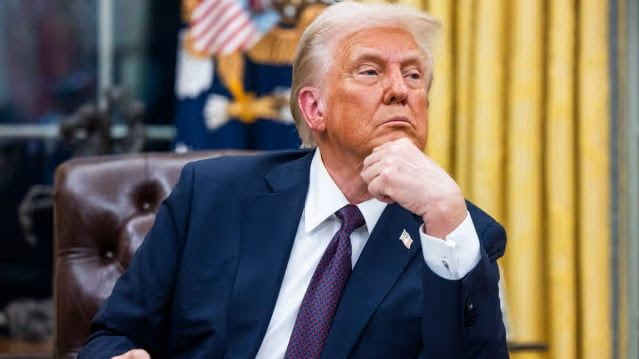
With Social Security projected to run out of full funding by 2033 and potential changes under Trump’s proposals, like cutting taxes on benefits and tips, some retirees are wondering if they should claim early to avoid possible cuts.
But financial experts caution against rushing.
Current retirees and those nearing retirement are unlikely to see reductions, and the math still strongly favors waiting.
Claiming at 62 slashes benefits by 30%, while waiting until 70 boosts payouts to 124% of your earned benefit—a “risk-free 8% return” that no investment can match.
Of course, real-life factors like health, job prospects, and immediate needs play a role, but for those who can wait, the long-term financial payoff is clear.
Don’t let fear drive your decision—plan wisely and consult tools or advisors to project your benefits under different scenarios.
Trivia
Which U.S. trading partner consistently ranks as one of the largest export markets for American goods and services, particularly in agriculture, machinery, and technology?
A. Canada
B. Mexico
C. China
D. Japan
E. Germany
Scroll for the answer
TAXES
Republicans Risk Tripping Over Tax Cuts Without Clear Strategy

With Trump’s 2017 tax cuts set to expire in 2026, Republicans are scrambling to craft new legislation, but political bickering and procedural chaos are overshadowing policy discussions.
Without action, 62% of Americans could face higher taxes and a more complex code, adding financial strain to families already battling inflation.
The 2017 Tax Cuts and Jobs Act (TCJA) simplified taxes for millions and spurred business investment, but current Republican leaders seem more focused on securing votes than crafting substantive reforms.
With only a handful of lawmakers left from the original TCJA debate, myths like “tax cuts pay for themselves” and “SALT deduction caps are double taxation” are muddying the waters.
To avoid losing credibility, the GOP needs to prioritize pro-growth, simplification-focused measures, such as extending full expensing for investments, while addressing fiscal concerns.
The TCJA proved tax reform requires time, compromise, and a coalition built on sound policy—not a rushed, vote-grabbing package cobbled together at Mar-a-Lago.
Answer
Which U.S. trading partner consistently ranks as one of the largest export markets for American goods and services, particularly in agriculture, machinery, and technology?
A. Canada
Canada is one of the largest trading partners of the United States, serving as a key export market for goods such as machinery, vehicles, technology, and agricultural products.
The close economic relationship is supported by geographic proximity, shared infrastructure, and agreements like the USMCA (United States-Mexico-Canada Agreement).
Trade with Canada contributes significantly to U.S. economic activity, especially in border states, and fosters economic integration across a wide range of industries, economic and social importance of healthcare, making it a cornerstone of the U.S. economy and a major driver of employment.