Exploding debt and blind optimism

Dear Friend,
So much for balanced budgets—Trump’s latest tax bill just tossed another $3.4 trillion onto the deficit bonfire, with a side of YOLO fiscal policy.
Bond yields are rising, the dollar’s stumbling, and even the ghosts of budget hawks past are doing double takes.
But hey, Wall Street’s still standing (for now), and June’s jobs report brought a pleasant surprise: more hiring, less panic.
The tax bill’s real winners? Oil drillers, chipmakers, and stadium tycoons.
The losers? Elite colleges, EVs, and anyone hoping for food assistance without a fight.
America First is back—and it’s louder, bolder, and burning through cash like it’s on sale.
Keep reading this edition of the Everlasting Wealth Insider Report to see what all this means for your next investment move.
Jeremy Blossom
Editor in Chief, Everlasting Wealth
MARKETS
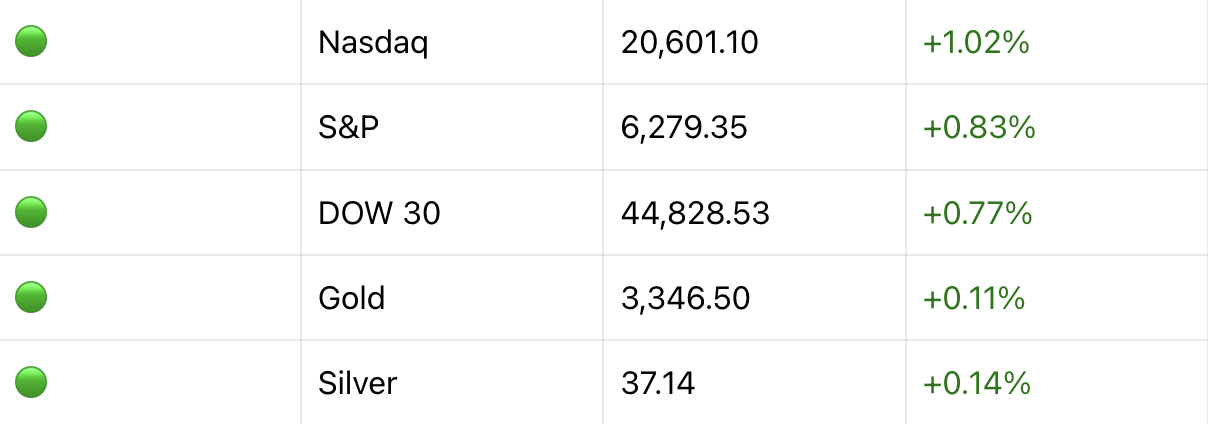
MARKET HEADLINES
📉 Global markets fell after Trump announced plans to start sending tariff letters with rates up to 70%, raising concerns ahead of the July 9 deadline.
🤖 Nvidia’s rally could continue as CEO Jensen Huang highlights robotics as a massive future industry with strong growth potential.
💸 Bitcoin’s brief surge on strong U.S. jobs data faded as traders refocused on Trump’s impending tariff decisions.
💊 Eli Lilly and Novo Nordisk dominate the weight-loss drug market, but challengers like Amgen, Viking, and Zealand are closing in.
📈 U.S. stocks reached record highs as easing trade tensions, robust jobs data, and passage of Trump’s tax bill boosted investor sentiment.
🎰 Leveraged ETFs led Q2 returns amid crypto, gold miner, and tech rebounds, though long-term risks remain high.
🧾 Trump and the GOP passed a sweeping tax bill projected to add $3.4 trillion to the debt, now facing the challenge of selling it to voters.
📊 Small-cap stocks stand to gain significantly from new interest deductibility rules under Trump’s tax bill.
🚗 Tesla’s Q2 deliveries beat low expectations but highlighted ongoing EV sales challenges and pressure for future growth.
🚙 Lucid reported record deliveries in Q2, driven by its new Gravity SUV, marking strong momentum in 2025 despite a slight miss on estimates.
Deficit Be Damned: D.C. Doubles Down, Wall Street Starts to Sweat
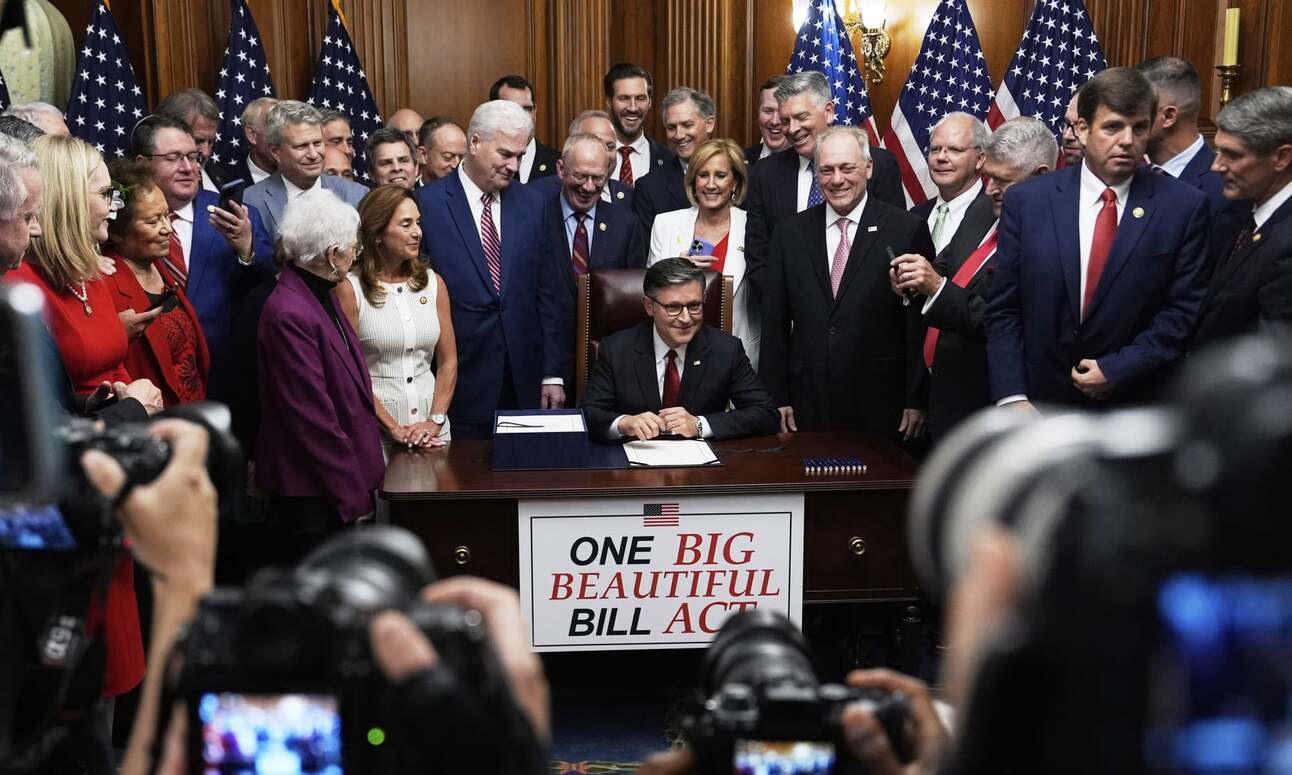
So much for fiscal conservatism—Trump’s GOP just pushed through a tax-and-spend bill that adds another $3.4 trillion to the deficit by 2034.
And nope, there’s no national emergency to justify it—just political will and a heavy dose of “growth will fix it!” optimism.
Markets aren’t in full panic yet, but bond yields are creeping up, the dollar just had its worst first half since the Nixon era, and the debt-to-GDP ratio is set to blow past WWII levels.
Even budget hawks like Chip Roy caved when push came to vote.
Wall Street veterans like Bill Gross and Ray Dalio are warning this kind of reckless spending could trigger serious long-term pain—think weaker dollar, higher interest rates, and bond market chaos.
But Trump’s betting that tariffs, tax cuts, and slashing entitlements will magic us out of the hole.
Hope you like roller coasters, because America’s fiscal policy just hit “YOLO” mode.
STOCKS 2 WATCH
↗️ Tripadvisor (TRIP): Shares in the travel-review platform surged 9% following a report from The Wall Street Journal that activist hedge fund Starboard Value has acquired a stake exceeding 9% in the company.
↗️ Lucid Group (LCID): The EV manufacturer’s shares climbed over 2% after it announced a rise in vehicle deliveries during the second quarter, signaling potential momentum in production.
↗️ Synopsys (SNPS), Cadence Design (CDNS), Siemens (XE:SIE): The U.S. reportedly eased certain export restrictions on chip-design software to China, benefiting these major industry players. Synopsys and Cadence each gained more than 5%, while Siemens rose just over 1% on the Frankfurt exchange.
↗️ Datadog (DDOG): Shares of the analytics and monitoring software company soared approximately 10% after it was confirmed the firm will be added to the S&P 500 index on July 9, replacing Juniper Networks, recently acquired by Hewlett Packard Enterprise.
Fact of the Week
In the 1800s, long before refrigerators, natural ice was one of America’s biggest exports. Massive blocks were cut from frozen lakes in New England and shipped as far as India and the Caribbean—wrapped in sawdust to prevent melting. The “Ice King” of the time, Frederic Tudor, became a millionaire selling frozen water.
ECONOMY
Solid Jobs Report Shows Economy Holding Strong—Despite Tariff Jitters and Labor Shifts

June’s job numbers came in better than expected—147,000 added and unemployment dipping to 4.1%.
That’s a solid showing, especially with all the noise around trade and immigration.
Most of the job growth came from healthcare and state and local government, while the private sector took a breather, likely waiting to see how Trump’s America First agenda plays out.
Manufacturing did dip slightly, but that’s not unusual given the global slowdown and ongoing adjustments from the tariff shift.
Meanwhile, fewer people are looking for work, possibly because of stricter immigration enforcement—which, let’s be honest, is exactly what Trump promised.
All in all, the market’s holding firm, inflation’s in check, and businesses are still hiring where they can.
It’s not a hiring frenzy, but it’s steady—and that’s a win in this environment.
ECONOMIC HEADLINES
💰 More taxpayers may get hit by the Alternative Minimum Tax under Trump’s new bill, especially due to changes like the increased SALT deduction cap.
📉 Despite strong job growth in June, weakening private sector data and declining labor participation suggest earnings season will better reveal the economy’s health.
🏥 Millions using marketplace health plans will face rising costs and tougher rules under the new GOP tax bill as enhanced subsidies expire and eligibility tightens.
🚑 Rural hospitals face existential threats from $1 trillion in Medicaid cuts despite a $50 billion relief fund included in Trump’s tax bill.
🏦 Crypto companies like Ripple and Circle are racing to secure bank charters amid a friendlier regulatory environment and potential access to the Fed’s systems.
📊 The jobs report looked strong, but a sluggish ISM services reading and rising import costs highlight persistent inflation risks and possible Fed hesitancy.
🔧 U.S. lifted chip software export restrictions to China, boosting Synopsys and Cadence stocks, as trade deals aim to stabilize semiconductor supply chains.
🇻🇳 Trump’s trade deal with Vietnam is less about boosting U.S. exports and more about boxing in China via new rules targeting indirect Chinese content.
📦 With the July 9 tariff deadline looming, Trump scrambles to finalize partial trade deals as major uncertainties remain over sectoral and China-specific tariffs.
🏛️ Fed Chair Jerome Powell faces escalating GOP scrutiny over a $2.5 billion HQ renovation, prompting calls for a congressional investigation and his resignation.
Trivia
What term describes a period in which stock prices fall by 20% or more from recent highs, often accompanied by widespread pessimism?
A. Correction
B. Recession
C. Bear Market
D. Market Crash
E. Pullback
Scroll for the answer
BUSINESS
Trump’s Tax Bill Picks Winners and Losers—And Signals a Clear Economic Agenda
Trump’s massive new tax bill just passed, and it’s clear who’s cashing in: oil and gas drillers, chipmakers, defense contractors, and anyone building factories or backing school choice.
The bill brings back public land leases, boosts semiconductors with a 35% tax credit, and locks in corporate-friendly rates from Trump’s first term.
It even throws in tax breaks for sports team owners and real estate developers—because who doesn’t need help buying another stadium or luxury condo?
Meanwhile, elite universities are getting smacked with higher endowment taxes (Harvard, enjoy the bill), and EVs, solar projects, and online retailers just lost key subsidies and loopholes.
Hospitals and food companies tied to Medicaid and SNAP? Also taking a hit. But overall, this bill doubles down on America First economics: pro-energy, pro-industry, and pro-growth—exactly what voters sent Trump to do.
Answer
What term describes a period in which stock prices fall by 20% or more from recent highs, often accompanied by widespread pessimism?
C. Bear Market
A bear market refers to a market condition where securities prices fall 20% or more from recent peaks, typically over a sustained period.
It’s often driven by investor fear, slowing economic growth, rising interest rates, or geopolitical instability.
Unlike a correction, which is a shorter-term drop of 10% or more, a bear market can last for months or even years.
It reflects negative investor sentiment and can impact everything from retirement portfolios to corporate earnings.