Young buyers are priced out, grads can’t find jobs, and everyday spending is collapsing

Dear Friend,
Well, well, well—look who’s back from the dead.
Small-cap stocks just staged the ultimate comeback, crushing the S&P and Nasdaq like they’ve got something to prove (which, to be fair, they do).
Turns out all they needed was a rate cut and a little Wall Street pity to start partying.
Meanwhile, America’s economy is still running two separate races: the yacht club is thriving, and everyone else is just trying to afford rent and ramen.
Oh, and FedEx just told China to take a seat—tariffs are biting, but business is still booming.
The rest of this week’s Insider Report is packed—keep reading.
Jeremy Blossom
Editor in Chief, Everlasting Wealth
MARKETS
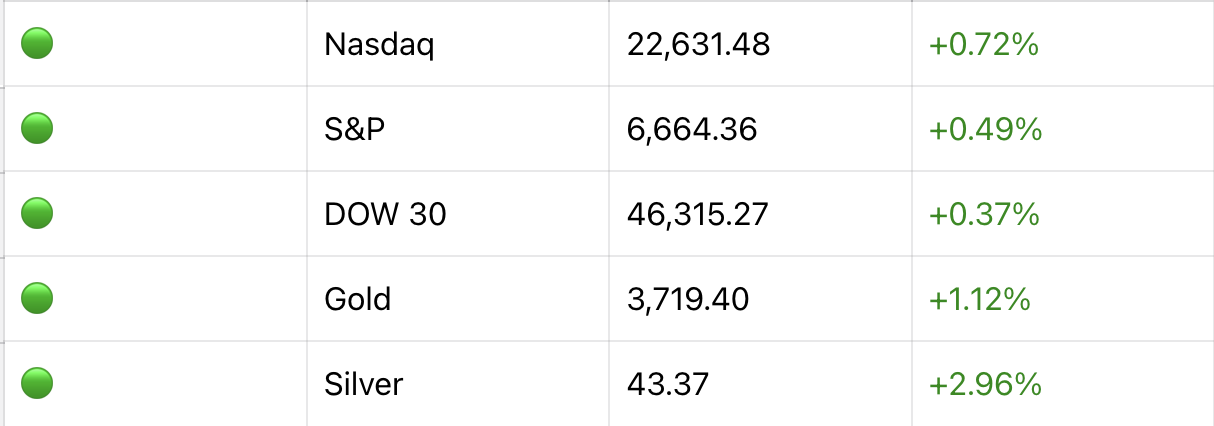
MARKET HEADLINES
📦 UPS stock was downgraded despite solid FedEx earnings, as analysts worry about weak business-to-business demand and trade policy headwinds.
🧠 Intel shares dipped after a massive rally, as analysts remain skeptical that its Nvidia-backed foundry business can compete with TSMC.
💹 Bitcoin slipped slightly, but crypto had a strong week overall as the Fed’s interest rate cut fueled bullish sentiment and profit-taking.
🚀 Intel’s Nvidia deal helped drive record stock market highs, as investor optimism about AI and Fed rate cuts continues to outweigh tariff concerns.
🎟️ Live Nation and Ticketmaster were hit with an FTC lawsuit over hidden fees and resale practices that allegedly deceived consumers and favored brokers.
✈️ FedEx beat earnings expectations and reinstated guidance, signaling clearing uncertainty despite pressure from tariffs and weak international volume.
⚡ Tesla stock jumped after Baird upgraded it with a 71% price hike, citing momentum in robo-taxis, humanoid robots, and AI-driven growth.
🇨🇳 Nvidia’s $5 billion Intel investment reflects U.S.-China tech tensions, as both governments pressure companies in a geopolitical semiconductor chess match.
🌍 Russia and China’s gas pipeline deal is likely strategic bluffing aimed at influencing global energy markets and trade negotiations with the U.S.
Small-Caps Finally Wake from Their 4-Year Nap—And Might Still Be Cheap?!

Well look who decided to show up—small-cap stocks just hit a record for the first time since 2021, and suddenly the Russell 2000 is the life of the party.
After being buried in Wall Street’s basement for four years, these little guys are up over 13% since August—blowing past the S&P and even the Nasdaq.
Why? The Fed finally dropped rates, and small-caps, being the broke college kids of the market, love cheap borrowing.
Analysts say they’re still relatively cheap compared to bloated large-caps, even after this rally.
Of course, this happy dance only lasts as long as the economy doesn’t completely faceplant—bad job numbers are great (yay, rate cuts!), but if things get too ugly, the mood will turn fast.
There’s also some noise about Trump’s tariffs maybe rattling the bond market, but for now, optimism’s winning.
The small-cap comeback tour might just be getting started—grab your popcorn.
STOCKS 2 WATCH
↘️ Lennar: The home construction giant saw profits decline for the fourth straight quarter, missing sales expectations as high mortgage rates and economic headwinds weighed on demand. Shares dipped 3% in early trading.
↗️ FedEx: Often seen as a proxy for economic health, the delivery powerhouse warned of a $1 billion earnings impact from U.S. tariffs but still beat estimates on both revenue and adjusted earnings. Shares climbed 5% premarket.
↘️ Intel: The chipmaker gave back some gains, dropping 3% before the open after a 23% rally on Thursday tied to its new deal with Nvidia.
🔎Scholastic: The children’s publisher reported a deeper quarterly loss as schools held off on book orders due to uncertain federal and state education funding.
🔎Jefferies: The investment banking firm is strengthening its relationship with Sumitomo Mitsui, which plans to raise its stake to as much as 20%, according to company executives.
↗️ United Parcel Service: The shipping giant saw shares rise 2.5% premarket after scrapping its planned acquisition of Mexican delivery company Estafeta.
Fact of the Week
With American consumers accounting for nearly 70% of U.S. GDP, the simple act of buying everything from sneakers to smartphones fuels such a colossal demand machine that global companies strategize around U.S. shopping habits, making Main Street spending a force that ripples through supply chains and stock markets worldwide!
ECONOMY
The “Biden Boom” Was Just for the Rich—Everyone Else Is Back to Scraping By

Here we go again: America’s economy is running at two speeds—one for the rich and retired, and one for literally everyone else.
High earners are sipping champagne on their yachts with fat 401(k)s and 3% mortgages, while young folks and working-class Americans are back to eating ramen and dodging eviction.
Wages for low-income workers have basically flatlined, and their spending is drying up fast, while the top 10% now make up half of all U.S. consumer spending.
First-time homebuyers? Good luck affording a broom closet—home prices are up 50% and down payments are a fantasy.
Meanwhile, AI is gutting entry-level jobs, leaving young college grads with degrees and no paychecks.
But don’t worry—the North Shore of Chicago is selling $31 million mansions like it’s no big deal.
So yeah, “Bidenomics” built back better… just not for the people it promised to help.
Economic Headlines
💰 The U.S. government made a $4.4 billion paper profit on its recent Intel stake, though its rare earth investment in MP Materials delivered even larger returns.
📉 The Fed’s latest rate cut buoyed markets, but concerns remain that unexpected GDP or inflation shifts could derail the rally.
⚡ Despite pushback from automakers, the EU is charging ahead with its 2035 gas-car ban, using tariffs and new EV models to protect its auto industry from Chinese competition.
🏦 The Fed trimmed rates amid rising job market risks, signaling caution and deep internal uncertainty over the economic outlook.
📱 Trump’s TikTok deal may ease ownership concerns but does little to fix deeper national security risks, potentially harming U.S. tech credibility abroad.
🚫 China has reportedly banned Nvidia’s custom AI chips, further straining U.S.-China tech ties and casting doubt over Nvidia’s future in the Chinese market.
🥣 General Mills beat earnings estimates but warned of ongoing sales struggles due to weak demand, rising competition, and the impact of weight-loss drugs.
📈 As market fears fade, bullish positioning and falling rates are fueling optimism in financial stocks, with ETFs like XLF primed to benefit.
🏛️ Despite Trump’s growing influence over the Fed, markets remain strong—though a loss of central bank independence could spark long-term financial risks.
🧪 GSK announced a $30 billion U.S. investment plan to bolster manufacturing and R&D, aiming to appease tariff threats and deepen ties with the American market.
Trivia
Which type of mutual fund passively tracks a market index rather than attempting to outperform it through active management?
A. Sector Fund
B. Actively Managed Fund
C. Target-Date Fund
D. Index Fund
E. Hedge Fund
Scroll for the answer
BUSINESS
FedEx Shifts Gears as Trump Tariffs Slam the Brakes on China Trade

Looks like FedEx is finally admitting what we already knew—Trump’s tariffs are biting hard, and China’s taking the hit.
U.S.-bound shipments from China have slowed so much that FedEx slashed trans-Pacific capacity by 25%.
Instead, they’re beefing up domestic shipping and leaning more on Europe and Southeast Asia (aka, friendlier territory).
Despite the China slump, the company still posted solid gains—revenue up 3% and profits ahead of expectations.
Domestic shipping volume jumped 5%, which shows when we bring manufacturing and demand back home, good things actually happen.
The company expects another $1 billion in tariff-related costs for 2026, but they’re still forecasting up to 6% revenue growth.
Translation: the tariffs may sting, but they’re working—and FedEx is adapting like a champ.
Now if only the rest of corporate America would stop crying and start pivoting.
Answer
Which type of mutual fund passively tracks a market index rather than attempting to outperform it through active management?
D. Index Fund
An Index Fund is a type of mutual fund (or ETF) designed to replicate the performance of a specific market index, such as the S&P 500 or Russell 2000.
These funds do not try to beat the market but aim to mirror its returns by holding the same securities in the same proportions as the index.
Because they require less research and fewer transactions, index funds typically offer lower expense ratios, making them a popular choice for long-term, passive investors seeking broad market exposure.