It’s all chips and chaos from here

Dear Friend,
Wall Street’s wearing rose-colored AI goggles again—and apparently, that’s all it takes to forget tariffs, oil shocks, and geopolitical chaos.
The S&P and Nasdaq are charging back to record highs, led by Big Tech’s billion-dollar spending sprees and banks pretending they’re tech companies.
Even Coinbase is mooning (because crypto also loves a good narrative).
Meanwhile, inflation’s heating up, global tensions are simmering, and Shell might be eyeing BP for a mega-merger worthy of an HBO series.
Oh, and Trump may name his next Fed chair soon, because why not add more fuel to the fire?
Keep reading this edition of the Everlasting Wealth Insider Report—you won’t want to miss what’s coming next.
Jeremy Blossom
Editor in Chief, Everlasting Wealth
MARKETS
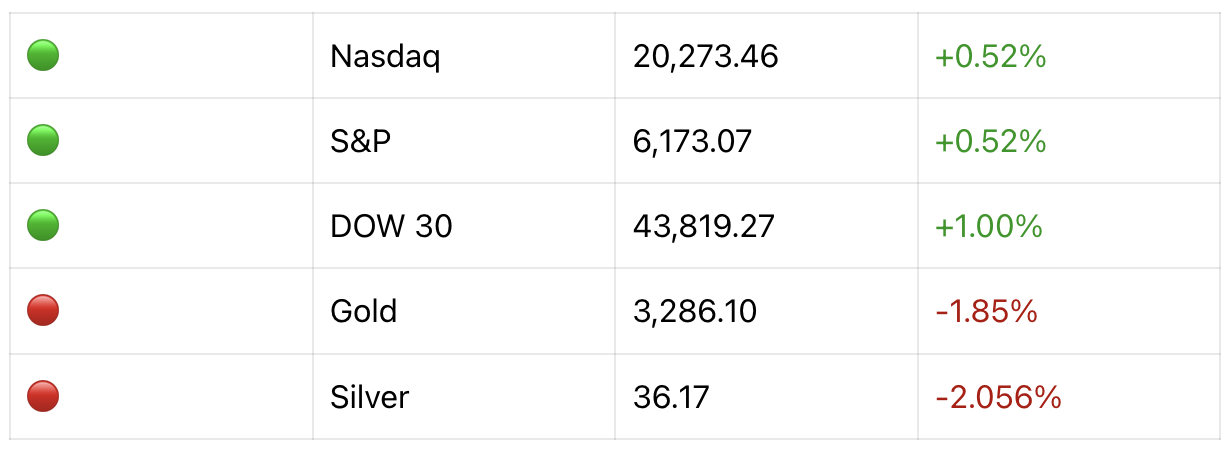
MARKET HEADLINES
📉 Bitcoin dipped slightly but is expected to rebound next week, driven by ETF inflows, regulatory momentum, and a weak U.S. dollar.
🚗 Tesla shares slipped after its head of sales and manufacturing departed and weak European sales data emerged, despite optimism over its robo-taxi launch.
🛢️ Oil prices are stabilizing around $66 post-cease-fire in the Middle East, with expert Daniel Yergin predicting continued volatility but ruling out $40 oil.
📈 Tech stocks are surging back to record highs, led by strong earnings and easing tariff fears, with historical trends suggesting the rally could continue.
💻 Nvidia stock continues to climb, bolstered by a Micron earnings beat and easing geopolitical tensions, reclaiming its title as the world’s most valuable company.
🏢 New York office REITs plunged after a mayoral upset, but analysts say the sell-off may be premature, especially with political uncertainty still ahead.
💊 Walgreens beat earnings expectations and is on track to go private later this year, even as parts of its U.S. healthcare division continue to struggle.
🤖 Palantir stock surged toward a new record following a partnership on AI-powered nuclear reactor software, extending its red-hot run amid Fed rate-cut hopes.
🔧 Micron delivered strong earnings and bullish AI outlook, but shares dipped slightly amid fierce competition and concerns over sustainability of market share.
💸 The U.S. dollar sank to a three-year low after reports Trump may name a new Fed chair early to push for rate cuts, stoking inflation fears and market jitters.Trump Talks, Trade, Markets Blast Off–Again
Tech Stocks Shrug Off Tariffs, War Fears—Wall Street Says “AI Over Everything”
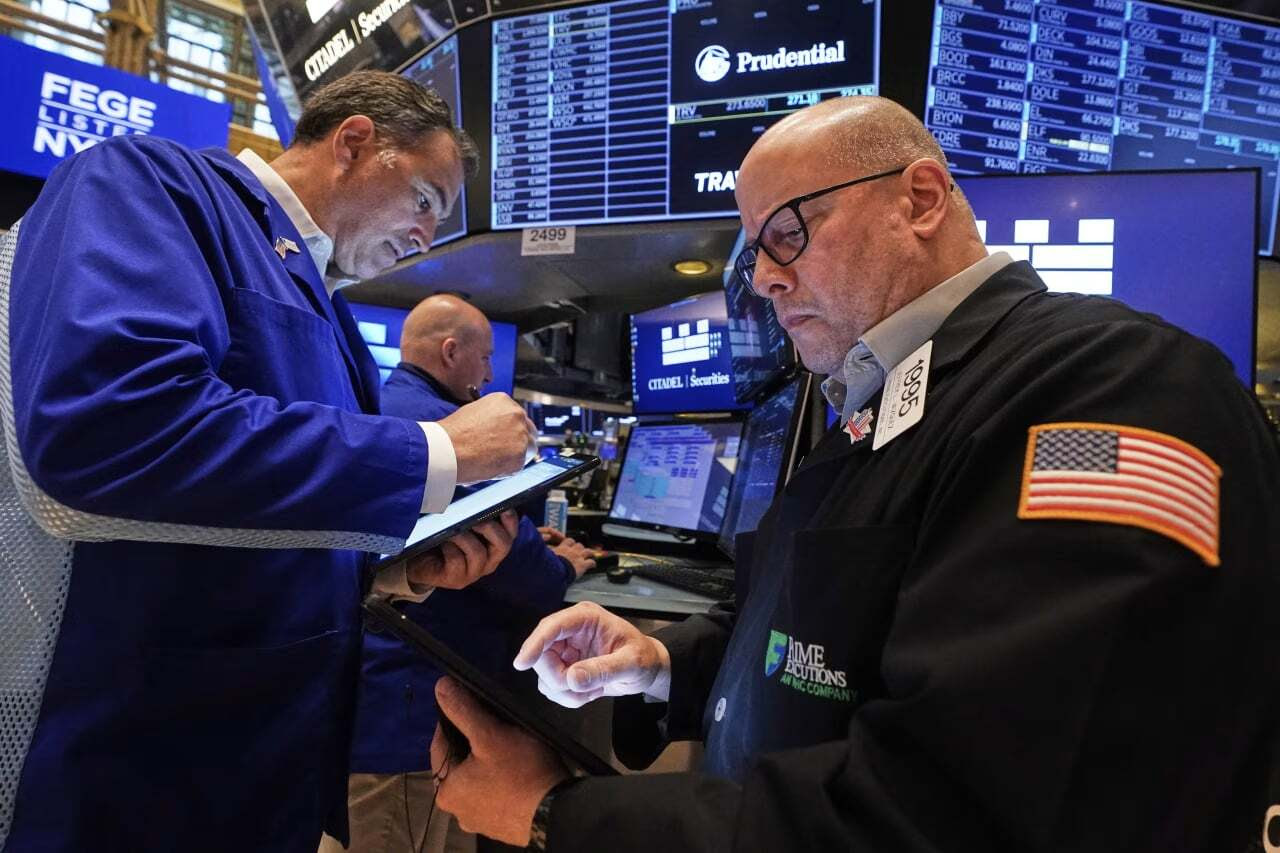
Well, the stock market just did a complete 180—again.
The S&P 500 and Nasdaq are back near record highs after tanking in April thanks to Trump’s tariff bombshell.
Apparently, investors have decided to forget about the whole “trade war + Middle East crisis” thing and throw their cash at anything with a microchip.
AI fever’s driving the bounce, with tech giants like Amazon and Meta tossing around billions like it’s Monopoly money.
Even banks are riding the AI wave—JPMorgan hit an $800B market cap and Coinbase shot to a new high (because why not throw crypto in the mix too?).
Meanwhile, Trump might name his next Fed chair early, which has the dollar dropping and rate-cut watchers foaming at the mouth.
In short: tariffs? Inflation? Global conflict? Nah, Wall Street’s got AI goggles on and couldn’t care less—for now.
STOCKS 2 WATCH
🔎 FTI Consulting (FCN): The advisory firm was one of several—including McKinsey and BCG—asked by the Trump administration on Thursday to explain their government contracts and propose ways to reduce federal spending.
🔎 Tesla (TSLA): A senior executive at Tesla, Omead Afshar, who oversaw sales and manufacturing across North America and Europe, has departed the company less than a year after being promoted. He was a key figure close to CEO Elon Musk.
🔎 JPMorgan Chase (JPM); Goldman Sachs (GS); Apollo Global Management (APO): Financial sector stocks were among Thursday’s top performers as the S&P 500 approached record levels. JPMorgan notably hit a milestone with its market value surpassing $800 billion for the first time.
↘️ MP Materials (MP): The rare-earth mining company’s shares slipped in premarket trading after Chinese officials signaled they would greenlight the export of “controlled items” to the U.S.—a move likely to impact the strategic supply chain.
↗️ Xiaomi (HK:1810): Shares in the Chinese tech brand rose 3.6% in Hong Kong after its new SUV drew a surge in orders on launch day. Market watchers speculated it could pose a serious challenge to Tesla’s market share in China.
Fact of the Week
The U.S. is the world’s top corn producer, and beyond food, corn powers ethanol fuel, sweetens most sodas, thickens sauces, and even helps make batteries, plastics, makeup, and printer ink. Some dollar bills are even printed using corn-based compounds.
ECONOMY
Global Business Keeps Chugging—Even as Tariffs and Bombers Fly
Somehow, the global economy’s still holding up—even with Trump’s tariff hammer swinging and the Middle East on fire.
The U.S., Europe, and big players in Asia are all still growing, but inflation is heating up fast here at home.
In fact, U.S. businesses just logged their biggest price hikes since the COVID inflation peak in 2022.
Meanwhile, Europe’s cautiously hopeful that Trump won’t actually double tariffs next month (because apparently, his delay game is now part of market strategy).
Germany’s showing signs of life, and even the U.K. is bouncing back, but France is struggling as global trade shifts around them.
The wildcard? Trump’s latest B-2 bomber party over Iran could send oil prices surging and ruin everyone’s inflation progress—especially in Europe.
So yes, global business is hanging in there… for now. But between tariffs, tanks, and tech bubbles, it’s like watching someone juggle chainsaws.
Economic Headlines
🏭 The new tax bill may not match the 2017 cuts but still offers $550 billion in incentives over 10 years for capital investment, R&D, and manufacturing reshoring.
📉 May’s expected tame PCE inflation data could support an earlier Fed rate cut, with markets increasingly eyeing July or September as potential pivot points.
⏳ Fed’s Thomas Barkin urges patience on rate cuts due to growing economic risks and inflation uncertainty, highlighting internal policy divergence.
🛃 The White House downplays Trump’s July 9 tariff deadline, signaling tariffs may rise regardless of negotiations, with legal challenges ongoing.
🪖 Europe’s pledge to double defense spending by 2035 is lifting U.S. and European defense stocks, boosting expectations of long-term sector growth.
🧠 To beat China in the AI race, experts argue the U.S. should prioritize market-driven innovation and avoid burdensome state-level regulations for the next decade.
📊 Markets are calm amid the Iran truce and Nvidia’s rally, but Trump’s tariffs, Fed uncertainty, and SCOTUS rulings could quickly reignite volatility.
🐉 China’s sputtering economy is seeing only short-lived stimulus gains, and Beijing may delay further support amid improved U.S. trade relations.
🏥 Republican Medicaid cuts could strain long-term care access for seniors, affecting the broader healthcare system and future nursing home affordability.
⚠️ Investor skepticism about the stock rally persists, with risks like recession, debt, trade uncertainty, financial shocks, and geopolitics still looming.
Trivia
Which type of investment fund is designed to track the performance of a specific index and is traded like a stock on an exchange?
A. Mutual Fund
B. Hedge Fund
C. Exchange-Traded Fund (ETF)
D. Private Equity Fund
E. Money Market Fund
Scroll for the answer
BUSINESS
Shell Eyes BP in Megamerger Move, Denies It With a Wink

Big oil’s playing footsie again—Shell is reportedly in early talks to buy BP in what could be the biggest oil merger since Exxon gobbled Mobil back in the ’90s.
Shell’s stock is flying high while BP’s been floundering after trying to go green too fast and losing investor patience.
Cue activist shareholders, weak earnings, and BP suddenly looking real attractive for a buyout.
Shell flat-out denied the talks after the news broke (classic), but under U.K. takeover rules, that could just be buying time.
If this deal happens, we’re looking at a $100 billion-plus energy titan with serious global clout—from LNG dominance to Gulf of America operations (yes, they’re calling it that now).
Between oil prices climbing and energy nationalism on the rise, don’t be surprised if this “speculation” turns into a full-blown corporate power grab.
Buckle up, because the energy sector is going full Game of Thrones.
Answer
Which type of investment fund is designed to track the performance of a specific index and is traded like a stock on an exchange?
C. Exchange-Traded Fund (ETF)
An Exchange-Traded Fund (ETF) is a type of investment fund that holds a basket of assets—such as stocks, bonds, or commodities—and aims to replicate the performance of a specific index like the S&P 500 or Nasdaq-100.
ETFs trade on major stock exchanges like individual stocks, allowing investors to buy and sell throughout the trading day.
They typically offer lower expense ratios than mutual funds and have become a popular tool for diversification, passive investing, and cost-effective market exposure.