Powell quietly walks back failed framework
Is this the end of easy money forever?

Dear Friend,
Remember all that tariff panic? Turns out the S&P 500 just dropped one of its strongest earnings seasons ever, up 11% year-over-year—so much for doom and gloom.
Big Tech crushed it (minus Tesla), the weak dollar gave overseas sales a boost, and CEOs apparently majored in Cost Pass-Through 101.
Meanwhile, the Fed’s quietly preparing to ditch its “let inflation run hot” experiment at Jackson Hole—because letting the economy catch fire wasn’t the genius move it once seemed.
And in retail land, Walmart and Amazon are thriving, while Target’s getting roasted for overpriced toothpaste.
Keep reading this edition of the Everlasting Wealth Insider Report to see who’s winning, who’s whining, and what’s next for your portfolio.
Jeremy Blossom
Editor in Chief, Everlasting Wealth
MARKETS
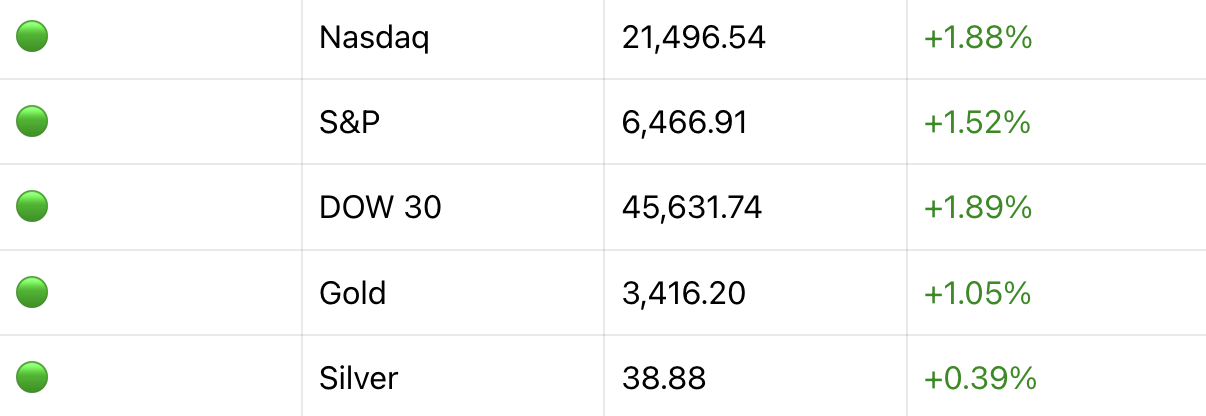
MARKET HEADLINES
🚗 NIO stock surged after unveiling a competitively priced luxury SUV, intensifying the EV price war in China and challenging Tesla amid cooling U.S.-China relations.
🛒 Walmart’s warning about rising tariff costs and consumer strain fueled inflation concerns, lowering odds of a September Fed rate cut and shaking markets on Powell’s Jackson Hole day.
🎮 Nvidia faces mounting pressure in China over security concerns and halted production of its H20 chip, putting its AI chip dominance and near-term growth at risk.
💰 Bitcoin slipped while Ethereum gained as crypto traders await Powell’s Jackson Hole speech, which could signal whether rate cuts—and thus crypto-friendly conditions—are on the horizon.
🤠 NYSE Texas gained momentum with 62 new listings as it battles the upcoming TXSE for dominance in Texas’ booming financial landscape, marking a shift in Wall Street’s geographic power.
📈 Japanese stocks soared despite tariffs and political upheaval, buoyed by strong monetary policy, fiscal stimulus hopes, and potential export advantages in the U.S. auto market.
💣 Bond yields’ relentless rise is creating a slow-motion crisis that could eventually shatter the stock market, warns “perma-bear” Albert Edwards, despite the AI-fueled equity euphoria.
🚘 Amazon’s used car partnership with Hertz signals deeper auto market ambitions, potentially disrupting car buying platforms like Carvana and CarGurus.
🔥 Tesla shares dipped after a fire at its German gigafactory added to worries over plummeting European sales, though its inclusion in hedge fund portfolios offered a silver lining.
🎬 Paramount Skydance shares spiked again amid meme-stock buzz and scrutiny over alleged Trump-linked merger dealings, raising questions about investor motives and political entanglements.
Tariffs? What Tariffs? Wall Street’s Still Partying Like It’s 2021

So much for all the tariff doom-and-gloom—S&P 500 companies just wrapped up one of the strongest earnings seasons ever.
Turns out those scary 2025 tariffs didn’t tank profits like the experts warned.
According to Goldman Sachs, earnings soared 11% year-over-year (triple what was expected), with a record number of companies beating estimates and even raising their guidance.
Apparently, CEOs have figured out how to pass along costs, sweet-talk suppliers, and shave expenses without breaking a sweat.
And the cherry on top? A weakening U.S. dollar that’s been juicing overseas sales.
Mega-cap tech (minus Tesla, of course) led the charge, and 2025 still looks solid.
Sure, analysts are getting a little too dreamy about 2026 margins—but for now, the market’s acting like tariffs are just a footnote.
STOCKS 2 WATCH
↘️ Intuit: Shares of the tax software provider dropped nearly 6% in after-hours trading after the company projected quarterly revenue growth of 14% to 15%, falling short of Wall Street’s more optimistic expectations.
↗️ Ross Stores: The discount retailer’s stock rose 2% after the bell, as the company reported increased sales in the latest quarter, driven by early demand tied to the back-to-school season.
↘️ Workday: Although the HR software firm reported revenue of $2.35 billion—slightly topping FactSet’s estimate of $2.34 billion—its shares still slipped nearly 4% after hours.
↗️ Zoom Communications: Shares in the video conferencing provider jumped close to 6% in extended trading after the company boosted its full-year guidance on the back of a solid second-quarter performance.
Fact of the Week
Despite making up just 4% of the global population, U.S. consumers wield staggering influence by generating nearly 30% of all global consumer spending—powering industries, stock markets, and supply chains worldwide, from luxury fashion in France to electronics in South Korea!
ECONOMY
Powell’s Big Policy Reboot: Fed Quietly Backs Away from 2020 Strategy Blunder

Well, looks like the Fed’s finally ready to hit “undo” on its 2020 strategy experiment.
Remember when they said they’d let inflation run hot to help jobs recover?
Yeah… that aged like milk.
Now, with inflation still a thorn in the economy’s side, Powell is prepping to scrap the whole approach during his big speech at Jackson Hole.
The Fed originally pushed this framework to fight low inflation and zero interest rates—but when prices exploded in 2021, they got caught flat-footed and waited way too long to hike rates.
The result? Four-decade-high inflation and a credibility problem.
Some economists say the framework itself was the problem; others say the Fed just botched the execution.
Either way, Powell’s ready to walk it back without admitting it outright.
The Fed’s learned the hard way that chasing unicorns like “maximum employment” while inflation’s on fire just doesn’t work.
ECONOMIC HEADLINES
🏛️ Tariffs may not crash the U.S. economy, but Trump’s ad-hoc corporate shakedowns risk undermining rule of law and long-term economic dynamism.
🏭 Manufacturers are increasingly turning to Foreign Trade Zones to offset soaring tariff costs, though Trump’s policy shifts could limit their benefits.
🤖 AI hasn’t yet caused widespread job loss among new grads, but flaws in the unemployment system leave the U.S. unprepared for future displacement.
🏘️ July home-price growth was the slowest since 2023, and economists warn that broader price declines may follow if affordability continues to weaken.
🌍 The U.S. and EU unveiled new trade terms exempting key goods like pharma and aircraft from tariffs, while maintaining steep auto tariffs until EU concessions.
📉 Investors hoping for a Fed rescue amid a stock market slump may be disappointed, as Powell faces political pressure but offers limited clarity on cuts.
💵 The Treasury market awaits Jerome Powell’s Jackson Hole speech to jolt it out of summer stagnation and clarify the Fed’s rate-cut intentions.
🇨🇳 China’s small exporters are scrambling to adapt to U.S. tariff threats through stockpiling, price hikes, and diversification—but still face grim uncertainty.
🏦 Fed meeting minutes reveal growing divisions over rate cuts, with some policymakers urging action amid mixed data and Trump’s mounting pressure.
🌐 Trump’s tariffs and foreign policy shifts are pushing India to thaw ties with China, potentially positioning it as a global export hub amid rising geopolitical recalibrations.
Trivia
Which component makes up the largest portion of U.S. Gross Domestic Product (GDP)?
A. Government Spending
B. Net Exports
C. Business Investment
D. Consumer Spending
E. Inventory Accumulation
Scroll for the answer
BUSINESS
Walmart, Amazon, and T.J. Maxx Are Thriving in Tariffland—Target, Not So Much
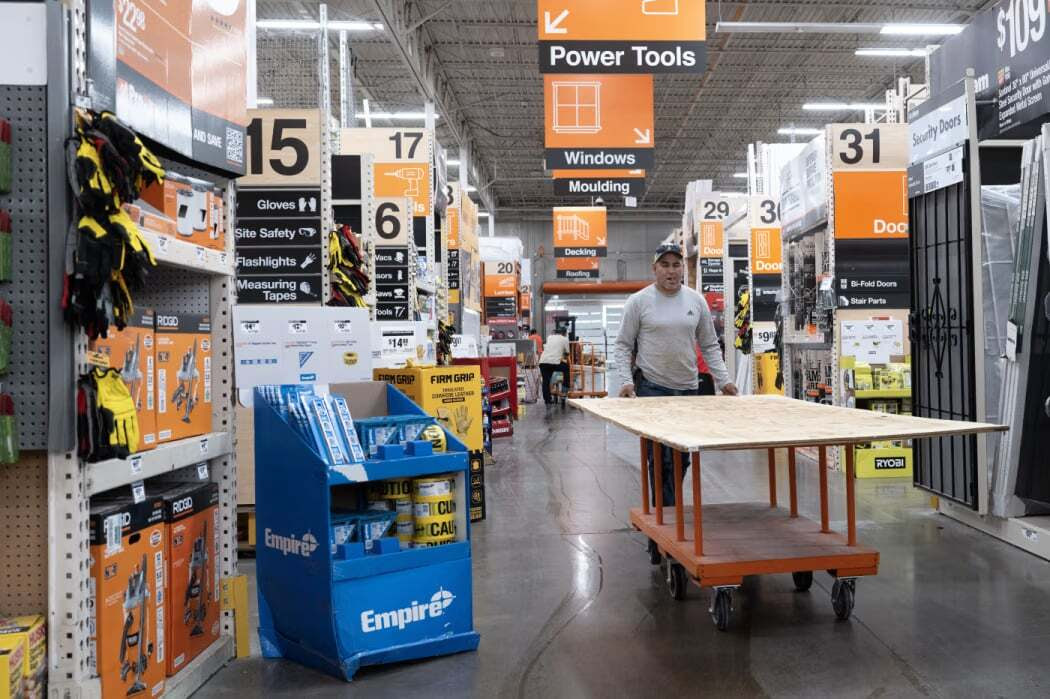
Turns out tariffs aren’t hurting everyone—just the retailers who didn’t plan ahead.
Walmart, Amazon, and TJX (aka T.J. Maxx’s parent) are eating their competitors’ lunch right now, offering deep discounts and convenience to consumers who are fed up with high prices.
Walmart’s absorbing a chunk of the tariff pain to keep groceries cheap, Amazon sped up deliveries without jacking prices, and T.J.
Maxx is happily scooping up excess inventory on the cheap.
Meanwhile, Target’s over here losing sales and getting side-eyed for being “too expensive”—not great optics in a tight economy.
Consumers are pinching pennies, skipping the lattes, and comparison shopping like it’s a full-time job.
Tariffs may be squeezing margins, but the retail giants who saw it coming are doing just fine.
The ones who didn’t? Well, good luck selling $8 toilet paper.
Answer
Which component makes up the largest portion of U.S. Gross Domestic Product (GDP)?
D. Consumer Spending
Consumer spending, also known as personal consumption expenditures (PCE), accounts for approximately two-thirds of U.S.
GDP, making it the largest and most influential component.
It includes household spending on goods (like food and clothing) and services (like healthcare and entertainment).
Because of its size, trends in consumer behavior are critical indicators of overall economic health.
Economists and policymakers closely watch consumer confidence and retail sales to anticipate shifts in GDP growth.