
Dear Friend,
Jerome Powell just dropped a not-so-subtle hint: interest rate cuts could be on the way. Don’t pop the champagne yet—these cuts are likely to be tiny, and any relief for borrowers will trickle in slower than your internet during peak hours.
Meanwhile, Trump’s old tariffs reshuffled trade, leaving Mexico on top as our biggest supplier. And while EV startups hoped to zoom into the future, they’re running out of gas (or, you know, battery).
Oh, and if you’re house hunting? Strap in—between wild mortgage rates and agent drama, it’s a bumpy ride.
Here’s everything you need to know in this week’s Everlasting Wealth Insider Report.
Jeremy Blossom
Editor in Chief, Everlasting Wealth
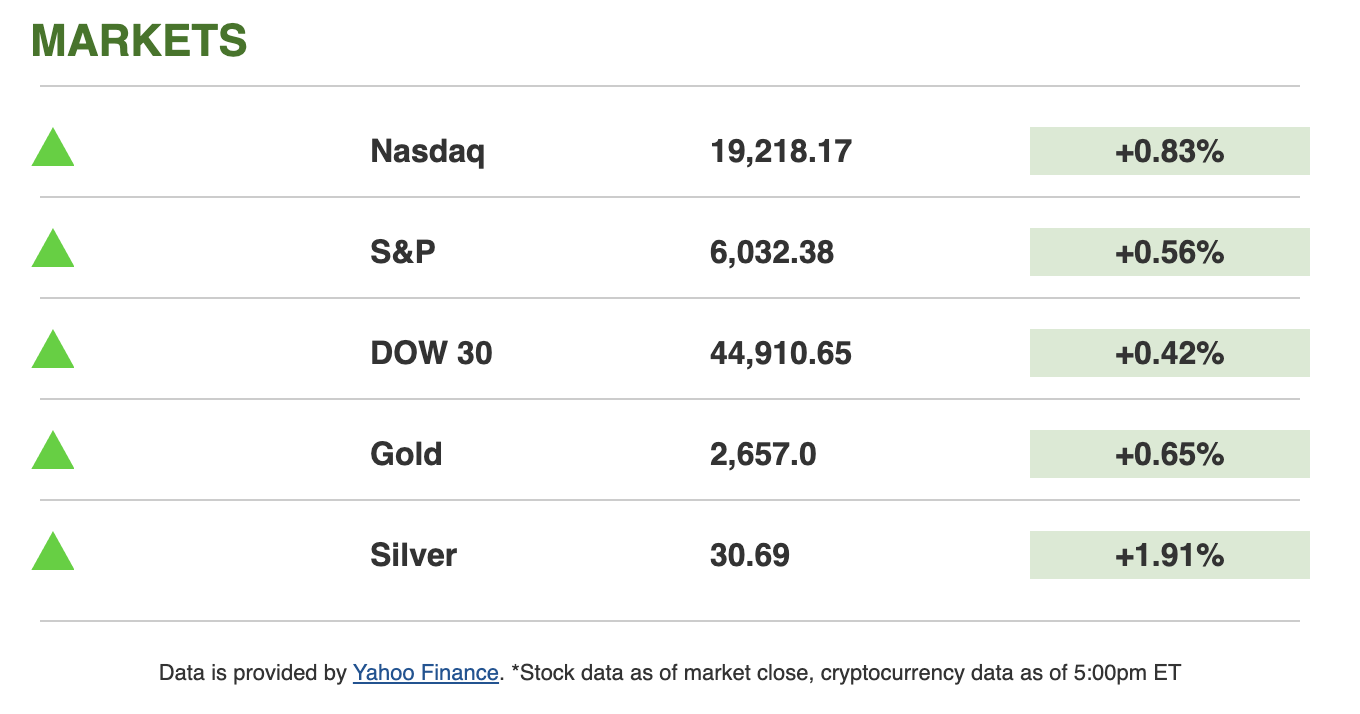
MARKET HEADLINES
💥 Rosenberg Research warns that rising leverage and opaque practices in the $14 trillion private markets sector pose systemic risks, urging regulators to act before economic instability escalates.
🐻 Despite a postelection rally pushing the Russell 2000 to record highs, analysts predict small-cap stocks will struggle in 2025 due to weak revenue growth and lack of sustained technical momentum.
💰 Bitcoin narrowly missed $100K due to profit-taking and market corrections, but analysts expect a rally to $110K-$120K by year-end, fueled by holiday enthusiasm and optimism around Trump’s crypto-friendly policies.
📈 Nvidia’s stock could climb 27% by January, fueled by CES 2025 hype around CEO Jensen Huang’s keynote and growing demand for AI and robotics chips, Citi analysts predict.
Markets React to Trumps Aim to Protect America with Tarrifs
President Trump is making bold moves again, this time proposing tariffs of 25% on imports from Canada and Mexico and 10% on goods from China.
The goal? Reinforcing border security and pushing back on unfair trade practices. Love him or hate him, Trump is clearly sticking to his America First playbook.
As expected, global markets are feeling the heat. Mexico’s peso took a dive, Canada’s dollar stumbled, and even some U.S. companies felt the pinch.
But American markets stayed relatively steady—our economy is resilient like that.
Meanwhile, Justin Trudeau is playing Mr. Nice Guy, trying to talk Trump down with his usual charm offensive.
Economists believe these tariffs are a way to pressure our trading partners into better deals, particularly on border security and drug trafficking issues.
Sure, it might mean higher prices in the short term, but Trump’s betting that tough love will pay off in the long run.
STOCKS TO WATCH
↗️ Applied Materials, Lam Research, and Nvidia: Semiconductor stocks jumped in premarket trading after reports suggested the Biden administration’s restrictions on sales to China may be less stringent than previously feared.
↗️ Hasbro: Shares of the toymaker climbed over 4% after Elon Musk sparked acquisition rumors by asking about the company’s valuation on his X social-media platform.
🔎 Meituan: The Chinese food-delivery giant announced a more than threefold increase in profit last quarter, outperforming expectations despite intense competition and a slowing Chinese economy.
🔎 Alphabet: Google’s parent company faces fresh regulatory pressure, as Canada filed a lawsuit accusing it of anticompetitive practices in the online advertising space.
This Day in the Markets
📊 On this day in 1971, Nasdaq began publishing its first stock index, revolutionizing how tech stocks were tracked and traded.
ECONOMY
China Who? Mexico Takes the Wheel in U.S. Trade
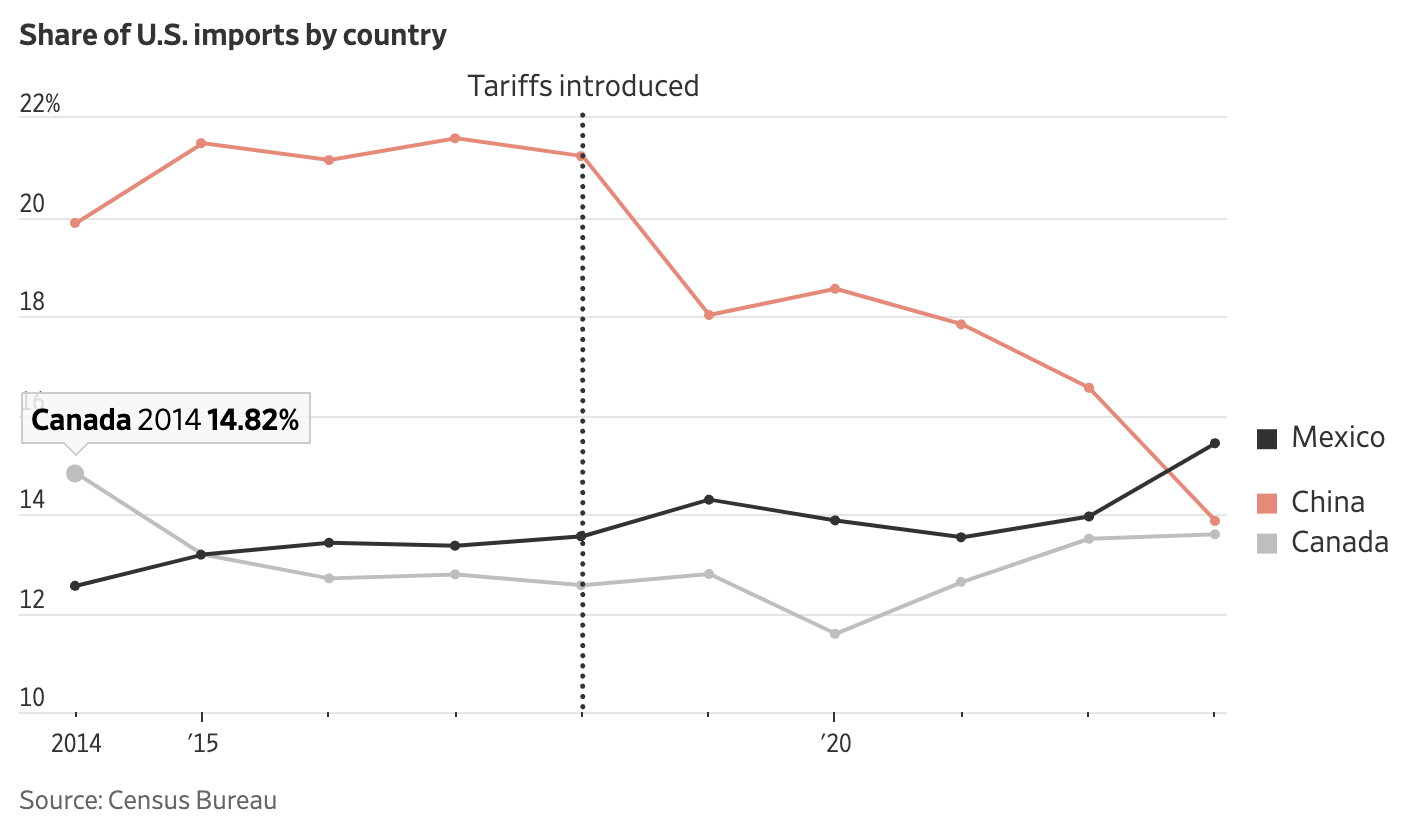
Here’s the scoop: Trump’s tariffs on China back in 2018 triggered a major shakeup in U.S. trade, and now Mexico’s the top supplier of goods to America.
While China’s exports to us have tanked, the demand for imports hasn’t slowed down one bit—we just rerouted the flow. Mexico, Vietnam, and Taiwan are now cashing in big time. Talk about finding new friends.
Some Chinese products—like semiconductors, laptops, and leather goods—took a 35% hit since 2017. But don’t worry, plenty of stuff like toys and video game consoles are still streaming in, showing China hasn’t lost its edge entirely.
Meanwhile, wooden cabinets are having their own little saga, shifting from China to Vietnam like it’s some kind of furniture soap opera.
Bottom line? The tariffs didn’t curb America’s shopping spree; they just reshuffled the supply chain deck.
With Trump’s latest tariff threats, it looks like round two is about to kick off. Brace yourselves—your gadgets and kitchen upgrades might get even pricier.
ECONOMY HEADLINES
📈 The S&P 500 and Dow hit record highs in November, boosted by a chip stock rally and investor optimism, as markets brush off tariff concerns and anticipate potential Fed rate cuts.
🌎 President-elect Trump’s tariff threats against Mexico, Canada, and China signal a renewed push for trade protectionism, sparking fears of global economic disruption and escalating tensions over immigration and fentanyl issues
💸 Protecting against inflation is increasingly complex, as traditional hedges like commodities struggle due to geopolitical and economic shifts, leaving options like TIPS and targeted investments as partial solutions.
🤝 Canada signals willingness to exclude Mexico in renegotiating the USMCA with the U.S., citing concerns over Chinese trade links, risking diplomatic tensions and economic repercussions in North America.
AUTOS
EV Startups Hit a Bump in the Road
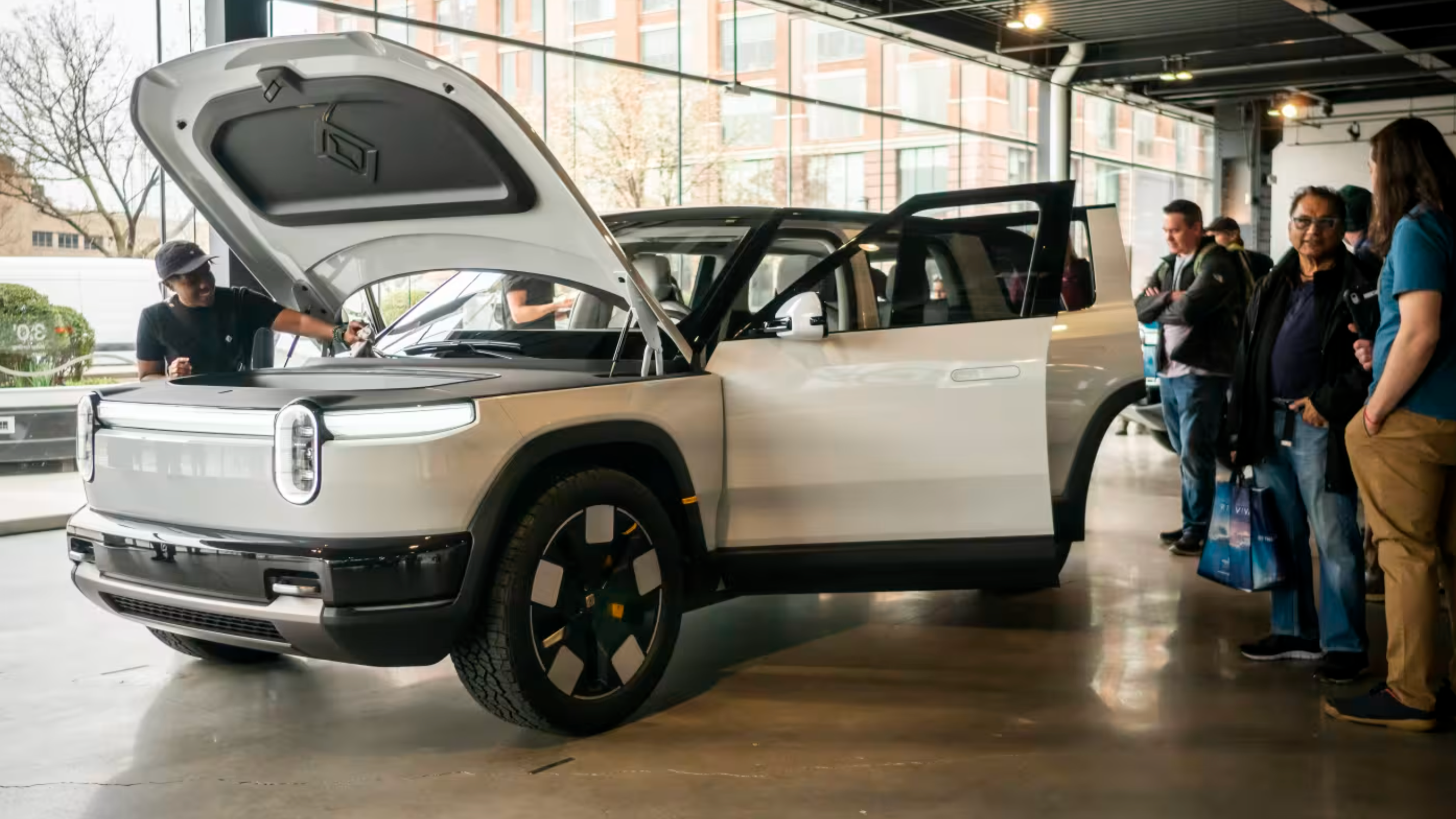
Electric vehicle startups are running into serious trouble, and it’s not just about politics.
Companies like Fisker and Arrival have already gone under, while Rivian and Lucid are struggling to stay afloat.
Sure, Rivian got approval for a $6.6 billion loan to expand production, but there’s a risk the deal won’t survive long-term.
Meanwhile, demand for EVs is cooling off, and supply chain issues aren’t helping anyone’s case.
With Trump back in office soon, the industry might lose some of its taxpayer-funded crutches, like the $7,500 EV tax credit.
And his focus on tariffs to protect American industries could raise costs for parts made overseas, putting extra pressure on companies already burning cash.
While big names like Ford and GM are rethinking their EV plans, China is racing ahead, dominating the battery and EV markets.
The startups who thought they’d be the next Tesla are finding out the hard way that this road isn’t as smooth as they hoped.Electric vehicle startups are running into serious trouble, and it’s not just about politics.
Companies like Fisker and Arrival have already gone under, while Rivian and Lucid are struggling to stay afloat.
Sure, Rivian got approval for a $6.6 billion loan to expand production, but there’s a risk the deal won’t survive long-term.
Meanwhile, demand for EVs is cooling off, and supply chain issues aren’t helping anyone’s case.
With Trump back in office soon, the industry might lose some of its taxpayer-funded crutches, like the $7,500 EV tax credit.
And his focus on tariffs to protect American industries could raise costs for parts made overseas, putting extra pressure on companies already burning cash.
While big names like Ford and GM are rethinking their EV plans, China is racing ahead, dominating the battery and EV markets.
The startups who thought they’d be the next Tesla are finding out the hard way that this road isn’t as smooth as they hoped.
REAL ESTATE
Housing Market Whiplash: High Prices, Low Commissions, and DIY Buyers

Home buying is officially weird right now. Mortgage rates are swinging like a pendulum, home prices are still sky-high, and thanks to a legal settlement, real-estate agent commissions are dropping.
Buyers are even skipping agents altogether to save cash—because, let’s face it, who wants to cough up $18,000 for a buyer’s commission when every penny counts?
Inventory is creeping up as sellers finally give up waiting for lower rates, but it’s still below normal levels.
Experts think 2025 might be friendlier for buyers with lower rates and slower price hikes, but for now, it’s slim pickings at top dollar.
The new rules on agent fees have made things even messier. Some buyers are opting to go solo, though that’s not always smooth sailing—agents aren’t exactly rolling out the welcome mat for unrepresented buyers.
Meanwhile, the Justice Department is sniffing around for antitrust violations, so this saga is far from over.
Bottom line: Between sky-high costs and rule changes, buying a house feels more like running an obstacle course. Hang tight—it might get better. Or not.
Trivia
Which fast-food chain once experimented with bubblegum-flavored broccoli to encourage kids to eat healthier?
A. Burger King
B. Wendy’s
C. KFC
D. McDonalds
E. Taco Bell
Scroll for the answer
TECH
Act Now on AI or Risk Falling Behind Competitors Already Using It

Generative AI is the new electricity—it’s set to power just about every part of business life, but companies need to stop tinkering and start using it where it counts.
Experts at Workhelix say the smart play is to focus on specific tasks AI can do faster, like summarizing documents, analyzing data, or automating customer responses.
Think low-hanging fruit, not moonshots.
The fields feeling the biggest impact? IT, customer service, sales, and management tasks like writing and decision support.
But it’s not just techies who win here—HR, marketing, and even legal teams have plenty of ways to cash in.
There’s an estimated $7 trillion worth of tasks that AI can speed up today.
This isn’t about replacing entire jobs yet. It’s about amplifying what humans can do by knocking out repetitive tasks.
Companies that figure this out now will sprint ahead, while their competitors are still in the “let’s experiment” phase.
Translation? Stop playing with GPT and start turning it into real-world wins.
Answer
Which fast-food chain once experimented with bubblegum-flavored broccoli to encourage kids to eat healthier
D. McDonald’s
This information comes from statements made by McDonald’s former CEO Don Thompson in 2014. During an event hosted by the innovation think tank Atlantic Council, Thompson revealed that McDonald’s had experimented with bubblegum-flavored broccoli to make healthier options more appealing to children. The idea was ultimately dropped because kids found the taste confusing.
Reference:
-
CNN Money article: “McDonald’s tried bubble-gum broccoli” (November 2014)