Powell teases cuts, but Friday’s numbers could torch the rally

Dear Friend,
Well, the market’s flexing like it just benched 500 pounds—S&P and Dow hit new records after the government “revised” GDP up to 3.3%.
Amazing what happens when you let the same folks who misspell your name at the DMV rewrite economic history.
Jerome Powell’s teasing a rate cut like it’s prom night, but if Friday’s inflation data shows up spicy, that dance might get canceled.
Meanwhile, Nvidia’s AI crown slipped a bit, Spam got too pricey for America, and China’s chipmakers are toasting Nvidia’s stumble like it’s Lunar New Year.
Keep reading this week’s Insider Report for the rest of the headlines Wall Street’s pretending don’t exist.
Jeremy Blossom
Editor in Chief, Everlasting Wealth
MARKETS
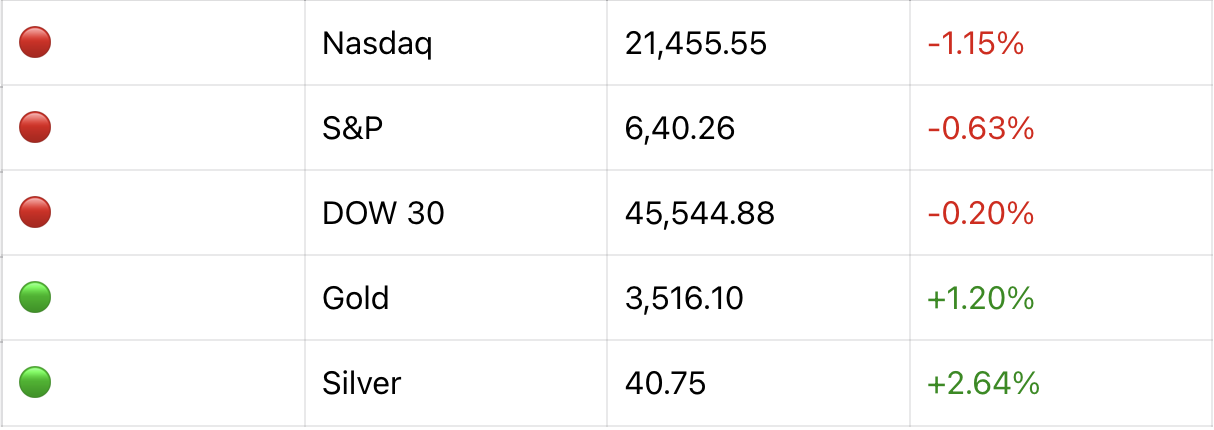
MARKET HEADLINES
📉 Bitcoin, Ethereum, and other major cryptocurrencies fell as doubts over aggressive interest rate cuts weigh on investor confidence despite bullish predictions from Trump allies.
🥤 Celsius stock surged after PepsiCo deepened its investment and handed over Rockstar Energy, expanding a strategic partnership in the energy drink market.
💳 Affirm stock soared after posting strong earnings, record transaction volume, and its first quarter of operating profitability, easing concerns after its Walmart split.
🤖 Nvidia shares slipped despite strong earnings, as investor fears about an AI bubble and missed data-center expectations dampen enthusiasm.
📺 YouTube TV and Fox struck a deal to keep live sports and news streaming, benefiting both platforms in the ongoing fight for streaming dominance.
🇨🇳 Alibaba stock gained after an earnings beat and news of a homegrown AI chip to reduce reliance on Nvidia, even as a price war in China pressures revenue.
💊 Novo Nordisk’s faltering drug demand contributed to Denmark cutting its GDP forecast, highlighting the risks of an economy heavily reliant on one company.
🚜 Caterpillar stock dropped as tariff estimates rose sharply, though Wall Street remains confident in the company’s long-term positioning.
📊 Elastic stock jumped after beating earnings and revenue estimates, boosting guidance, and impressing analysts with broad-based growth.
Wall Street Throws a Party While Inflation Lurks in the Corner
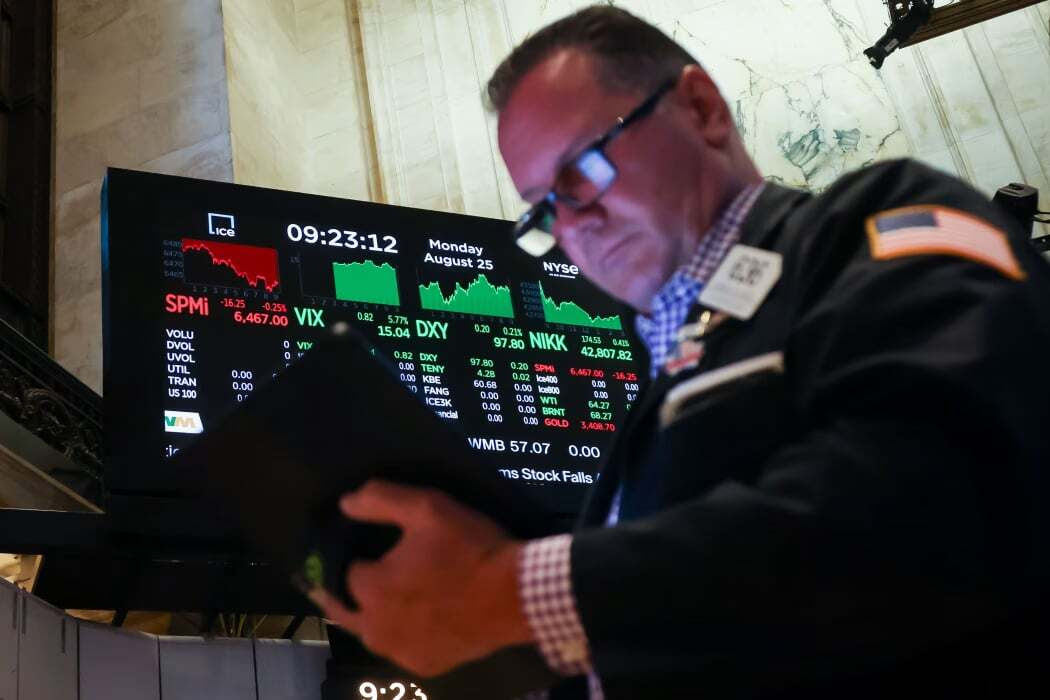
Well, the stock market’s strutting around like it just won the Super Bowl.
The S&P 500 and Dow hit fresh records after the government “revised” GDP growth up to 3.3%—because nothing says “trust us” like bureaucrats going back and changing their homework.
Wall Street’s loving it, even though inflation is still hanging around like an uninvited guest that refuses to leave.
Jerome Powell hinted at cutting rates in September, but if Friday’s inflation numbers come in hot, those hopes might get torched faster than a California forest.
Meanwhile, Nvidia—the golden child of AI—posted big sales but gave a meh forecast, so its stock wobbled a bit.
China’s chipmakers, of all people, are actually cheering because Nvidia’s losing ground over there.
Over in Fed-land, one of Biden’s leftovers, Lisa Cook, is suing Trump to keep her cushy job after he tried to give her the boot—Wall Street basically shrugged like, “meh, seen this movie before.”
Oh, and Snowflake stock skyrocketed, while Hormel got whacked for daring to raise prices on Spam—because apparently Americans have a breaking point when it comes to pricey canned meat.
Wall Street’s partying like it’s 1999, but Main Street’s still stuck footing the bill.
STOCKS 2 WATCH
↗️ Petco Health & Wellness: The pet supply retailer returned to profitability last quarter and lifted its full-year earnings forecast. Its shares surged 19% in premarket trading.
↗️ Affirm: The “buy now, pay later” firm exceeded profit expectations, posting a surprise profit. The stock jumped 15% before the market opened.
↘️ Dell: Despite boosting its full-year outlook on strong AI-related demand, the tech company issued a weaker-than-expected quarterly forecast, sending its shares down around 6% premarket.
↘️ Gap: The apparel retailer now anticipates tariff-related costs to total between $150 million and $175 million this fiscal year—an increase from earlier estimates. While revenue and same-store sales met or slightly improved, the stock dropped 1.8% in early trading.
↘️ Marvell Technology: The chipmaker delivered earnings that aligned with expectations, but a weaker forecast for the current quarter dragged shares down 13% before the bell.
Fact of the Week
The U.S. stock market is so colossal that Apple’s market value alone has, at times, outshined the entire GDP of countries like Canada, Brazil, or Spain—meaning one iPhone-maker on Wall Street has been “richer” on paper than entire nations bustling with millions of people, industries, and resources!
ECONOMY
Bidenomics Still Limping Along, But AI’s Doing the Heavy Lifting

So apparently the economy grew faster last quarter than the pencil-pushers first thought—3.3% instead of 3%.
The Commerce Department went back and “fixed” the numbers (again), and voilà, suddenly we’re $20 billion richer on paper.
A lot of that came from consumers still swiping their credit cards like there’s no tomorrow and businesses piling cash into the AI gold rush.
Basically, Silicon Valley’s server farms are keeping this economy from looking like a flat tire.
Of course, part of the GDP boost came from fewer imports—because companies already stockpiled stuff before Trump’s tariffs hit.
Funny how Trump was supposed to wreck the economy with tariffs, yet here we are… still growing.
Meanwhile, consumer spending on everything from drugs to dinner out was stronger than expected, though it’s moving at a slower clip than in past years.
The jobs picture? Not exactly booming—job growth has slowed to a crawl—but unemployment claims are still low enough for the White House to pat itself on the back.
Truth is, the media will hype this as proof everything’s peachy, but without AI doing the heavy lifting and consumers racking up debt like it’s Monopoly money, this so-called “growth” looks more like a sugar high than real strength.
ECONOMIC HEADLINES
📊 Core PCE inflation came in exactly as expected for July, reinforcing expectations that the Fed will cut interest rates in September amid building political pressure and persistent tariff effects.
📈 Despite political drama, Nvidia concerns, and new tariffs, U.S. stock markets hit record highs as investors stay focused on momentum and softening volatility.
🏦 Fed Governor Christopher Waller strongly endorsed starting rate cuts in September, arguing inflation is tamed and the labor market is weaker than it appears.
📦 New global tariffs on low-cost imports could raise $10 billion annually, targeting narcotics and counterfeit goods while disrupting international shipping.
🏠 Mortgage rates are more influenced by 10-year Treasury yields than Fed rate decisions, limiting the central bank’s immediate power over housing affordability.
⚠️ The stock market’s calm could be misleading, as analysts warn of likely fall volatility driven by AI market shifts, Fed independence questions, and overconfidence.
🇨🇳 Nvidia’s lack of new China sales highlights escalating U.S.-China tensions, raising fears of broader economic fallout and deglobalization.
💰 Trump’s equity grabs in companies like Intel and defense contractors echo a de facto U.S. sovereign wealth fund, despite global evidence most such funds underperform.
📉 Markets are betting on a series of Fed rate cuts—but history shows these expectations often overshoot, setting investors up for potential disappointment.
🛢️ Exxon has quietly held talks about returning to Russia if peace advances, though sanctions and geopolitical risks still pose significant hurdles.
Trivia
What is the primary role of the U.S. Federal Reserve (the Fed)?
A. Printing U.S. currency
B. Setting fiscal policy
C. Regulating international trade
D. Conducting monetary policy
E. Collecting federal taxes
Scroll for the answer
BUSINESS
Tesla’s Back on Top While China’s EV Darling Hits a Speed Bump

Looks like BYD, China’s so-called “Tesla killer,” just hit the brakes—hard.
Their profits plunged nearly 30% last quarter, the first drop in three years, even though revenue technically rose.
Translation: they’re cutting prices to keep cars moving, but the discounts are eating their lunch.
Overseas sales are keeping the lights on, but back home in China, competition’s so fierce you’d think they were giving these things away in cereal boxes.
Meanwhile, Tesla just snatched back the profit crown with $1.39 billion in Q2, leaving BYD eating dust.
Remember when the media cheered because BYD briefly passed Tesla last quarter? Yeah… that didn’t last long.
Tesla’s still struggling in China, but at least they’re not burning cash to keep up appearances.
The “Tesla is finished” crowd might want to pump the brakes—turns out China’s EV juggernaut isn’t invincible after all.
Answer
What is the primary role of the U.S. Federal Reserve (the Fed)?
D. Conducting monetary policy
The Federal Reserve is the central bank of the United States, and its main role is conducting monetary policy to promote stable prices, maximum employment, and moderate long-term interest rates.
It manages the nation’s money supply primarily through interest rate adjustments and open market operations.
While the U.S. Treasury is responsible for printing currency and the Internal Revenue Service (IRS) handles taxes, the Fed’s unique role is ensuring financial stability and controlling inflation by influencing the cost and availability of credit.