
Dear Friend,
It’s a mixed bag of economic news this week: the U.S. services sector is humming along as businesses prepare for Trump’s policies, but inflation jitters are brewing thanks to rising costs and Fed rate cuts.
Meanwhile, Marks & Spencer crushed Christmas sales, only to spook investors with warnings of tough times ahead—turns out, marathon transformations aren’t for the faint of heart.
On the personal finance front, retirement planning tools are using nuclear physics (yes, really) to help you budget smarter, while property taxes are quietly lurking, ready to sabotage your dream home plans if you’re not careful.
And speaking of the future, Blackstone is betting $300M that AI is the new gold rush.
Let’s dive into the details in this week’s Insider Report!
Jeremy Blossom
Editor in Chief, Everlasting Wealth
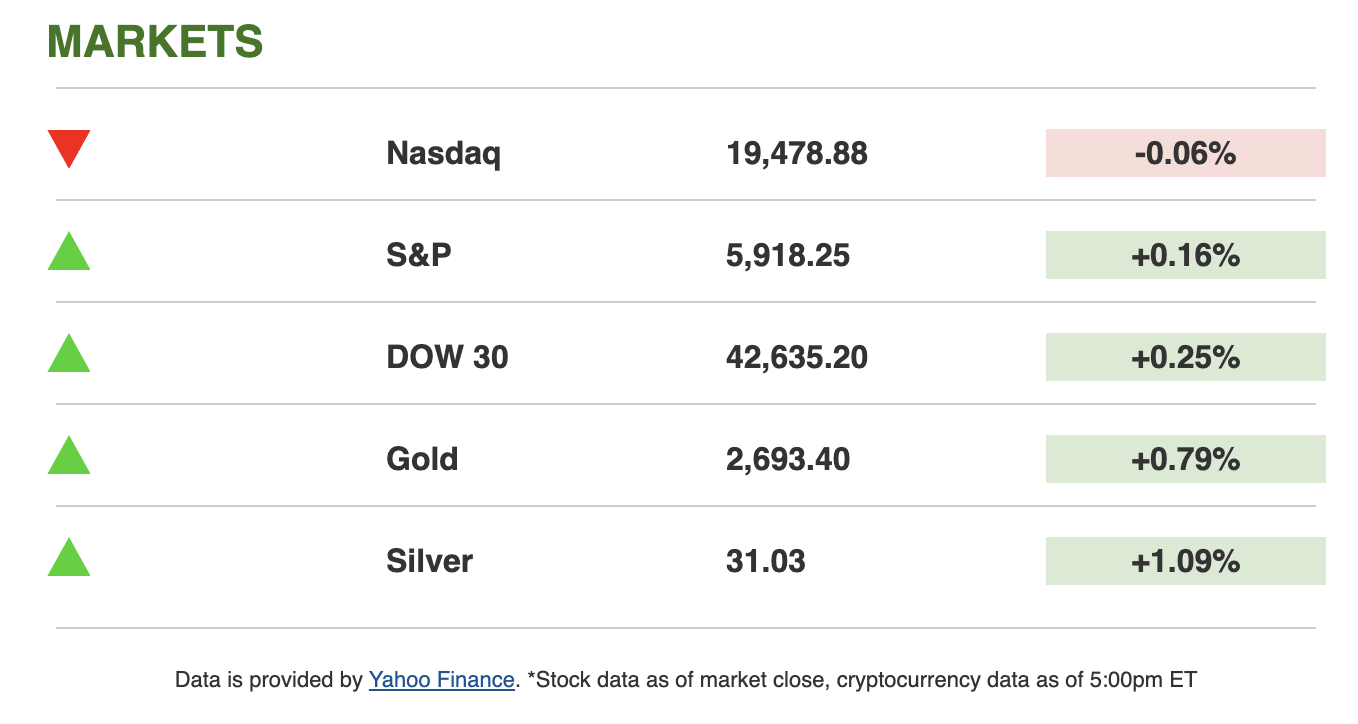
MARKET HEADLINES
📈 Dividends Poised for Strong Growth in 2025: With improving earnings, a low payout ratio, and increasing demand from retirees, dividends across most sectors are forecasted to grow by 7% – 12% this year, particularly in financials, real estate, and technology, making them an appealing component of total returns.
📊 Stocks React to Market and Tech Updates: Nvidia faced a flat day after disappointing CES announcements, while AMD and Tesla saw mixed outcomes, quantum computing stocks tumbled following Jensen Huang’s skepticism, and Vir Biotechnology surged on promising cancer treatment results.
🚀 Momentum Stocks Shine While Dividend Growth Gains Favor: While momentum stocks led in 2024, analysts predict shifting investor interest toward sectors like energy, real estate, and dividend growth stocks, driven by potential deregulation and fiscal policies under the Trump administration.
🇩🇰 Trump’s Tariff Threats Target Denmark: President-elect Trump’s proposed tariffs on Denmark could significantly impact U.S. prices for critical imports like insulin, hearing aids, and wind turbine components, while provoking potential retaliatory measures against U.S. exports of petroleum, aircraft, and chemicals.
🌞 SolarEdge Struggles Amid European Market Weakness: SolarEdge Technologies faces plummeting stock value following Citi’s downgrade and concerns about stagnant market share and high inventory levels in Europe, contrasting sharply with Goldman Sachs’ more optimistic outlook on the company’s recovery potential.
Blackstone Bets Big on AI with $300M Investment in DDN

Blackstone is making waves in the AI world with a $300 million investment in DDN, a California-based data company specializing in storing and analyzing massive datasets for AI training and deployment.
Valued at $5 billion, DDN’s tech powers some of the largest AI infrastructure projects, including Elon Musk’s Colossus supercomputer, which utilizes 200,000 Nvidia chips.
This move aligns with Blackstone’s aggressive play in the AI boom.
The private-equity giant has invested heavily in data centers and AI-supporting firms, including the $16 billion acquisition of AirTrunk and a partnership with Digital Realty to develop $7 billion worth of data centers.
With this latest deal, Blackstone is banking on DDN’s potential to expand its business-customer base and possibly go public in the near future, further cementing its stake in the AI revolution.
STOCKS TO WATCH
↗️ eBay (EBAY): Shares surged 9.9% after Meta Platforms announced plans to let select users browse eBay listings on Facebook Marketplace, following regulatory pressure from the EU.
↗️ Boston Scientific (BSX): The medical-technology company saw its stock rise 4.3% after agreeing to buy the remaining stake in Bolt Medical for $443 million. Additional momentum came from a setback for competitor Johnson & Johnson.
↘️ Edison International (EIX): Shares dropped 10% as Southern California Edison, a subsidiary, faced significant challenges from multiple wildfires near Los Angeles.
🔎 Nvidia (NVDA): After hitting a record high on Monday, the stock experienced volatility. Shares remained mostly flat following CEO Jensen Huang’s keynote, which failed to meet lofty investor expectations.
This Day in the Markets
📈 On this day in 1997, the Dow Jones Industrial Average achieved a new milestone, closing above 6,700 for the first time in history at 6,703.79. This record reflected strong investor optimism during a booming economy driven by advancements in technology, declining unemployment, and corporate profitability. The Dow’s rise marked a key point in the 1990s bull market, which was fueled by innovations such as the internet and the globalization of trade.
STOCK PICK OF THE WEEK
Weiss Research
Thanks to Nvidia’s continued AI dominance and reflecting its growth potential
Bank of America recently made a huge announcement.
Analysts there are raising their price target for Nvidia to $190.
That’s nearly a third higher than its current price, which just reached a record high.
That means that, even though Nvidia has exploded as much as 198% in the last year…
Even though it was the S&P 500’s best performing stock in 2023 with a 239% gain…
And even though it’s shot up 749% since ChatGPT signaled the start of this AI boom at the end of 2022…
We believe Nvidia still has plenty of room to explode and dominate AI even more.
And it’s not the only company that could benefit from the next stage of this AI revolution.
We’re looking at three companies working closely with Nvidia that could now see their own stocks follow a similar path thanks to AI’s continued explosion.
See why this Nvidia boom is just beginning right away.
ECONOMY
Services Sector Surges, but Inflation Looms Under Trump’s Return

The U.S. services sector picked up steam in December, with the ISM services index climbing to 54.1, signaling expansion as businesses prepared for Trump’s inauguration and the Fed delivered another rate cut.
Industries like finance and insurance led the charge, while real estate stumbled, and employment slipped, hinting at a cooling labor market.
Optimism abounds, but tariff jitters and rising input prices stoked inflation fears.
While the Fed’s rate cuts have boosted activity, policymakers are increasingly wary of inflation pressures under the incoming administration, suggesting future cuts might be off the table for now.
For businesses, it’s a mix of cautious optimism and inflation-fueled anxiety heading into 2025.
ECONOMY HEADLINES
💼 Billionaires Shape Trump’s Administration: President-elect Trump’s cabinet, filled with billionaires like Elon Musk and Howard Lutnick, aims to leverage their wealth and industry experience to deregulate and innovate, raising questions about conflicts of interest and the influence of the ultra-rich in shaping public policy.
🍳 Rising Grocery Prices Pinch Americans: Food prices are climbing again, driven by recurring avian flu outbreaks, cattle shortages, natural disasters, and potential tariffs under Trump’s administration, threatening household budgets as supply chains remain strained.
📉 Bank of America Faces $100 Billion Bond Loss Risk: Rising interest rates have expanded Bank of America’s unrealized bond losses to potentially over $111 billion, posing long-term profitability challenges despite assurances that losses will gradually diminish as securities mature.
👮 San Francisco Tightens Security for Healthcare Summit: With heightened police presence and canceled leave, San Francisco braces for potential security risks during a major healthcare conference, following the high-profile killing of a UnitedHealth executive and growing public resentment toward the industry.
🌊 Trump Proposes Renaming Gulf of Mexico: Trump’s plan to rename the Gulf of Mexico as the “Gulf of America” is rooted in nationalist sentiment and faces criticism for undermining historical and international recognition, potentially escalating tensions with Mexico and global naming conventions.
BUSINESS
Marks & Spencer: Strong Sales, But Tax Hikes Take a Bite

Marks & Spencer (M&S) saw its shares nosedive by over 5% after warning of a tough road ahead, despite reporting a strong Christmas season with record-breaking sales of £4.06 billion.
Inflation, tax hikes, and higher national insurance costs are squeezing margins, casting a shadow over its solid performance in food sales, which rose 8.7% last quarter.
The retailer, up 26% over the past year, is now grappling with increased operating costs from U.K. government policies.
While M&S remains confident in its growth plan, calling their transformation a “marathon, not a sprint,” investors appear spooked by the uncertain economic outlook, inflationary pressures, and looming interest rate challenges.
Still, with a robust food division, improving clothing appeal, and a focus on digital innovation, M&S continues to reshape its business for long-term gains—though the market’s patience may be wearing thin.
RETIREMENT
Predicting Your Retirement Future: Will You Get Rich or Go Bust?

Retirement planning tools like Boldin and MaxiFi, powered by Monte Carlo simulations originally developed for nuclear physics, are reshaping how we plan for the future.
These tools calculate hundreds of financial scenarios, accounting for market swings, inflation, taxes, and even Social Security, giving users a glimpse into their potential financial futures.
With a subscription cost of around $100 a year, they help translate 401(k) balances into real-world spending power and show how small changes today can make a big difference tomorrow.
But, as with fortune-telling, user interpretation is key.
Experts warn that misjudging inputs—like future spending or market returns—can lead to overconfidence or panic.
Even so, the tools push us to confront the trade-offs between our present and future selves, helping to make smarter decisions today. While no algorithm guarantees success, with an 83% chance of a stable future (and some luck), these tools might just be the crystal ball you need for retirement peace of mind.
Trivia
Which U.S. economic indicator reflects the average change over time in the selling prices received by domestic producers for their output, serving as a measure of inflation at the wholesale level?
A. Consumer Price Index (CPI)
B. Producer Price Index (PPI)
C. Gross Domestic Product (GDP)
D. Employment Cost Index
E. Retail Sales Report
Scroll for the answer
TAXES
Don’t Overlook Property Taxes in Homeownership Plans

For prospective homeowners, property taxes are a key cost often underestimated when budgeting for a new home.
Typically around 1% of a home’s value annually, these taxes can rise sharply with reassessments or local spending proposals passed during elections.
Buyers may face sticker shock if tax bills jump the year after purchasing, especially in high-growth areas where property values climb quickly.
Incorporating property taxes into your financial plan is just as important as understanding your mortgage payment.
Experts recommend researching local tax rates and assessing potential increases tied to home appreciation or community projects.
For long-term stability, ensure you’re factoring this into your overall tax and budgeting strategy to avoid unpleasant surprises down the road.
Answer
Which U.S. economic indicator reflects the average change over time in the selling prices received by domestic producers for their output, serving as a measure of inflation at the wholesale level?
B. Producer Price Index (PPI)
The Producer Price Index (PPI) measures the average change over time in the selling prices received by domestic producers for their goods and services.
It serves as a key indicator of inflation at the wholesale level, reflecting price changes from the perspective of the seller rather than the consumer.
By analyzing PPI data, economists and policymakers can gain insights into inflationary trends that may eventually impact consumers, as increases in production costs are often passed down the supply chain.
Monitoring the PPI helps in making informed decisions regarding monetary policy and assessing the overall economic health.