Trump rattles trade, gold nears $5,000, volatility builds

Dear Friend,
Wall Street basically shrugged off this week’s wild headlines — tariffs, Greenland drama, and another round of stubborn inflation — with the Dow, S&P, and Nasdaq barely budging even as traders stayed on edge.
The market’s calm facade hides a gold rush into safe havens as bullion hit near record highs and silver broke past $100, while Intel got smacked for mis‑reading AI demand and natural gas decided to go absolutely nuts.
Meanwhile, Trump lit up Davos with his “America First” pitch, preaching tariffs and tax cuts to the global elite, and oil markets are scrambling with big energy names suddenly in the spotlight again.
Keep reading this edition of the Insider Report to get the full story.
Jeremy Blossom
Editor in Chief, Everlasting Wealth
MARKETS
MARKET HEADLINES
🌍 Despite a temporary market rebound after Trump backed off his Greenland threats, global tensions, eroding alliances, and a weakening dollar signal deeper unresolved fractures in U.S. foreign policy and investor confidence.
📉 Markets passed the “TACO” test—Trump Always Chickens Out—as his Greenland drama reversed, but with gold surging and tech earnings looming, more stress may lie ahead.
🇨🇦 Trump’s foreign policy blowup with Canada highlights a broader strategic pattern centered on countering China, tying together military, trade, and technology decisions with geopolitical tension.
🛡️ Booz Allen stock rebounded after an earnings beat and raised guidance, offering hope to investors even as government reform pressures continue to weigh on the defense IT giant.
🏗️ Ukraine is poised to become the decade’s biggest business opportunity, with massive reconstruction spending and Western integration attracting U.S. investment across energy, defense, and tech sectors.
🇩🇰 Denmark’s sale of U.S. Treasuries may be small in scale but big in symbolism, potentially inspiring broader global shifts away from dollar-denominated debt amid rising political strain.
🤖 Amazon is slashing another 14,000 corporate jobs, with CEO Andy Jassy citing AI as a long-term driver of leaner operations and permanent workforce reductions.
🚀 Redwire stock surged on hopes it will win a piece of Trump’s $542 billion “Golden Dome” missile defense project tied to Greenland, as defense spending ramps amid global instability.
💸 The U.S. government took a $2.6 billion hit on Intel stock in a single day, but it’s still up over 100% on its CHIPS Act-fueled stake, with more shares potentially on the way.
🧨 The blockbuster IPO of Europe’s CSG defense firm reflects booming investor confidence in EU military spending, but U.S. defense stocks like Karman remain top growth plays too.
Markets Tread Water While Trump Shakes the Globe
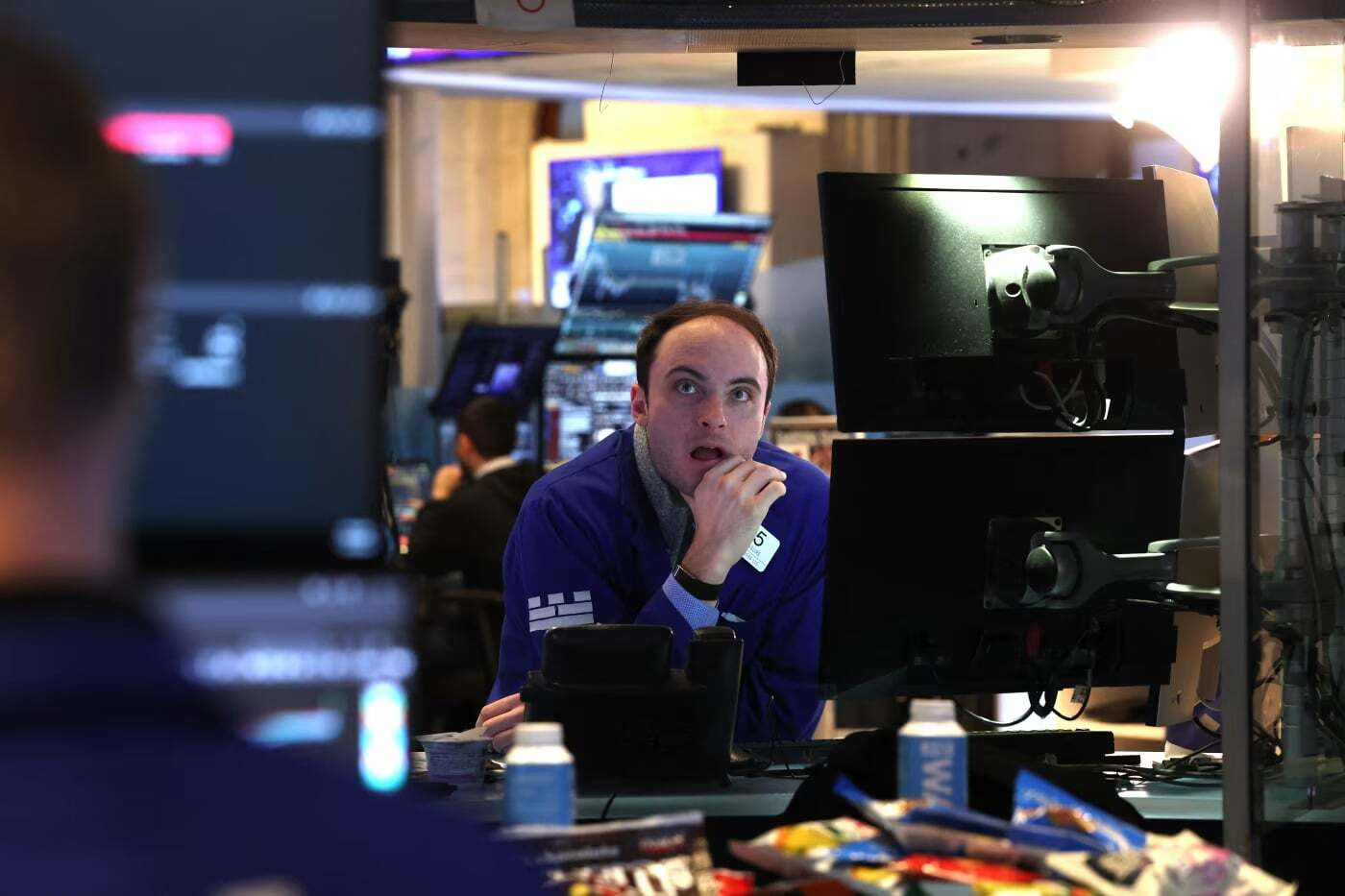
Wall Street basically shrugged this week—even after Trump tossed out trade war threats (again), tried to buy Greenland (again), and inflation kept marching on.
The Dow, S&P, and Nasdaq all finished flat-ish, even though things felt anything but calm.
The big takeaway?
Consumers are still spending like it’s 1999, thanks to the “wealth effect” of record-high portfolios, and the economy’s still clocking 4.4% growth.
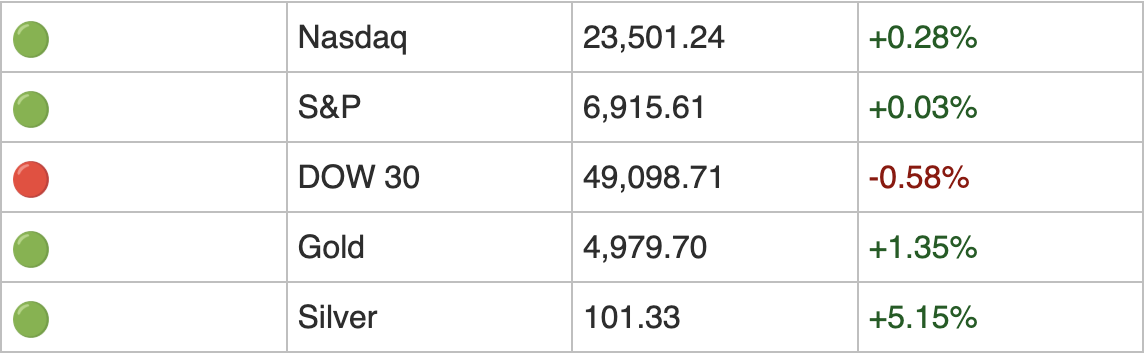
But here’s the kicker: gold shot up to nearly $5,000 an ounce and silver broke $100, as investors noped out of fiat currency and long-term Treasurys.
Intel tanked after totally misjudging AI demand (good luck with that), and natural gas prices went full beast mode—up 70% in a week.
Meanwhile, Trump’s Venezuela oil reboot is causing chaos and opportunity: Exxon’s out, but the drillers and wildcatters are loving it.
Halliburton and friends are soaring, and SLB basically said: “We’re ready to make Venezuela great again.”
All in all? The markets are holding steady—but buckle up, because nothing about this ride is normal.
STOCKS 2 WATCH
↘️ Intel: Shares plunged over 12% in premarket trading after the chipmaker posted a wider-than-expected loss and warned of further losses ahead, citing underestimation of AI data center demand.
🔎 Clorox: The consumer goods company confirmed its full-year forecast and announced a $2.25 billion acquisition of Gojo Industries, the maker of Purell.
↗️ Ericsson: The Swedish telecom equipment firm jumped 9% after boosting its dividend and unveiling a $1.7 billion stock buyback initiative.
↘️ Capital One Financial: The stock dropped nearly 5% in after-hours trading following news that the company plans to acquire fintech startup Brex for $5.15 billion in cash and stock, according to The Wall Street Journal.
🔎 Alcoa: The aluminum producer beat earnings expectations last quarter, as higher metal prices helped counterbalance the impact of tariffs on Canadian imports.
↗️ CSX: Despite falling short on revenue and profit forecasts, the railroad company’s optimistic outlook for 2025 helped lift shares 3% in premarket trading.
🔎 JPMorgan Chase: CEO Jamie Dimon earned $43 million for 2025 as the bank’s shares reached record highs, marking his 20th year leading the financial powerhouse.
Fact of the Week
In the U.S., “popcorn” is basically a market micro-drama—because when investors get nervous, they often rush into super-safe Treasury bills and money-market funds, and that flight-to-safety can quietly tighten cash for riskier bets like startups and smaller stocks, showing how Wall Street’s mood can ripple all the way from government debt to the next big business idea.
ECONOMY
Trump to Davos: Tariffs, Cheap Gas, and No More Wall Street Landlords
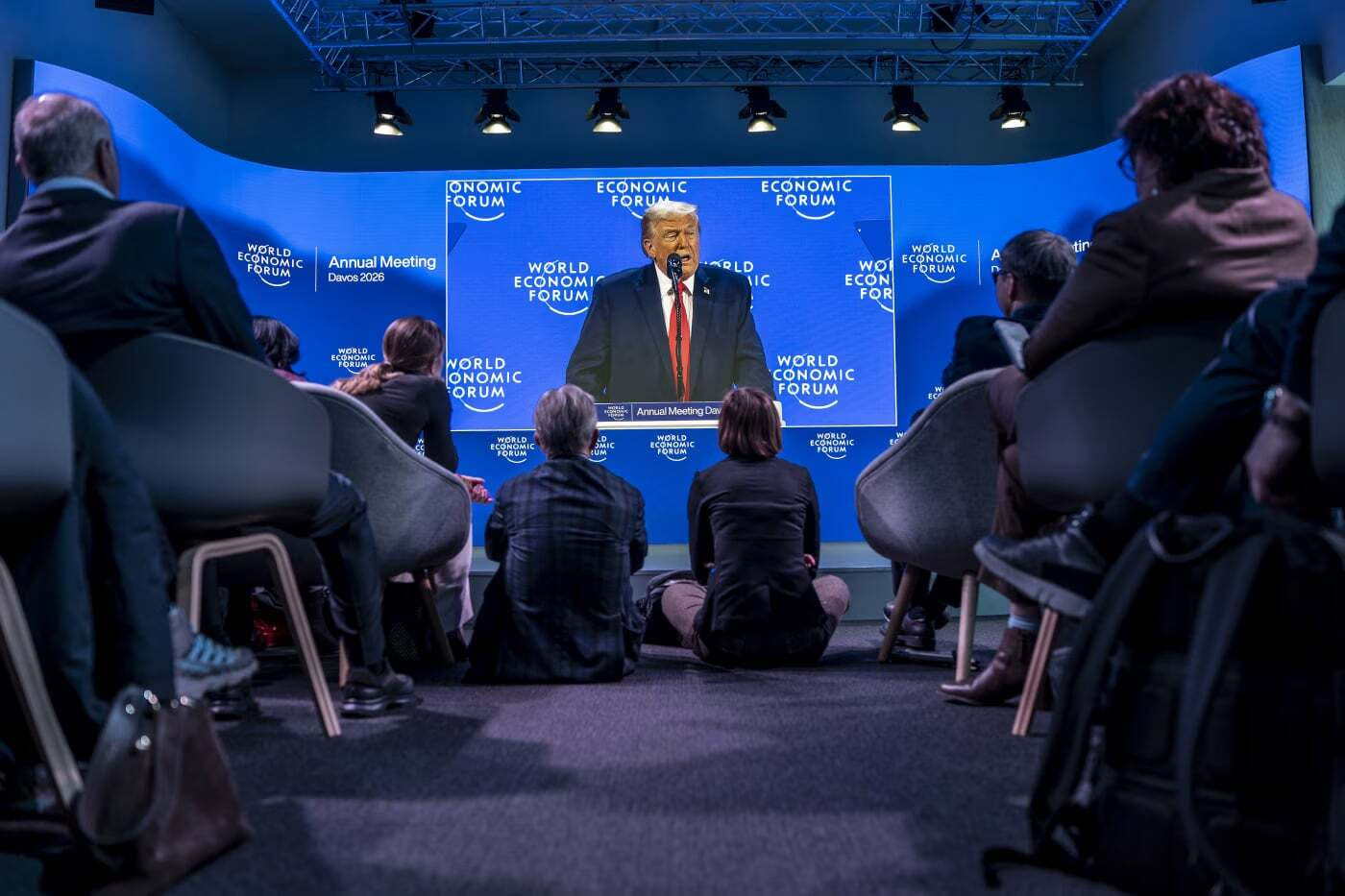
President Trump lit up Davos this week, laying out how his America First agenda is firing on all cylinders.
He reminded the global elite that his tariffs are working—the trade deficit has dropped like a rock, and factories are finally coming back (despite what the Fed bean counters want to say).
He doubled down on tax cuts, permanent bonus depreciation, and tip income breaks—because yes, working Americans deserve a win for once.
He also called out Wall Street for treating homes like Monopoly pieces and pushed to ban big firms from snatching up single-family homes.
Gas prices? Down.
Credit card rates? He’s pushing to cap ‘em at 10%.
And while the left worships windmills made in China, Trump’s going full steam ahead on nuclear to keep our grid strong and prices low.
Oh, and drug prices? He’s demanding they come down 90%—finally putting Americans ahead of Big Pharma.
Trump went to Davos and reminded the world who’s boss.
Economic Headlines
💰 Bigger tax refunds in 2026—thanks to Trump’s One Big Beautiful Bill—are set to boost consumer spending, especially at mid- and high-end retailers like Tapestry, Costco, and TJX.
❄️ Winter Storm Fern is expected to blanket much of the U.S. in snow and ice, disrupting air travel, deliveries, and utilities as businesses scramble to respond.
🌍 Trump’s Greenland gambit is accelerating a shift toward a multipolar world, pushing allies to rethink U.S. dependence and investors to diversify away from America-centric portfolios.
🏦 The Fed’s quiet expansion of its balance sheet may not be called QE, but it’s inflating asset prices, benefiting the wealthy and raising risks of deeper inequality and inflation.
🦅 Trump’s aggressive domestic and foreign agenda—dubbed “Big America”—is reshaping global diplomacy, markets, and the role of government with an unprecedented executive push.
📈 New 2025 tax deductions for seniors, overtime, tips, and car loans are set to deliver $300–$1,000 more in refunds for millions, supercharging consumer wallets this tax season.
🇺🇸 The U.S. didn’t lose to globalization—it reinvented it by exporting firms, not just goods, building a powerful global network that continues to anchor American economic strength.
📉 With Big Tech earnings looming and markets wobbling, investors are looking for clarity amid rising rates, geopolitical jitters, and fears the AI-fueled rally may have gone too far.
🎭 Trump’s Greenland reversal may seem like another “TACO” moment, but analysts say he’s more TATER—taking extreme risks until just before the damage becomes irreversible.
📲 TikTok will continue operating in the U.S. under a new Oracle-led joint venture, ending years of uncertainty with a data-focused deal backed by Trump’s executive orders.
Trivia
Which “boring” economic indicator can quietly rattle U.S. markets because it’s one of the fastest signals of whether consumers are pulling back—often showing stress before earnings reports and GDP do?
A. The Producer Price Index (PPI)
B. Weekly initial jobless claims
C. The Beige Book)
D. The ISM Services PMI
E. U.S. retail sales
Scroll for the answer
BUSINESS
Intel Stumbles on AI Surge, Stock Tanks 17% After Earnings Miss
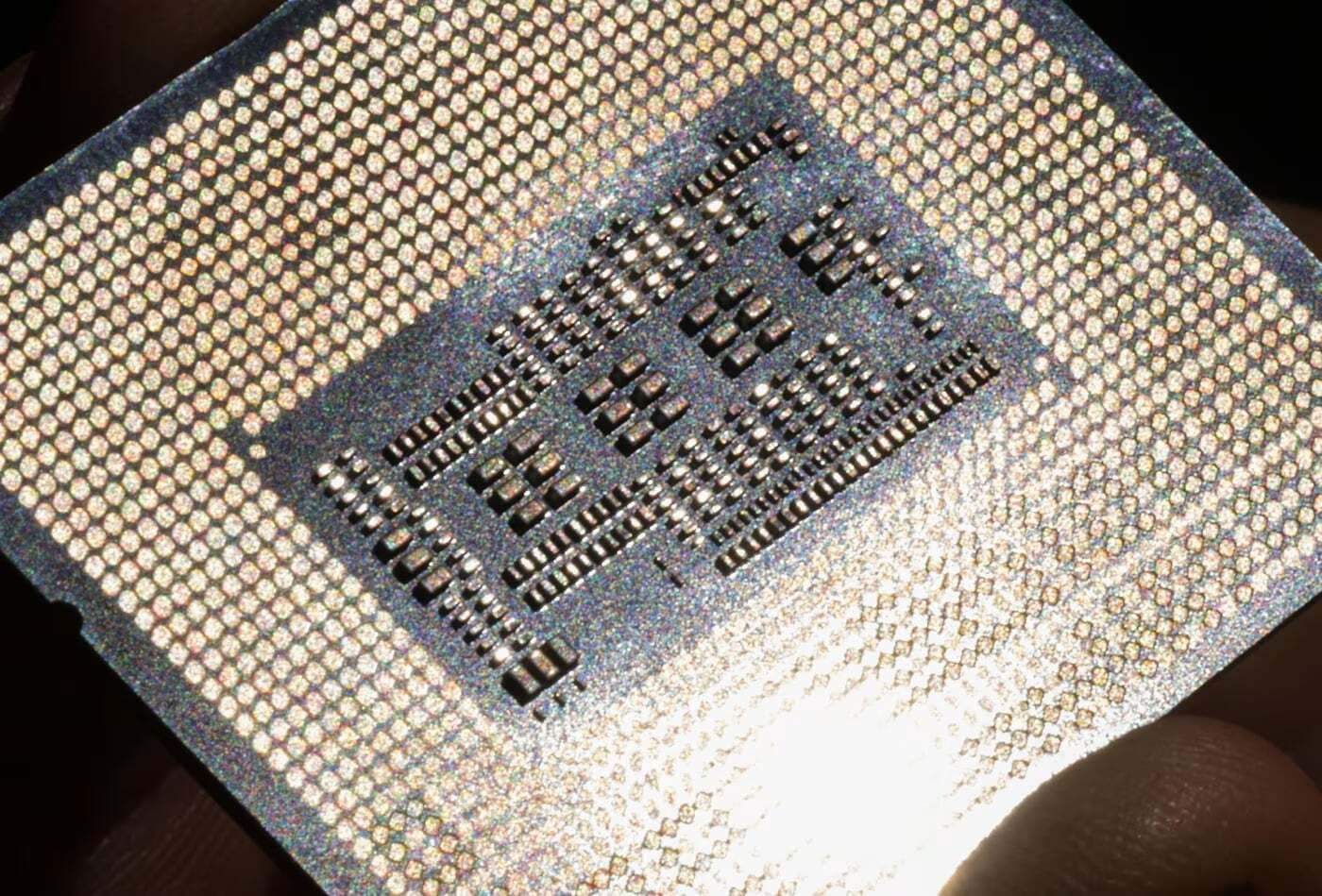
Intel just got steamrolled by the very AI demand it was counting on.
The chipmaker posted a $333 million Q4 loss and warned of more red ink ahead, blaming inventory shortages and a failure to anticipate soaring demand from AI data centers.
Investors were not impressed—Intel shares plunged 17%, their worst drop in 18 months.
Despite a 130% stock run-up over the past six months on AI hype and hopes for its foundry business, Intel admitted it still hasn’t secured a major customer for that division, which lost $10 billion last year.
Its next-gen Panther Lake chips are out now—but it’s a waiting game to see if customers actually bite.
Meanwhile, AMD is circling like a shark, gaining market share and stock price.
CEO Lip-Bu Tan summed it up: “We are on a multiyear journey.
It will take time and resolve.” Translation: buckle up.
Answer
Which “boring” economic indicator can quietly rattle U.S. markets because it’s one of the fastest signals of whether consumers are pulling back—often showing stress before earnings reports and GDP do?
B. Weekly initial jobless claims
Weekly initial jobless claims come out far more frequently than most major data releases and give markets a near-real-time pulse on labor-market cooling or layoffs, which matters hugely for consumer spending power, recession risk, Federal Reserve expectations, and therefore everything from stock valuations to bond yields and the U.S. dollar.