Wall Street’s volatility spikes despite Nvidia’s strong earnings

Dear Friend,
Nvidia just dropped blowout earnings—and Wall Street responded with a panic attack. The Nasdaq plunged over 1,000 points, Bitcoin got body-slammed, and the S&P swung like a toddler on espresso.
Meanwhile, we finally got job numbers after a seven-week government nap, and Toyota’s out here showing the EV crowd how grownups build cars that actually work.
Keep reading this edition of the Everlasting Wealth Insider Report to find out who’s thriving, who’s flailing, and whether this sleigh ride ends with a rally—or a wreck.
Jeremy Blossom
Editor in Chief, Everlasting Wealth
MARKETS
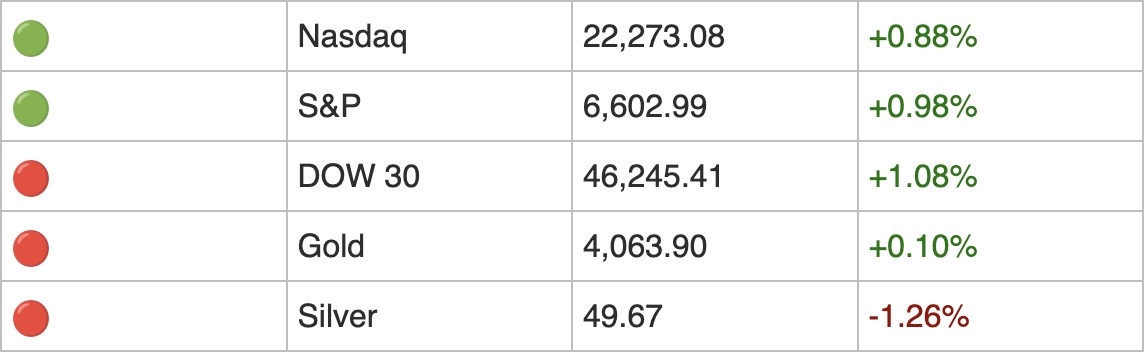
MARKET HEADLINES
🧠 Markets are no longer looking to Nvidia to guide the AI trade, as investor anxiety over unsustainable spending, interest rates, and economic uncertainty overshadows even the strongest earnings.
🧵 Gap stock jumped after beating earnings estimates and lifting its full-year outlook, with strong sales across brands positioning it for a solid holiday season.
📉 Despite raising guidance and delivering strong earnings, Veeva Systems’ stock dropped after revealing it secured fewer top pharma clients for its new CRM than expected.
🚗 Retail investors took a hit as Tesla and Nvidia shares sank during a broader AI-driven market pullback, highlighting the risks of chasing high-growth tech stocks.
🌐 GE Healthcare’s $2.3 billion acquisition of Intelerad boosts its SaaS push and growth outlook, though short-term earnings dilution is expected.
🏠 A legal battle between Compass and Zillow over listing policies could reshape home sales in the U.S., with major implications for brokers, consumers, and the housing market.
💸 Bitcoin and other cryptos suffered their steepest weekly losses in years, as rising rate fears and investor risk aversion triggered a selloff spiral.
🛢️ Despite global oversupply, oil prices remain resilient as China’s vast storage capacity and improved transparency help absorb shocks and reduce volatility in the market.
🧳 Walmart outperformed expectations as cost-conscious shoppers drove growth, with its low-price strategy drawing even higher-income consumers amid economic uncertainty.
📊 Value investor Bill Nygren remains unfazed by volatility, favoring overlooked stocks like GM and Capital One that trade at attractive valuations.
Wall Street Wobbles: Strong Earnings, Weak Nerves as Tech Selloff Spurs Correction Fears
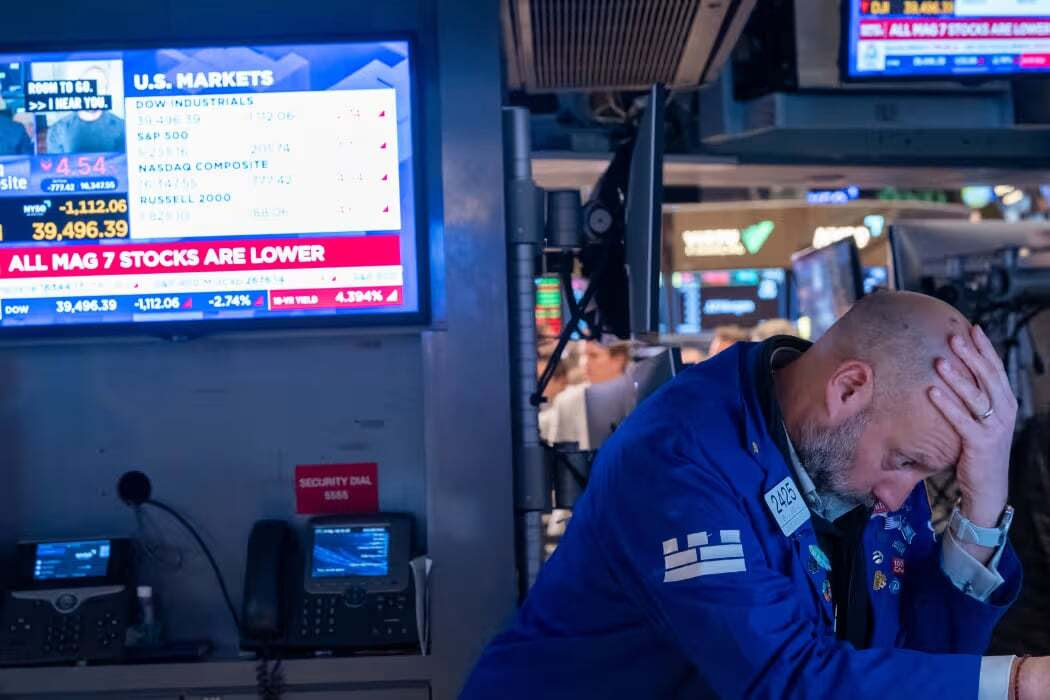
You’d think a blowout earnings report from Nvidia would send markets to the moon — but instead, the S&P 500 just logged its biggest intraday swing since April and is now halfway to correction territory.
Apparently, even good news isn’t good enough anymore.
Nvidia crushed it, sure, but investors saw dollar signs burning as the AI race heats up — and they’re not loving the reckless spending vibes coming from Big Tech.
The Nasdaq plunged over 1,000 points in a single day, the VIX volatility index hit its highest level since April, and Bitcoin collapsed again, down 34% from its October peak.
Margin calls from crypto losses are forcing investors to dump tech stocks to raise cash.
Add in the Fed delaying rate cuts, and it’s no surprise Wall Street’s having a nervous breakdown.
We might still get a Santa Claus rally — December is usually a good month for stocks — but right now, this market feels more like sleigh bells and whiplash.
Investors are jittery, and even a trillion-dollar holiday shopping season may not be enough to stop the sell-off if sentiment doesn’t rebound fast.
STOCKS 2 WATCH
↗️ Gap: Shares climbed nearly 4% in premarket trading after the apparel giant lifted its annual outlook, driven by positive same-store sales across its key brands—Old Navy, Gap, and Banana Republic.
↗️ Ross Stores: The discount chain saw a nearly 3% boost in offhours trading after posting better-than-expected results and raising its full-year forecast, despite a 5-cent-per-share earnings hit from tariffs.
↗️ Intuit: The fintech firm advanced 3.5% in early trading as quarterly results came in ahead of estimates, fueled by rising AI-driven demand from mid-sized businesses.
🔍 JPMorgan Chase, Bank of America, Citigroup: A $20 billion bailout plan for Argentina has been dropped by major U.S. banks in favor of a smaller, short-term loan deal. Meanwhile, Citigroup announced a new CFO and a restructuring of its U.S. personal banking unit.
🔍 Warner Bros. Discovery: Multiple media giants have reportedly made nonbinding offers. Paramount is aiming to acquire the full company, while Netflix and Comcast are interested in Warner’s studios, HBO, and HBO Max.
Fact of the Week
Despite owing the world more than it owns (a negative net international investment position), the U.S. still pockets a surplus of investment income because Americans hold riskier, higher-return foreign assets (equities/FDI) while foreigners park in safer, lower-yield Treasuries and deposits—so Wall Street effectively “borrows cheap, invests dear,” and those cash flows quietly help finance the perennial trade deficit.
ECONOMY
Jobs Up, Clarity Down: Fed’s Crystal Ball Still Fogged Up

After a seven-week government vacation—I mean “shutdown”—we finally got September’s job numbers, and surprise! Turns out 119,000 jobs were added, way more than the 50,000 the experts (who are wrong as usual) predicted.
Of course, the unemployment rate also crept up to 4.4%, which is now the highest since 2021—so congrats to Bidenomics for hitting both the gas and the brakes at the same time.
The Fed now gets to make its December decision on interest rates using data that’s about as fresh as gas station sushi.
Meanwhile, some job sectors like healthcare and leisure are still hiring, while industries that actually move goods—like transportation—are shedding jobs.
But hey, native-born workers are finally getting a leg up while foreign-born employment dipped… so at least someone is doing border enforcement.
Investors are still sweating about a potential AI bubble, while everyday folks are tightening their belts and skipping Home Depot runs.
And now we all get to watch the Fed try to interpret ancient job stats like they’re deciphering the Dead Sea Scrolls.
Economic Headlines
🏠 Trump and NYC Mayor-elect Mamdani are clashing over affordability, with both vying for credit on cost-of-living relief as economic pressure mounts and populist policies gain traction.
📉 A volatile stock market is deepening inequality, as wealthier Americans benefit from asset growth while lower-income households struggle with inflation and a weakening job market.
🏦 Fed Governor Lisa Cook warns that private crnds, esedit fupecially business development companies, may pose hidden risks and deserve greater regulatory scrutiny.
🏡 U.S. home sales rose modestly in October amid falling mortgage rates, but economists say it’s too soon to declare a housing market recovery.
💬 Nvidia’s CEO calmed fears of an AI bubble with bold growth projections, sparking a market rebound and restoring faith in the broader AI investment boom.
📊 Fed minutes show policymakers split between holding or cutting rates in December, as they balance sticky inflation with signs of labor market weakness.
🌍 Trump’s pro-crypto policies and stablecoin regulation aim to cement U.S. dominance in global digital finance, but foreign markets may bristle at American oversight.
📉 Trump Media’s plummeting stock has erased over $5 billion in Trump family wealth, as its massive crypto bet turns sour amid falling Bitcoin prices.
⚖️ A federal judge ruled Meta doesn’t have to sell Instagram or WhatsApp, saying rapid tech evolution undercuts the FTC’s monopoly argument.
📆 Markets are on edge as Nvidia earnings, Fed minutes, and jobs data converge, with investors hoping for clarity amid rising volatility and fading rate-cut hopes.
Trivia
Which quick-and-dirty proxy do investors often use for the U.S. equity risk premium?
A. S&P 500 dividend yield
B. S&P 500 earnings yield minus the 10-year Treasury yield
C. Price-to-book ratio minus CPI
D. Fed funds rate minus core PCE
E. Shiller CAPE ratio
Scroll for the answer
BUSINESS
Toyota Goes Hybrid—Because Someone’s Got to Build Cars That Actually Work
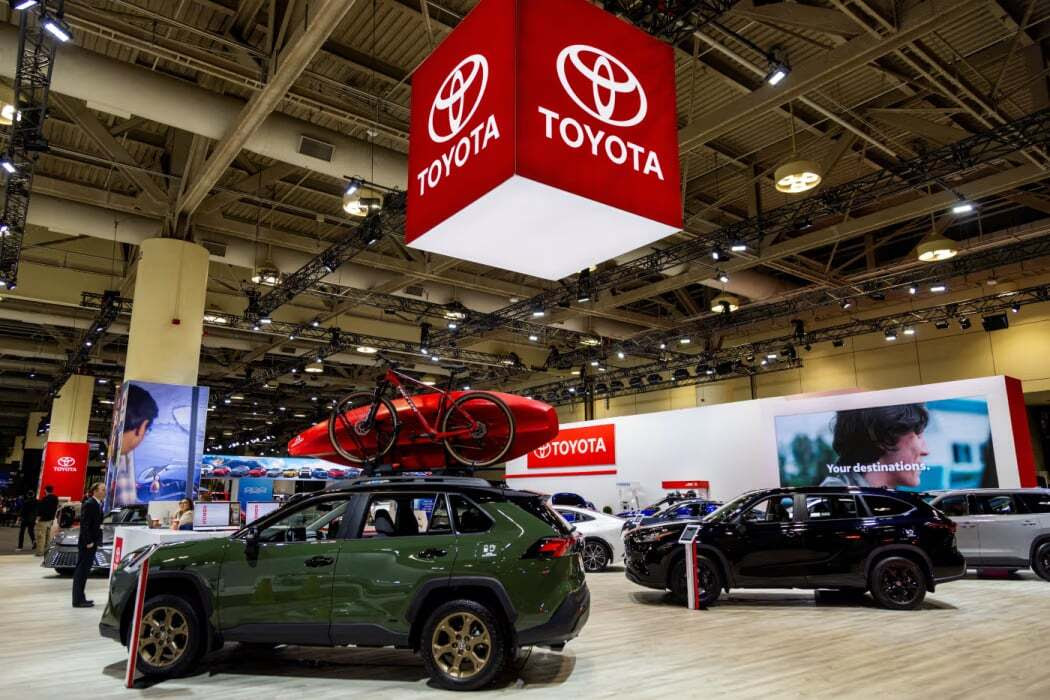
Well look who’s leading the pack with some actual common sense—Toyota just dropped nearly a billion bucks to ramp up hybrid production here in the U.S.
They’re spreading the love across five states (including some good ol’ red ones like Kentucky and West Virginia), and even bringing Corolla hybrid production stateside for the first time.
That’s 252 new jobs, and not a single one of them requires a gender studies degree—imagine that!
While the Biden admin keeps pushing EVs that need a tow truck and a charger every 40 miles, Toyota is betting on hybrids—because apparently, they understand Americans want cars that don’t die in a snowstorm.
With half their U.S. sales now hybrids or EVs, they’re blowing the rest of the industry out of the water.
Oh, and they’re building a $14 billion battery plant in North Carolina too, so yeah—Toyota’s playing chess while the rest of the green energy clowns are playing Hungry Hungry Hippos.
Answer
Which quick-and-dirty proxy do investors often use for the U.S. equity risk premium?
B. S&P 500 earnings yield minus the 10-year Treasury yield
This “yield gap” (E/P − 10y) approximates how much extra return equities might offer over long Treasuries, though it’s an imprecise gauge because reported earnings are cyclical and the 10-year rate includes term and liquidity premia. /