Delayed data and weak signals keep traders on edge

Dear Friend,
The stock market’s doing its best impression of a government committee—lots of noise, no actual movement.
The “Santa Claus rally” is still MIA, tech stocks are pouting, and economic data is about as clear as a White House press briefing.
Meanwhile, Wall Street’s finally realizing that maybe, just maybe, the economy isn’t as “booming” as they’d like you to believe.
Oh, and FedEx actually turned a profit—proving at least someone in 2025 knows how to run a business.
Keep reading this edition of the Insider Report for all the latest chaos (and maybe a glimmer of hope).
Jeremy Blossom
Editor in Chief, Everlasting Wealth
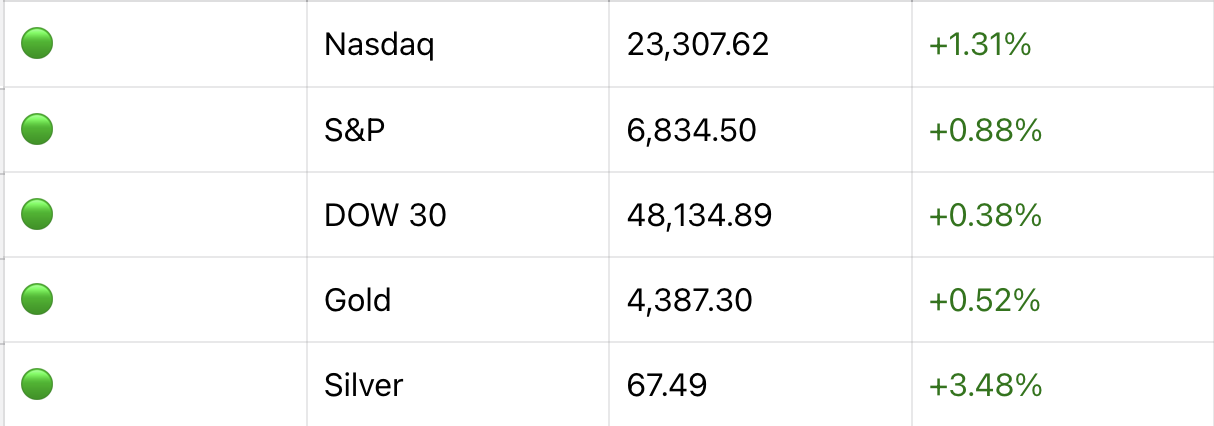
MARKET HEADLINES
🚀 Elon Musk regained a $138 billion stock-option package after a Delaware Supreme Court ruling, boosting his net worth to about $640 billion and keeping alive the possibility he could become a trillionaire if future Tesla and SpaceX milestones hit.
📊 Despite nonstop short-term noise, the stock market’s real focus should be on the “lucky 13,” as analysts expect 13% earnings growth in 2026 to drive further S&P 500 gains even without valuation expansion.
📦 FedEx beat earnings expectations thanks to cost cuts and higher U.S. shipment volumes, though cautious forward guidance left investors weighing strong execution against near-term profit pressure.
🧬 BioMarin shares surged after the company agreed to buy Amicus Therapeutics for $4.8 billion, adding two rare-disease drugs that analysts say will immediately strengthen revenue growth.
📉 Technical indicators suggest investors should consider selling into strong market days, as stretched positioning, fading AI momentum, and weakening leadership point to rising downside risk.
☁️ Tencent is accessing Nvidia’s banned Blackwell AI chips indirectly through Japanese cloud data centers, exploiting a loophole in U.S. export controls and drawing scrutiny from lawmakers.
⚡ Infosys stock briefly spiked as much as 56% before paring gains, with analysts unable to identify a clear fundamental reason and suspecting short-covering or forced buy-ins.
🚢 Carnival’s better-than-expected earnings and upbeat 2026 guidance reassured investors, lifting cruise stocks and easing fears about oversupply and weakening demand.
🎲 Prediction markets are blurring the line between investing and gambling, as platforms like Robinhood push sports and event contracts that are growing rapidly but unsettling traditional Wall Street firms.
🌿 Cannabis stocks stayed under pressure after President Trump ordered marijuana reclassified to Schedule III, a move that aids medical use and research but falls short of legalization or major commercial relief.
Wall Street Crosses Fingers for a Santa Rally—Because Apparently That’s a Strategy Now
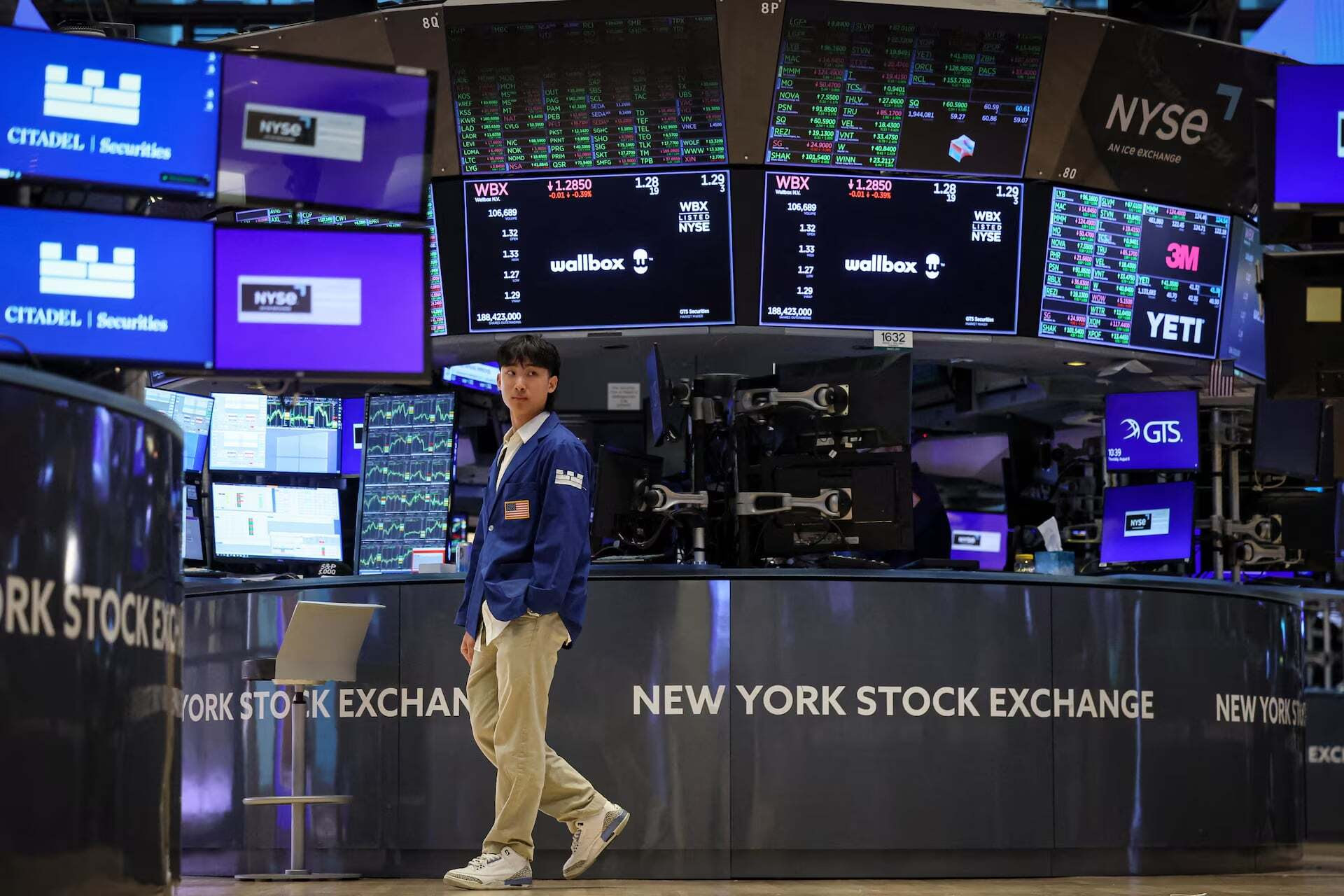
The stock market is basically sitting around doing a whole lot of nothing—kind of like Congress.
The S&P 500 is up 16% for the year, but this week it couldn’t decide if it was coming or going.
Everyone’s waiting on this so-called “Santa Claus rally” to save the day, which sounds about as reliable as Biden remembering where he parked.
Tech stocks had another moody week thanks to AI drama and Oracle playing Scrooge with its spending forecast.
The usual “experts” are scratching their heads because the economic reports came in late—thanks to our ever-efficient government—and surprise, they didn’t clear anything up.
Apparently, inflation might be cooling, but no one trusts the data because it’s from the same folks who can’t pass a budget on time.
Meanwhile, folks are bailing on tech and moving into financials and industrials—aka, real companies that actually produce something.
If Wall Street’s betting on a year-end miracle to hit new highs, they better hope Santa’s a capitalist.
STOCKS 2 WATCH
↗️ Oracle: Shares of the software giant rose 5.5% in premarket trading after it secured a spot in a newly established U.S. joint venture with TikTok’s parent company, ByteDance, alongside a group of fresh investors holding a 50% stake.
↘️ FedEx: Despite reporting quarterly results that exceeded expectations and increasing the lower bound of its annual forecast, the shipping leader’s stock slid about 1.5% before the opening bell, weighed down by market reaction.
↘️ Nike: The global footwear and apparel brand saw a 10% drop in premarket share value after projecting a sales decline for the current quarter. The company also faced margin pressure last quarter due to rising costs linked to tariffs and sluggish demand in China.
↘️ KB Home: The residential builder experienced a 5% after-hours stock decline following weaker earnings and a reduction in home deliveries, impacted by ongoing stagnation in the broader housing market.
Fact of the Week
The U.S. stock market is so big that the S&P 500 (just 500 companies) effectively “pays you” to own everyday life—because its biggest winners often come from boring-but-unstoppable habits like monthly subscriptions, cloud software, groceries, and even credit card swipes—so when Americans keep spending and businesses keep quietly raising productivity, your index fund is basically hitching a ride on the country’s routines as much as its innovation.
ECONOMY
White-Collar Woes: When Even the Cubicle Crowd Starts to Sweat

So now the “college-educated elite” are finally figuring out what the rest of America has known for years—this economy is a mess.
White-collar workers are clinging to their jobs like a cat on a ceiling fan, thanks to layoffs, AI takeover fears, and companies pulling a Houdini on new job postings.
The unemployment rate for the degree-holding crowd is creeping up, and suddenly all those folks who used to brag about “job mobility” are realizing the only thing mobile is their resume into a black hole.
Apparently, sending out applications without a personal connection is like yelling into a void, and even when you do get an interview, it takes months—because nothing says “booming economy” like hiring freezes and triple-duty job descriptions.
CEOs are openly talking about AI replacing half of white-collar workers, but sure, let’s keep pretending everything’s just peachy.
Even government jobs, once the gold standard of “coasting until retirement,” are suddenly shaky.
Welcome to reality, folks—maybe now the laptop class will understand what over-regulation, inflation, and out-of-touch leadership have done to this country.
Economic Headlines
🚀 Trump Media’s pivot into nuclear fusion through its $3 billion merger with TAE Technologies mirrors Kodak’s failed leap into pharma, highlighting both high ambition and high risk.
💊 The White House struck deals with major drugmakers to lower Medicaid prices and boost direct-to-consumer sales, while granting them tariff relief, subtly shifting the healthcare system toward self-pay.
📉 Wage growth is slowing as job creation stalls and long-term unemployment rises, raising concerns about financial strain and declining job mobility for American workers.
🤝 Oracle surged after forming a joint venture with TikTok and ByteDance to oversee U.S. operations, aiming to resolve security concerns and keep the app alive under new ownership rules.
⚠️ Options data and analyst surveys suggest a 10% chance of a 30% stock market crash in 2026, driven by tech bubble fears, Fed uncertainty, and potential overconfidence in bullish forecasts.
🎁 Markets celebrated a cooler inflation report and potential Fed cuts, but overlooked data reliability and global rate divergence, including Japan’s surprise tightening.
💹 The Bank of Japan hiked rates to 0.75%—the highest since 1995—while remaining vague about future policy, weakening the yen and raising risks of global financial volatility.
🏦 Regulators should stop shielding banks from commercial ventures and instead level the playing field with nonbanks by allowing more innovation within the banking sector.
📈 Small-cap stocks are outperforming amid economic optimism and Fed rate cuts, with analysts predicting continued gains due to undervaluation and profit growth potential.
Trivia
Which U.S. rule change is widely credited with helping ignite today’s explosion of passive investing—by allowing broad-market index funds to run more cheaply and efficiently—thereby accelerating the shift of trillions of dollars from stock-picking to “buy the whole market” investing?
A. The Securities Act of 1933 requiring prospectuses for public offerings
B. The Glass–Steagall Act separating commercial and investment banking
C. The 1975 SEC decision to end fixed brokerage commissions (“May Day”)
D. The creation of the Federal Deposit Insurance Corporation (FDIC) in 1933
E. The 1999 repeal of parts of Glass–Steagall via the Gramm–Leach–Bliley Act
Scroll for the answer
BUSINESS
FedEx Delivers the Goods—Literally and Financially
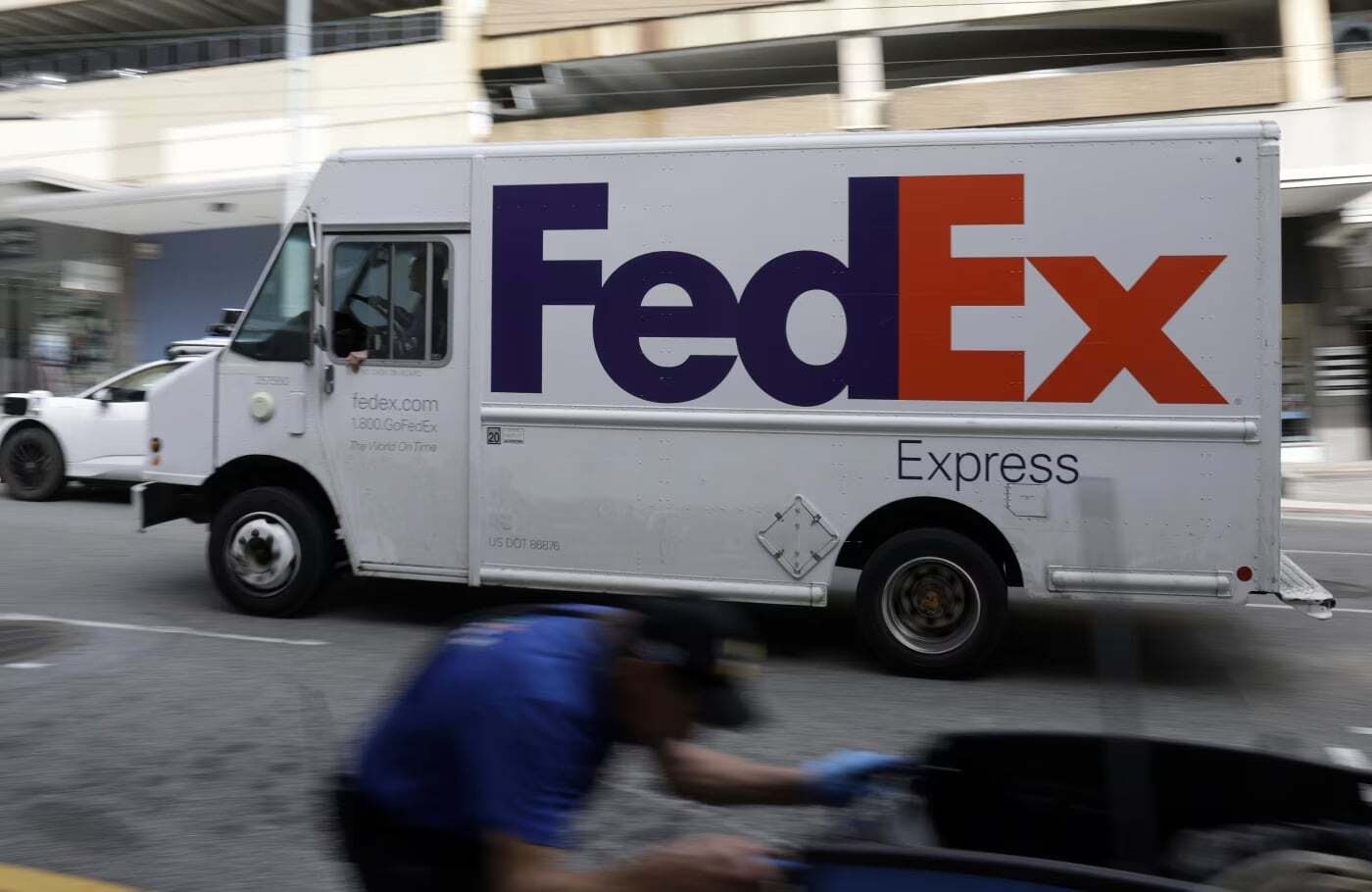
Well look at that—FedEx actually managed to do something right this quarter.
They posted nearly a billion bucks in profit and bumped up the low end of their full-year forecast, which is about as rare these days as a coherent Biden press conference.
Turns out more Americans are shipping packages—probably all those folks fleeing blue states sending their stuff to Texas and Florida.
Their Express business is hauling in the gains, with volume up 6% and yields rising too, because apparently charging more for doing less is still a solid business model.
Even Wall Street analysts were caught off guard, expecting less—so I guess they’re grading on the same curve they use for government economic forecasts.
The Freight division’s still dragging a bit, but they’re blaming it on prepping for a spinoff and paying people actual wages (what a concept).
Either way, it’s nice to see a company still functioning in this economy without begging for a bailout or blaming “climate change” for its delivery delays.
Answer
Which U.S. rule change is widely credited with helping ignite today’s explosion of passive investing—by allowing broad-market index funds to run more cheaply and efficiently—thereby accelerating the shift of trillions of dollars from stock-picking to “buy the whole market” investing?
B. The 1975 SEC decision to end fixed brokerage commissions (“May Day”)
By ending fixed brokerage commissions in 1975 (“May Day”), the SEC triggered intense fee competition that slashed trading and fund-distribution costs—making low-expense, broad diversification via index funds economically viable at scale—and that cost revolution, compounded over decades, is a major reason passive investing became the dominant force reshaping U.S. markets, asset management, and even corporate governance.