Defense, housing, and small caps take the lead

Dear Friend,
Looks like Wall Street just remembered there’s more to life than AI chips and tech unicorns—like tanks, paint, and small businesses that actually make stuff.
The 2026 rally’s kicking off with a bang (literally), thanks to Trump’s $1.5 trillion defense budget and a sudden love affair with homebuilders and mom-and-pop stocks.
Meanwhile, Trump’s taking a flamethrower to Wall Street’s real estate hustle—because apparently families need houses more than hedge funds do.
Keep reading this week’s Insider Report to see why 2026 might be the year the real economy makes its comeback tour.
Jeremy Blossom
Editor in Chief, Everlasting Wealth
MARKETS
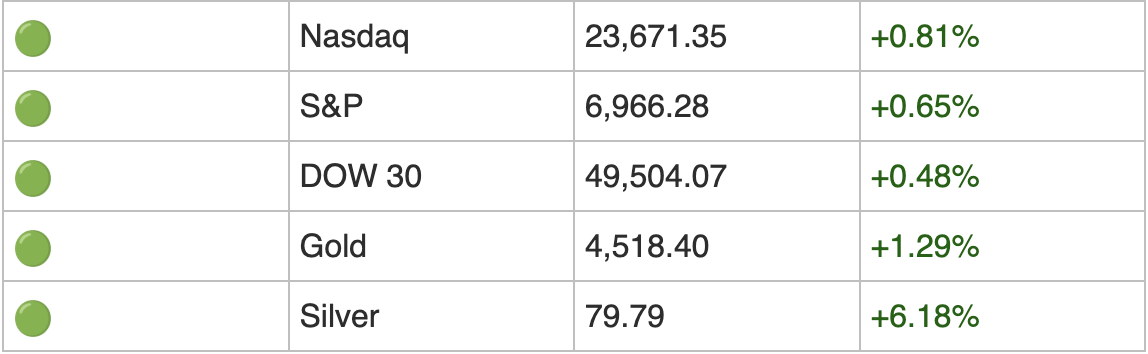
MARKET HEADLINES
📉 Despite strong 2025 returns, both stocks and bonds face headwinds in 2026 as rising long-term yields and inflation may outweigh Fed rate cuts.
🐢 S&P 500 growth is likely to slow in 2026, with modest gains more realistic than bullish forecasts amid inflated earnings expectations and tightening margins.
📱 Qualcomm stock was downgraded due to risks from Apple’s shift to in-house modem chips and a weak smartphone market, potentially putting billions in revenue at risk.
⚛️ Meta has partnered with Oklo and Vistra to power its data centers with nuclear energy, sparking a rally in both companies’ stocks and advancing next-gen reactor development.
💡 Utilities like Entergy and NiSource stand to benefit from $1 trillion in AI-driven infrastructure investments, though dividend yields may suffer as capital shifts to growth.
🔌 Credo stock soared after being named a top AI play for 2026, thanks to its efficient copper-based AEC technology and growing adoption across hyperscalers.
🧑🎨 Adobe stock was downgraded amid intensifying competition in the creative software space, with analysts expecting shares to remain range-bound despite solid AI efforts.
💼 Trump’s executive order pushes defense contractors to prioritize delivery over payouts, with potential CEO pay caps and production-linked incentives now on the table.
🏠 Real estate and homebuilder stocks surged after Trump’s $200 billion mortgage bond plan pushed mortgage rates below 6%, potentially reigniting housing demand.
📊 Despite mixed jobs data and a delayed tariff ruling, markets stayed strong ahead of Q4 earnings season, with analysts forecasting robust corporate profits into 2026.
Trump Boosts Defense and Blue-Collar Stocks While Silicon Valley Takes a Breather

Looks like Wall Street’s finally waking up to the fact there’s more to the economy than AI robots and tech bros in hoodies.
The market’s kicking off 2026 with a “rotation trade,” meaning investors are moving money out of the bloated tech sector and into good old-fashioned companies—like defense, housing, and small business stocks.
Shocking, I know—turns out when Trump announces a $1.5 trillion defense budget, folks see dollar signs in F-35s, not just ChatGPT clones.
Defense stocks soared, even after Trump slapped them for being slow and greedy (he’s not wrong).
Meanwhile, companies like Home Depot and Sherwin-Williams are rallying thanks to pro-housing policies—because apparently helping working Americans is back in style.
The Dow’s nearing 50,000, small-cap stocks just hit a record, and even with the job market cooling a bit, optimism’s in the air.
This rally ain’t just Big Tech’s party anymore—it’s MAGA’s market now.
STOCKS 2 WATCH
↗️ Fast Retailing: The Japanese parent of Uniqlo soared nearly 11% to a record close after posting strong quarterly results and raising its full-year profit outlook, lifting the Nikkei 225.
↘️ LG Electronics: Shares slid 3.4% in Seoul after the company warned it’s heading for its first quarterly operating loss in nearly a decade.
🔎 Johnson & Johnson: The pharma giant joined other drugmakers in agreeing to lower U.S. medication prices, securing an exemption from tariffs imposed under the Trump administration.
↘️ General Motors: The automaker fell 1.4% in after-hours trading following news it would take a $6 billion hit tied to losses in its electric vehicle division.
↗️ Glencore: The mining firm jumped 8% in London after reentering merger talks with Rio Tinto, a move that could lead to the creation of the world’s largest mining company.
Fact of the Week
The first modern credit card launched in the U.S. in 1950 (Diners Club) because someone famously forgot their wallet at dinner, and that tiny “oops” helped spark a whole ecosystem where payments, consumer spending data, rewards programs, and even stock market sectors (banks, fintech, retailers, travel) now move in sync with what Americans swipe every day.
ECONOMY
Trump to Wall Street: Hands Off Our Houses

Trump just lobbed a grenade at Wall Street’s real estate game—he’s moving to ban big investors from gobbling up single-family homes.
His message? “People live in homes, not corporations.” Amen.
These hedge funds have been swooping into neighborhoods with all-cash offers, boxing out working families while turning houses into rental ATMs.
Now they’re whining that this is “anti-free-market”—as if pricing Americans out of homeownership is some noble capitalist cause.
Sure, they only own 2–3% of homes nationwide, but in places like Atlanta or Vegas? They’re hoarding up to 25% of rental stock.
Trump’s move might hit legal roadblocks without Congress, but he’s forcing the issue—and even folks like Elizabeth Warren (gasp) are calling for action.
Naturally, the stock prices of investor-owned landlords tanked—poor things.
About time we put homebuyers ahead of hedge funds.
Let Wall Street cry into their granite countertops.
Economic Headlines
🧪 Clinical labs are urging Congress to delay Medicare payment cuts of up to 15% that could hurt innovation and access to life-saving diagnostics.
📉 Trump posted partial jobs data before its official release, raising concerns about data integrity and potential violations of federal disclosure rules.
🌿 Tilray posted better-than-expected earnings and sees a major boost ahead if marijuana is rescheduled federally, though recent stock gains have faded.
🏦 Trump’s $200 billion mortgage bond plan aims to lower rates toward 5%, but execution speed and further housing policies will determine its impact.
💣 Trump’s $1.5 trillion defense spending plan could trigger inflation and worsen U.S. debt, echoing fiscal mistakes from the Vietnam War era.
⚖️ Prediction markets expect the Supreme Court to strike down Trump’s tariffs, a ruling that could boost retailers but create refund uncertainty.
🚀 Trump’s executive order tying defense contractor pay and capital returns to performance has reshaped winners and losers across the defense sector.
🧸 Goldman Sachs downgraded Mattel due to tariff risks, limited IP growth, and a lack of near-term upside after recent outperformance.
🏠 Trump’s housing agenda hinges on his upcoming Fed chair pick, as mortgage rates—and the market—depend more on monetary policy than mortgage bond buying.
💵 The U.S. dollar extended gains amid jobs data and tariff uncertainty, with markets watching for a Supreme Court ruling that could trigger massive refunds.
Trivia
The VIX—often called Wall Street’s “fear gauge”—is calculated primarily from the prices of what financial instruments?
A. S&P 500 stocks themselves (intraday price swings)
B. U.S. Treasury bond yields (the shape of the yield curve)
C. Options on the S&P 500 index (a strip of out-of-the-money calls and puts)
D. Credit default swaps on major U.S. banks
E. The U.S. dollar index (DXY) futures
Scroll for the answer
BUSINESS
Merck Bets Big on Cancer Goldmine, Eyes $30B Biotech Buy
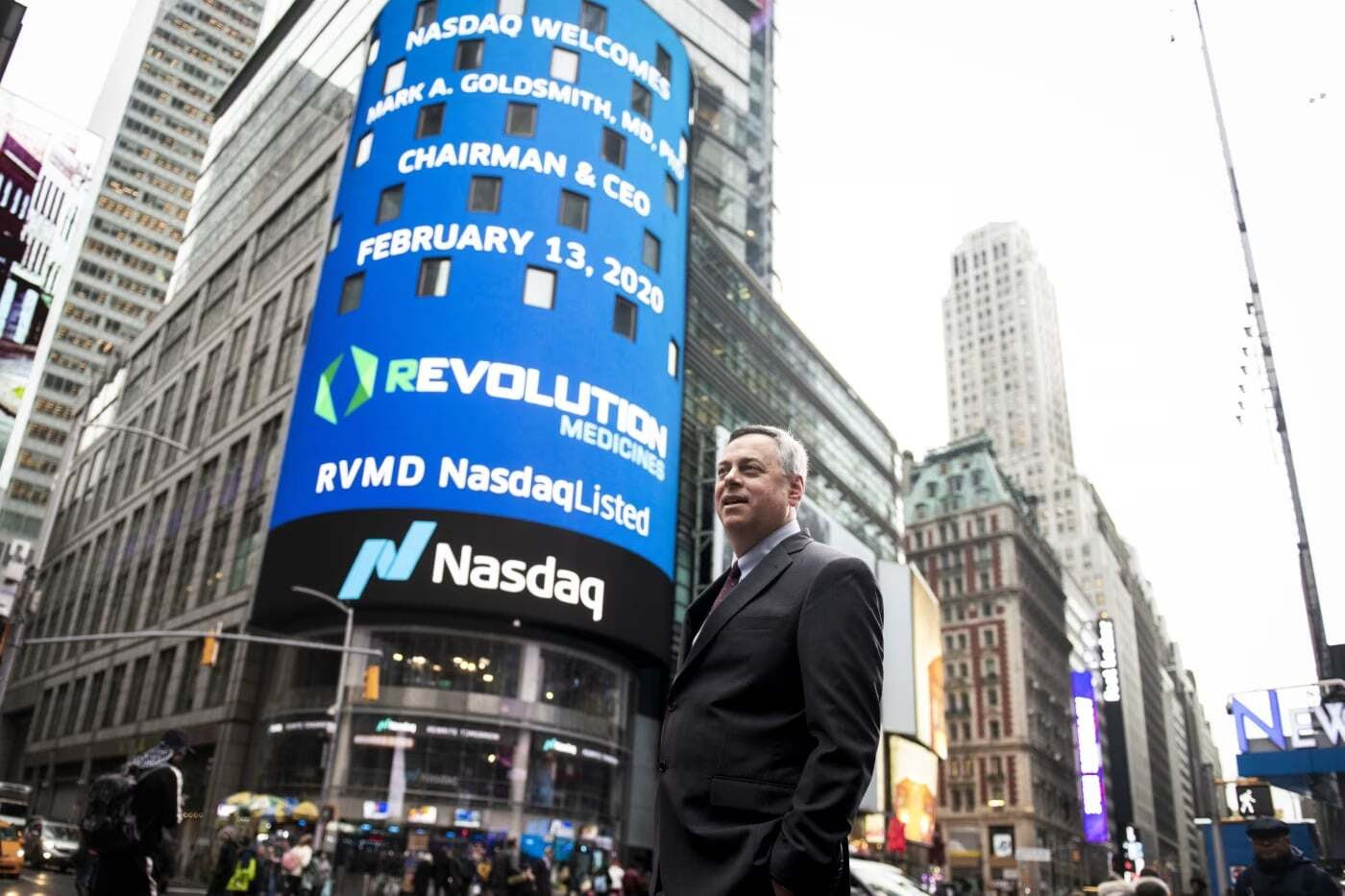
Well, Big Pharma’s back at it—Merck is in talks to buy Revolution Medicines for a cool $30 billion, because apparently $275 billion in market cap just isn’t enough.
Revolution’s working on cancer drugs that target RAS mutations—fancy science talk for “huge money if it works.”
One of their pancreatic cancer treatments alone could rake in $10 billion a year by 2035.
Not bad for a company that was worth $16 billion a week ago.
Merck’s scrambling to fill the hole Keytruda’s going to leave when its patent expires in 2028—because heaven forbid they miss a quarter without a billion-dollar blockbuster.
And don’t forget, cancer meds are the cash cows of healthcare: six-figure price tags and growing like weeds.
The only real risk? Some other pharma giant might try to crash the party.
But hey, if we’re gonna be ruled by drug monopolies, might as well enjoy the stock bump.
Answer
The VIX—often called Wall Street’s “fear gauge”—is calculated primarily from the prices of what financial instruments?
C. Options on the S&P 500 index (a strip of out-of-the-money calls and puts)
The VIX is derived from S&P 500 index option prices—especially a wide range of out-of-the-money calls and puts—because option premiums embed the market’s consensus “insurance cost” against near-term moves, so by translating those premiums into an implied 30-day volatility estimate, the VIX effectively measures how much turbulence traders are pricing into U.S. equities rather than what the market has already done.