
Dear Friend,
Germany’s about to get a taste of Jamie Dimon’s tech-fueled bank takeover—complete with bratwurst, beer, and $450 million worth of American ambition.
But while JPMorgan’s dreams of 80 million German savers are ambitious, let’s just say selfie-based account setups won’t fly with their regulators.
Meanwhile, Planet Fitness is flexing hard, shaking off its $10-a-month days and lifting profits higher than a bench press.
Oh, and if your portfolio still looks like a 60/40 throwback, experts are saying it’s time to level up—maybe with gold, annuities, or just a bit more guts.
Buckle up, because we’ve got all the juicy details in this edition of the Everlasting Wealth Insider Report.
Jeremy Blossom
Editor in Chief, Everlasting Wealth
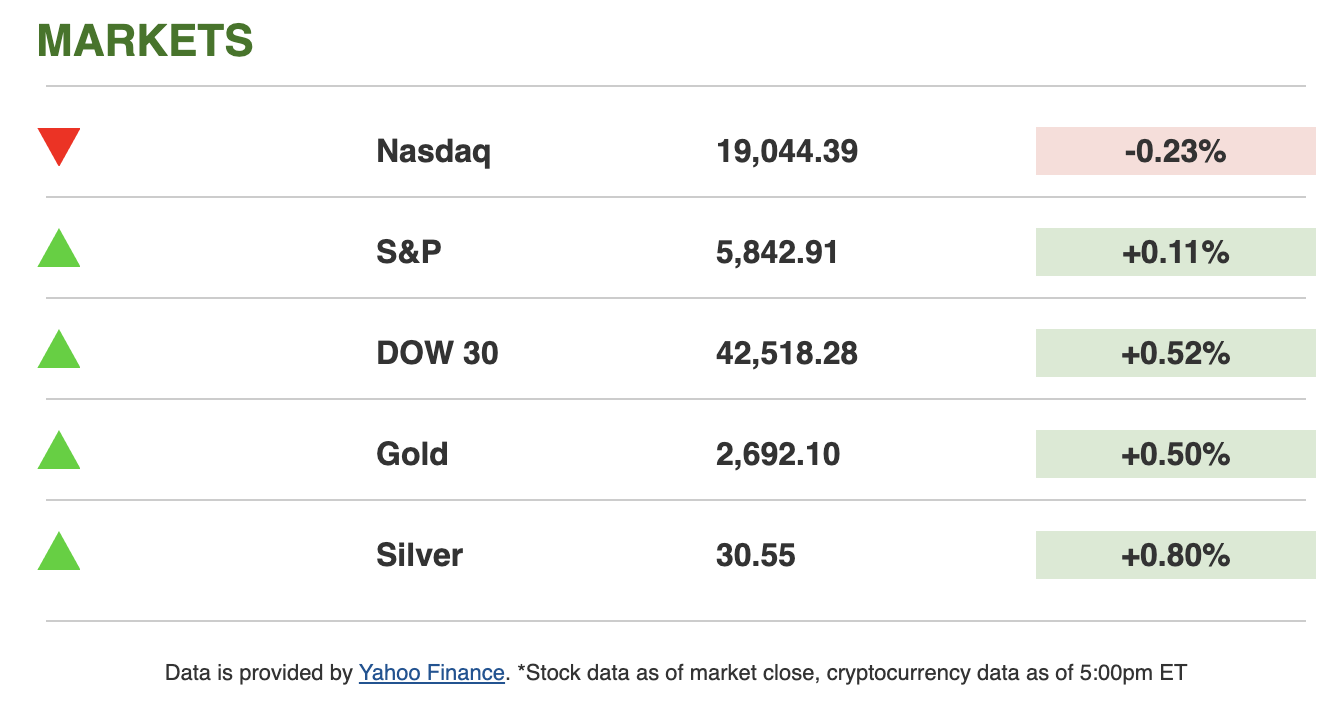
MARKET HEADLINES
🌟 Bitcoin, XRP, and other cryptocurrencies experienced a sharp rise as Trump’s re-election and plans to position the U.S. as a global crypto hub boosted investor optimism despite recent market volatility.
📈 Nvidia rebounded on hopes of policy changes to AI chip export restrictions, Palantir recovered despite bearish analyst forecasts, and KB Home surged on strong earnings driven by improved housing market conditions.
🤖 Nvidia shares climbed as investors bet on potential adjustments to Biden-era AI chip export restrictions under Trump’s administration, while the company faced challenges scaling its advanced Blackwell chip systems.
🏭 U.S. manufacturing stocks are expected to thrive in 2025 as inventory normalization, steady economic growth, and a $1.9 trillion post-Covid construction boom signal a strong industrial rebound.
🏢 Bill Ackman’s Pershing Square proposed a $1 billion merger to privatize Howard Hughes Holdings and transform it into a “modern-day Berkshire Hathaway,” sparking debate over its valuation among minority shareholders.
Jamie Dimon’s European Bank Tour: Will Germany Be the Jackpot or Just Another Pit Stop?

Jamie Dimon’s taking JPMorgan on a European conquest, starting with Germany—a country famous for its bratwurst, beer, and unprofitable banks.
With a $17 billion tech budget, a Berlin WeWork office, and a dream of wooing 80 million savers, Dimon wants to slap the Chase logo on a shiny app and take on Deutsche Bank, fintech startups, and state-backed savings banks that practically specialize in losing money.
JPMorgan already scored big in the U.K. with over two million customers and $25 billion in deposits, but Germany’s strict regulations mean they’ll have to rebuild some systems from scratch—because apparently, selfies and passports aren’t legit there.
At $450 million a year for this “adventure,” some execs are skeptical, but Dimon’s betting his digital empire can crack Europe’s tough banking market.
Nothing like a good old capitalist cage match to keep things interesting!
STOCKS TO WATCH
🔎 Pfizer, Sarepta Therapeutics, 10x Genomics: These companies are presenting at the JPMorgan Healthcare Conference, a major event in the healthcare sector beginning today.
↘️ Nvidia, Tesla, MicroStrategy: Tech giants and speculative assets, like bitcoin-buyer MicroStrategy, faced premarket pressure as climbing bond yields weighed on stock futures.
🔎 Nippon Steel, U.S. Steel: The U.S. government extended the timeline for these companies to abandon their merger plans after President Biden recently blocked the sale of U.S. Steel to the Japanese firm.
↗️ Exxon Mobil, BP, Shell: Shares of major crude producers climbed as rising oil prices were fueled by fresh U.S. sanctions targeting Russia’s energy sector.
This Day in the Markets
📈 On this day in 2020, the Dow Jones Industrial Average achieved a historic milestone by closing above 29,000 for the first time in its history, reaching 29,030.22, as investors reacted positively to progress in U.S.-China trade negotiations and broader economic optimism, signaling confidence in the resilience of the global economy despite ongoing uncertainties.
STOCK PICK OF THE WEEK
Weiss Research
AI Is Coming for Your Wallet—Here’s How to Stop It

Everywhere you turn, all you hear is how great our future is going to be once Artificial Intelligence takes over …
But there’s one thing about AI that nobody is talking about …
A much darker side to this story …
And an imminent threat to our American way of life and our financial future.
Unfortunately, most people will get caught by surprise …
I’m 100% certain millions of Americans won’t know what to do when things start unraveling …
… months, perhaps even weeks from now.
That’s why I recorded this urgent briefing for you …
In it, I explain all the details on what’s happening behind the scenes … and how to protect yourself and your family – including the four steps you must take RIGHT NOW.
ECONOMY
U.S. Tightens the Screws: Ban on Chinese and Russian Tech in Cars

The Biden administration just finalized a ban on Chinese and Russian hardware and software in internet-connected vehicles, citing national security concerns.
Starting with 2030 models, Chinese and Russian-made connectivity systems—like Bluetooth, cellular, and satellite components—are out.
Automated driving software from these nations gets the boot even earlier, with 2027 models.
The Commerce Department didn’t stop there, barring manufacturers tied to China or Russia from selling connected vehicles in the U.S., no matter where they’re made.
This move targets potential risks from systems like GPS trackers and data-transmitting sensors, which officials say pose “unacceptable” security threats.
For now, the rules cover passenger cars, with plans to address commercial vehicles soon.
Looks like the road ahead for Chinese and Russian tech in America just hit a dead end.
ECONOMY HEADLINES
⛽ Oil Price Surge: Rising crude oil prices, with Brent reaching $80 per barrel, could drive higher inflation in early 2025, although increased production and a strong dollar may ease pressures later in the year.
🚨 Hidden Risks: Despite strong GDP growth and fading recession fears, analysts warn that factors like restrictive Trump-era policies, inflation, and stock market overconfidence could disrupt the economy in 2025.
📊 Persistent Inflation: Producer prices are expected to show stubbornly high growth in December, signaling ongoing inflation challenges that may limit Federal Reserve rate cuts in 2025.
📱 TikTok’s Replacement: With TikTok facing a possible U.S. ban, Chinese-owned app RedNote has surged to the top of download charts, though its future remains uncertain under national security scrutiny.
🚗 Tesla’s Trump Factor: Tesla stock surged on optimism about regulatory support under the Trump administration, despite concerns over potential changes to zero-emission credit programs and federal EV incentives.
BUSINESS
Planet Fitness Pumps Up Profits: How a Post-Crisis Makeover is Flexing Its Muscles

Planet Fitness is back in fighting shape after a messy 2023, when it fired its CEO and shares tanked.
The company ditched its famous $10-a-month deal, hiking prices for new members to $15, which analysts called risky.
Turns out, it wasn’t—membership and profits are up, with investors enjoying a 125% stock rebound.
Franchisees are happier too, thanks to relaxed equipment and remodeling demands.
Despite click-to-cancel laws making it easier for members to quit, churn has been manageable, and Planet Fitness is thriving on an asset-light model with steady free cash flow.
With plans to double its U.S. locations to 5,000 and leverage its top-rated fitness app, the chain has muscle to spare.
Who knew a little gym that counts on people bailing on their resolutions could flex so hard?
RETIREMENT
Rethinking Retirement: Is the 60/40 Portfolio Outdated?
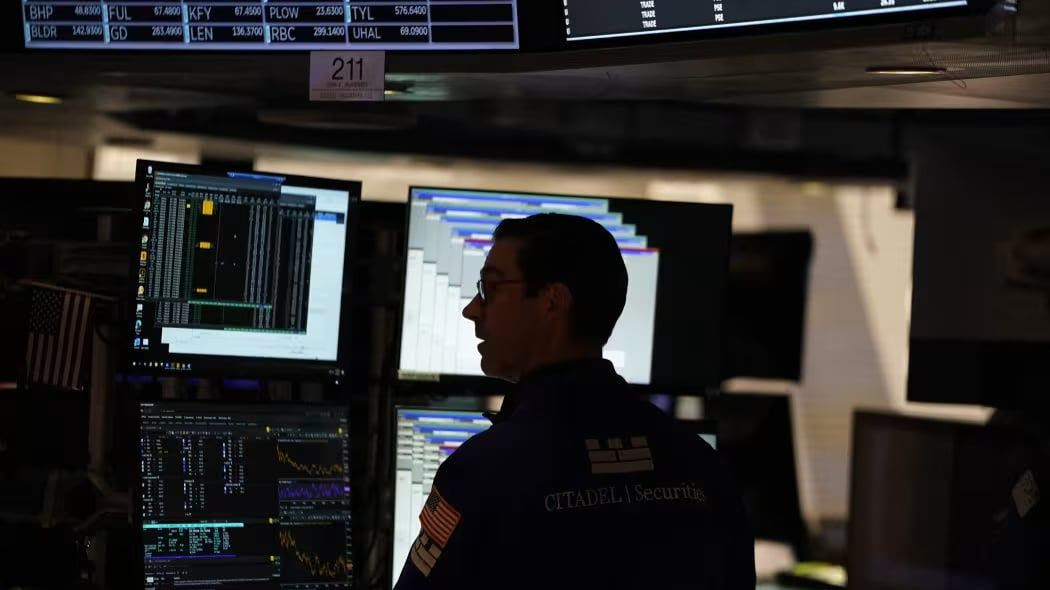
The traditional 60/40 portfolio—60% stocks and 40% bonds—may no longer cut it for retirees seeking stability.
Bonds, once a steady counterweight to stocks, are increasingly moving in sync with them, as seen in the 2022 market plunge.
With inflation fears and rising yields rattling markets, some experts suggest replacing bonds with annuities or pivoting to more international stocks.
Vanguard argues bonds still have a role, thanks to higher rates boosting returns, while others recommend adding a pinch of gold for inflation protection.
The bottom line? It’s time to rethink your portfolio strategy to ensure your retirement savings can handle today’s unpredictable market.
Trivia
Which U.S. economic indicator measures the monthly change in the number of workers added to or removed from payrolls across various industries, excluding farmworkers, private household employees, and nonprofit organization workers?
A. Labor Force Participation Rate
B. Unemployment Rate
C. Nonfarm Payrolls
D. Initial Jobless Claims
E. Job Openings and Labor Turnover Survey (JOLTS)
Scroll for the answer
TAXES
Tax Season Kicks Off Jan. 27—Here’s How to Max Your Refund Fast

The IRS is opening its doors for tax filing on Jan. 27, and if you want your refund sooner, now’s the time to get moving.
Start by organizing your tax forms—W-2s are due by Jan. 31, but investment docs may trickle in later.
The standard deduction has increased 5%, now $14,600 for singles, $29,200 for married couples filing jointly, and $21,900 for heads of households.
This year, the IRS expanded its Direct File program to 25 states, letting more filers skip commercial software and submit taxes for free.
For those earning $84,000 or less, the Free File program offers another no-cost option using tax software like TaxSlayer.
Don’t forget, you can still contribute to an IRA or HSA by April 15 to lower your taxable income.
Thinking about hiring a pro? Book now before the tax season crunch hits.
Filing early could have your refund in your pocket within 21 days, according to the IRS. Why wait?
Answer
Which U.S. economic indicator measures the monthly change in the number of workers added to or removed from payrolls across various industries, excluding farmworkers, private household employees, and nonprofit organization workers?
C. Nonfarm Payrolls
Nonfarm Payrolls, reported by the Bureau of Labor Statistics (BLS), is a critical measure of labor market health.
This monthly indicator tracks changes in employment across most industries, excluding farming, households, and nonprofits.
A rising nonfarm payroll figure indicates job growth and economic expansion, while a decline may suggest a slowing economy.
Policymakers, economists, and investors monitor this data closely to assess labor market trends, guide monetary policy, and evaluate the broader economic outlook.