
Dear Friend,
Well, Trump said “deal,” and Wall Street practically swooned.
The Dow jumped, Bitcoin moonwalked past $100K, and even the Nasdaq dusted off April like it was just a bad dream.
Meanwhile, Treasury Sec. Bessent is headed to Beijing to sprinkle some trade fairy dust—and maybe score another market sugar high.
The Fed’s walking back rate cut talk, Toyota’s crying tariff tears, and Arizona’s out here stacking Bitcoin like it’s prepping for crypto Y2K.
Keep reading this edition of the Insider Report to see why one word from Trump still moves markets like a Taylor Swift album drop.
Jeremy Blossom
Editor in Chief, Everlasting Wealth
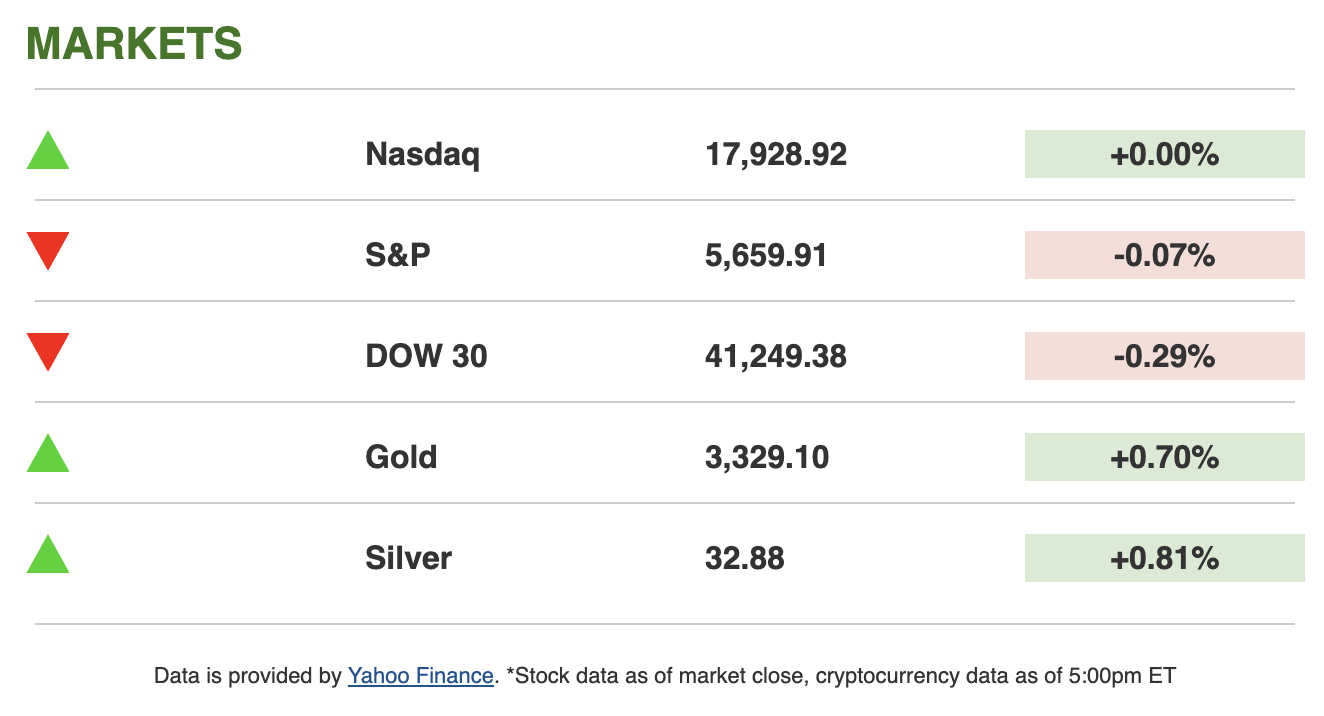
MARKET HEADLINES
💸 MicroStrategy and Robinhood gained further as Bitcoin held above $100K, while Coinbase dipped on mixed earnings despite optimism around pro-crypto U.S. policies.
⚙️ Nvidia stock climbed again as easing export rules and a new China-specific H20 chip reinforced investor confidence in the AI chipmaker’s global strategy.
🚗 Tesla stock ticked higher, aiming for a third straight weekly gain as investor hopes rest on the upcoming robotaxi launch despite weak recent sales.
📈 Bitcoin and altcoins soared on trade optimism and U.S. crypto policy developments, but economists warn that fading tariff pauses could derail the rally.
🧠 D-Wave Quantum stock skyrocketed 51% after selling its first quantum machine to Germany and publishing controversial but headline-grabbing research.
🔦 Ouster’s strong Q1 sales, solid guidance, and bullish outlook for AI-driven smart infrastructure sent its lidar tech stock up nearly 10%.
🔍 Despite AI threats and declining Safari search traffic, analysts remain bullish on Alphabet, citing diversified revenue streams and undervalued shares.
💉 Novavax shares jumped 30% after a surprise earnings beat and raised outlook, driven by terminated deals and stronger licensing revenue.
🔐 Fortinet shares plunged nearly 8% as cautious Q2 guidance and internal sales uncertainty overshadowed an otherwise strong earnings report.
🪙 Bitcoin’s breakout past $100K sent crypto stocks like Coinbase, Robinhood, and MicroStrategy rallying, fueled by a new U.S.-U.K. trade deal and major acquisition news.
Trump Talks Trade, Markets Blast Off—Again
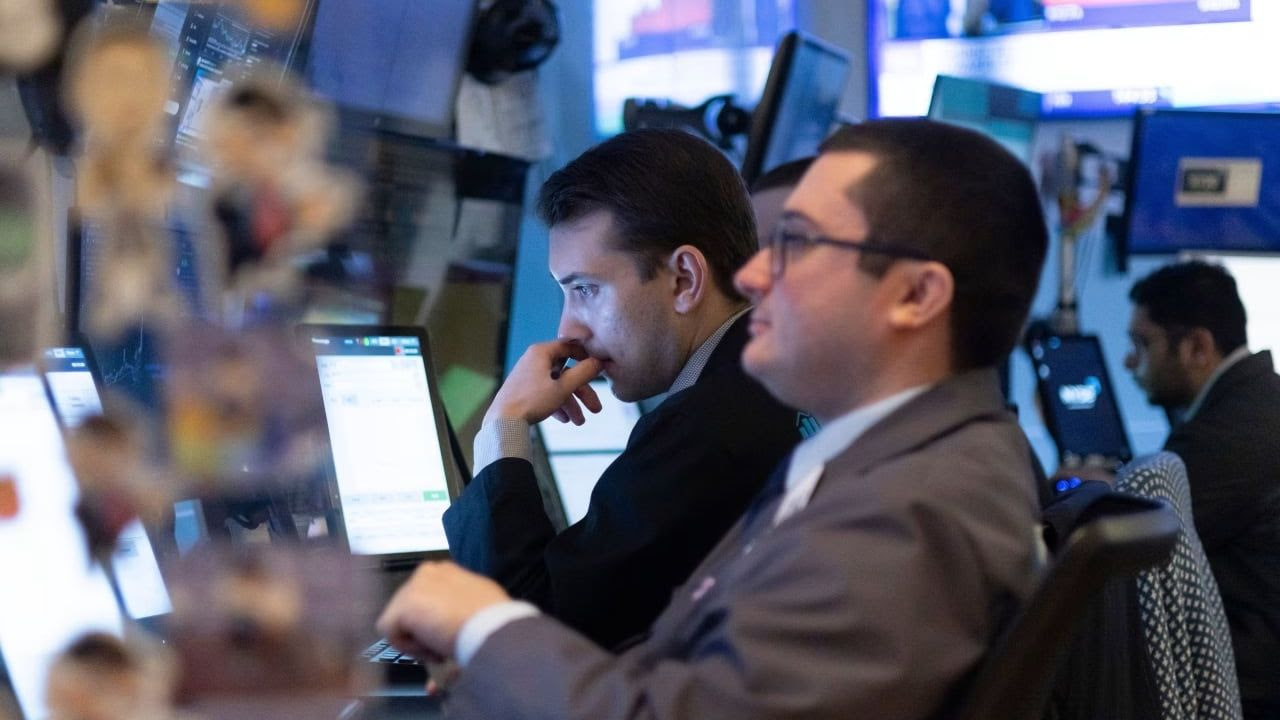
Looks like all President Trump had to do was mention the word “deal” and suddenly Wall Street caught a case of the warm fuzzies.
The Dow jumped 250+ points after he rolled out a new U.K. trade agreement—complete with promises of “increased market access” and the usual Trump flair about a $10 trillion investment boom.
Stocks rallied, and Bitcoin soared back over $100K.
Now everyone’s buzzing that China could be next in line for a handshake and some tariff relief, especially with Treasury Sec. Bessent flying over like a diplomatic Cupid.
The Fed even got caught in the crosswind, with traders scaling back expectations for rate cuts faster than Biden loses his train of thought.
And while Toyota’s fretting over a $1.2 billion tariff tab, the Nasdaq just shook off all its April losses.
Bottom line? When Trump talks trade, the markets listen—and sometimes, that’s all it takes.
STOCKS TO WATCH
↗️ Pinterest (PINS): A return to profitability and a bullish revenue outlook for the current quarter propelled the stock up 12% in premarket trading, easing fears about trade tensions hurting digital ad spend.
↘️ Expedia (EXPE): Weaker-than-anticipated U.S. travel demand led to a deeper quarterly net loss, driving the online travel agency’s stock down 9.5% before the market opened.
↘️ Coinbase (COIN): The crypto exchange posted a steep decline in quarterly earnings, triggering a premarket dip—though shares surged in Thursday’s session on bitcoin strength and its deal to acquire Deribit.
↗️ Anheuser-Busch InBev (BUD): The brewing giant delivered stronger-than-expected results, lifting its stock in European markets as global demand held steady.
🔎 Ford (F): Amid tariff uncertainty, Ford hiked prices on three of its models as automakers scramble to absorb the impact of rising import costs on vehicles and parts.
🔎 Carlyle (CG), ConocoPhillips (COP), Shopify (SHOP) & Warner Bros Discovery (WBD): All are set to release their earnings ahead of the opening bell, with Lyft (LYFT) slated to report after the close.
This Day in the Markets
📉 On this day in 2022, the Nasdaq Composite plunged 3.2%, driven by a sharp tech sell-off as investors grappled with persistent inflation and aggressive Fed rate hike plans. The decline came during a turbulent week for markets, as fears of a potential recession and tightening financial conditions led to widespread risk-off sentiment, especially in high-growth tech stocks.
ECONOMY
Trump’s U.K. Trade Deal Sends a Clear Message: America Sets the Terms Now
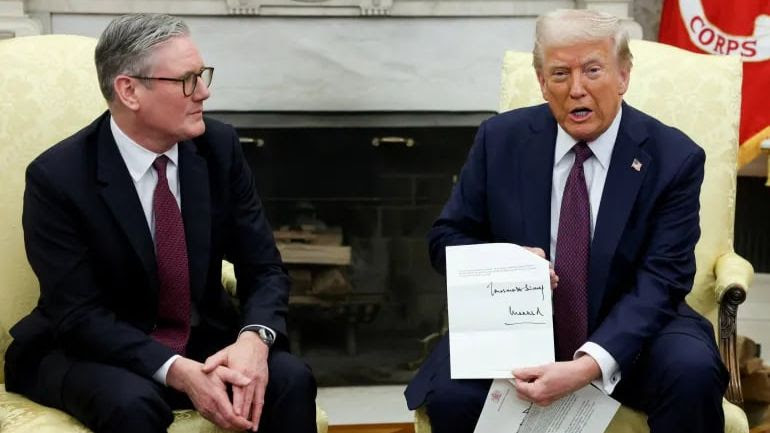
Trump just scored a trade win with the U.K., and while the media’s tripping over themselves to downplay it, the deal’s a smart, targeted move that shows he’s still the best closer in the game.
Sure, it’s not a one-size-fits-all template for China or the EU—but it’s not supposed to be.
The U.K. was a logical first step, especially since we’ve got a trade surplus with them, and Trump leveraged that into more Boeing sales, better market access for our farmers, and a rollback of tariffs—all without dragging it out for years like the D.C. crowd usually does.
Critics say it doesn’t “set precedent,” but what it does is set the tone: America deals from a position of strength.
China, Europe, and Canada aren’t rushing to sign yet, but they’re definitely watching.
And with Trump already sending his Treasury Secretary to talk shop with Beijing, you can bet more deals are on the way.
This may not be the trade revolution globalists wanted—but it’s exactly the America-first strategy voters signed up for.
ECONOMY HEADLINES
📉 China’s exports to the U.S. fell 21% in April as Trump’s new tariffs reshaped global trade patterns, though China expanded shipments to other regions.
🧾 Trump’s tariff changes have significantly increased the workload and complexity for U.S. customs brokers, who are now central to navigating shifting trade policies.
✈️ Boeing stock rose on news of a $10 billion plane deal with the U.K., as the Trump administration’s trade initiatives signaled broader global export opportunities.
🛒 Tariffs are starting to lift U.S. consumer prices, and experts suggest inflation could rise in the short term depending on supply chain impacts and consumer expectations.
🕰️ The Federal Reserve held rates steady, citing uncertainty from recent tariffs and signaling it will monitor economic data before making further moves.
🤝 Markets are watching U.S.-China talks in Switzerland for signs of de-escalation, with potential tariff adjustments and economic agreements on the table.
💷 The Bank of England cut interest rates amid global trade uncertainty, shortly after the U.S. and U.K. reached a new trade agreement.
👶 The U.S. may exempt baby gear like strollers and car seats from China tariffs, a move under review by the Treasury Department following public and congressional input.
📰 Investors are more focused on progress in U.S.-China trade discussions than on Fed policy, reflecting hopes for a reduction in tariff-driven market disruptions.
🪙 Bitcoin crossed $100,000 again after the U.S.-U.K. trade deal boosted investor sentiment and brought greater clarity to international economic policy.
Trivia
Which U.S. government-sponsored enterprise (GSE) played a central role in the housing market before and during the 2008 financial crisis by purchasing and guaranteeing mortgage-backed securities?
A. Ginnie Mae
B. Federal Reserve
C. Fannie Mae
D. HUD
E. FHA
Scroll for the answer
BUSINESS
Bitcoin Breaks $100K—Because Apparently Risk Is Cool Again
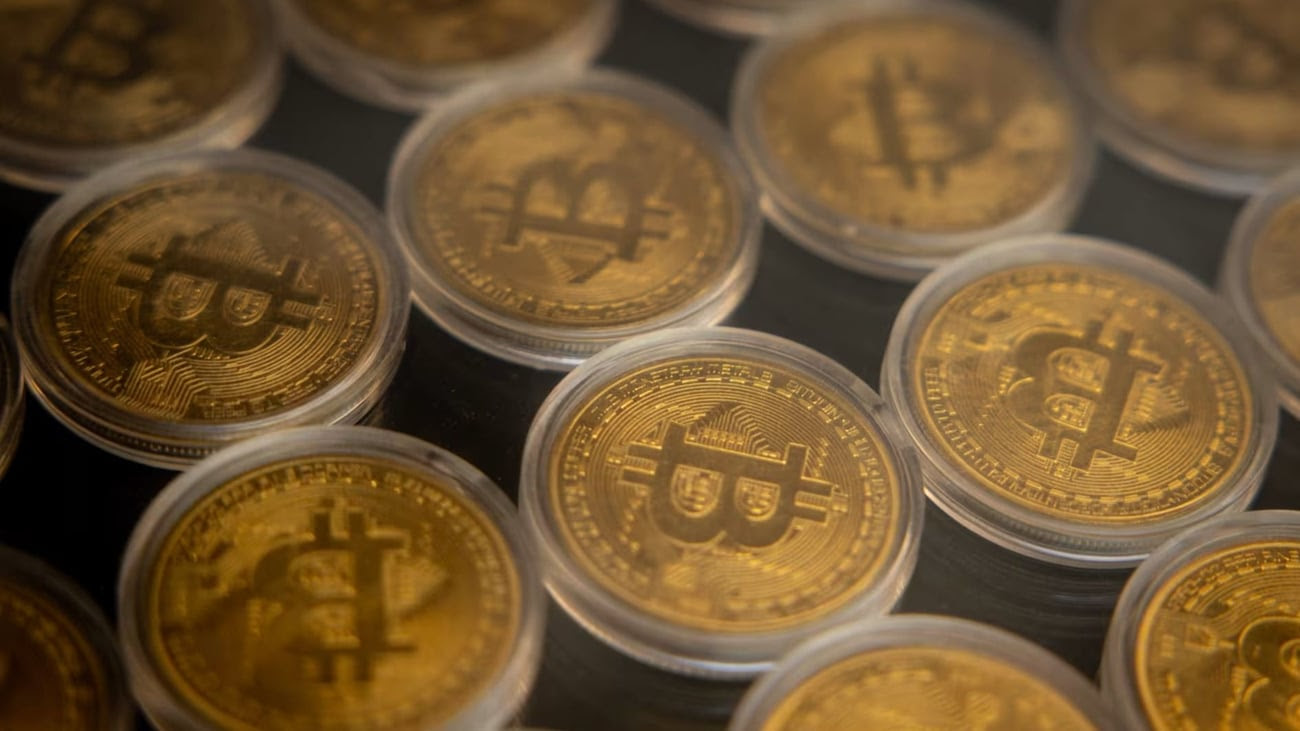
Bitcoin is back over $100,000, and suddenly everyone’s acting like April’s market meltdown never happened.
Fueled by a fresh U.K. trade deal from Trump and a dose of renewed investor optimism, the crypto crowd jumped in with both feet—pushing Bitcoin up 5% on Thursday alone.
Stocks rallied too, because when Trump says “deal,” Wall Street hears “buy everything.”
And just for good measure, Arizona and New Hampshire passed bills to start holding Bitcoin reserves, which is basically the digital equivalent of states hoarding gold in their basements.
Sure, Bitcoin’s still 7% off its January high, but analysts say if it stays above $101K, we might be gunning for $109K again.
Just don’t call it a safe haven yet—Bitcoin’s still the wild child of finance, riding high when markets are feeling gutsy and tanking when they chicken out.
But for now? Crypto’s hot, stocks are climbing, and the panic button is back in the drawer.
Answer
Which U.S. government-sponsored enterprise (GSE) played a central role in the housing market before and during the 2008 financial crisis by purchasing and guaranteeing mortgage-backed securities?
C. Fannie Mae
Fannie Mae (Federal National Mortgage Association) was a key player in the U.S. housing finance system leading up to the 2008 financial crisis.
It purchased large volumes of mortgages from lenders, packaged them into mortgage-backed securities (MBS), and guaranteed them for investors.
While this system helped expand homeownership, it also contributed to the buildup of risky subprime lending practices.
When the housing bubble burst, Fannie Mae faced massive losses and was placed into federal conservatorship alongside Freddie Mac.
Their collapse underscored the systemic risks posed by securitized mortgage markets and the need for greater oversight of GSEs.