The market’s AI-fueled bubble just got punched—investors are finally facing reality, and it’s not pretty

Dear Friend,
The Nasdaq dropped nearly 2%, Nvidia and Tesla led the tumble, and suddenly everyone’s realizing you can’t run a bull market on vibes and ChatGPT alone.
Meanwhile, services activity picked up, but inflation’s rearing its head again, and a bankrupt auto-parts giant is begging the court for a $600 million life raft just to keep the lights on.
Oh, and we’re still in the dark thanks to the government shutdown—perfect timing, right?
Keep reading this edition of the Everlasting Wealth Insider Report to see what’s wobbling, what’s holding up, and why Nvidia’s next earnings might decide the market’s fate.
Jeremy Blossom
Editor in Chief, Everlasting Wealth
MARKETS
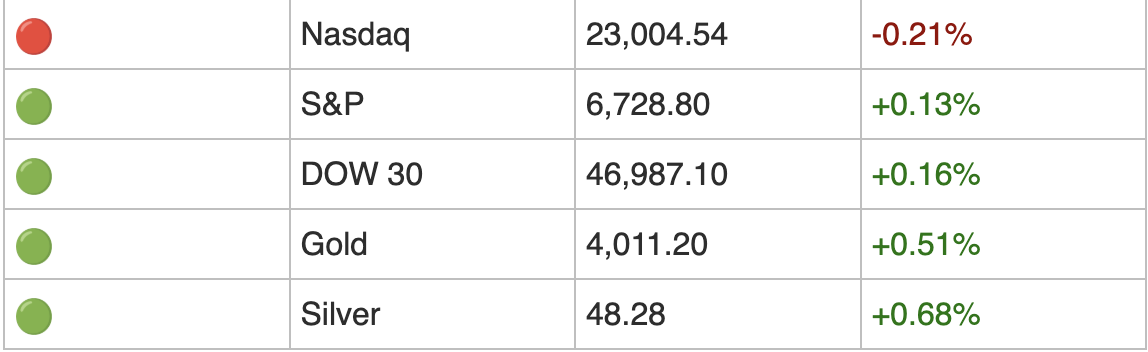
MARKET HEADLINES
📉 Constellation Energy stock dropped after Q3 earnings missed estimates and the company narrowed full-year guidance despite strong revenue.
🤖 Nvidia shares slid further amid renewed China tensions and investor worries over the sustainability of AI infrastructure spending.
💸 Bitcoin’s recent selloff dragged Block stock down 14% as weak crypto revenue and missed earnings weighed on investor sentiment.
🚗 Elon Musk’s $1 trillion Tesla pay package was approved, but concerns mount over his push to fund xAI with Tesla resources amid shaky AI enthusiasm.
✈️ Airlines cut flight schedules at major U.S. airports due to air-traffic controller fatigue caused by the ongoing government shutdown.
🎁 Holiday retail sales are expected to exceed $1 trillion for the first time, though growth may be slightly slower than last year.
📉 DraftKings missed Q3 targets and halved its profit outlook as it pivots into prediction markets to compete with new rivals.
🏭 Charles Schwab is acquiring Forge Global for $660 million to expand access to private markets for retail investors.
☀️ Corning is betting big on U.S. solar manufacturing with a new wafer plant in Michigan aiming to claim 15% of the domestic market.
☕ Starbucks is selling a majority stake in its China business to focus on U.S. growth, boosting profitability and easing geopolitical risk.
Wall Street Throws a Hissy Fit as Big Tech Gets a Reality Check
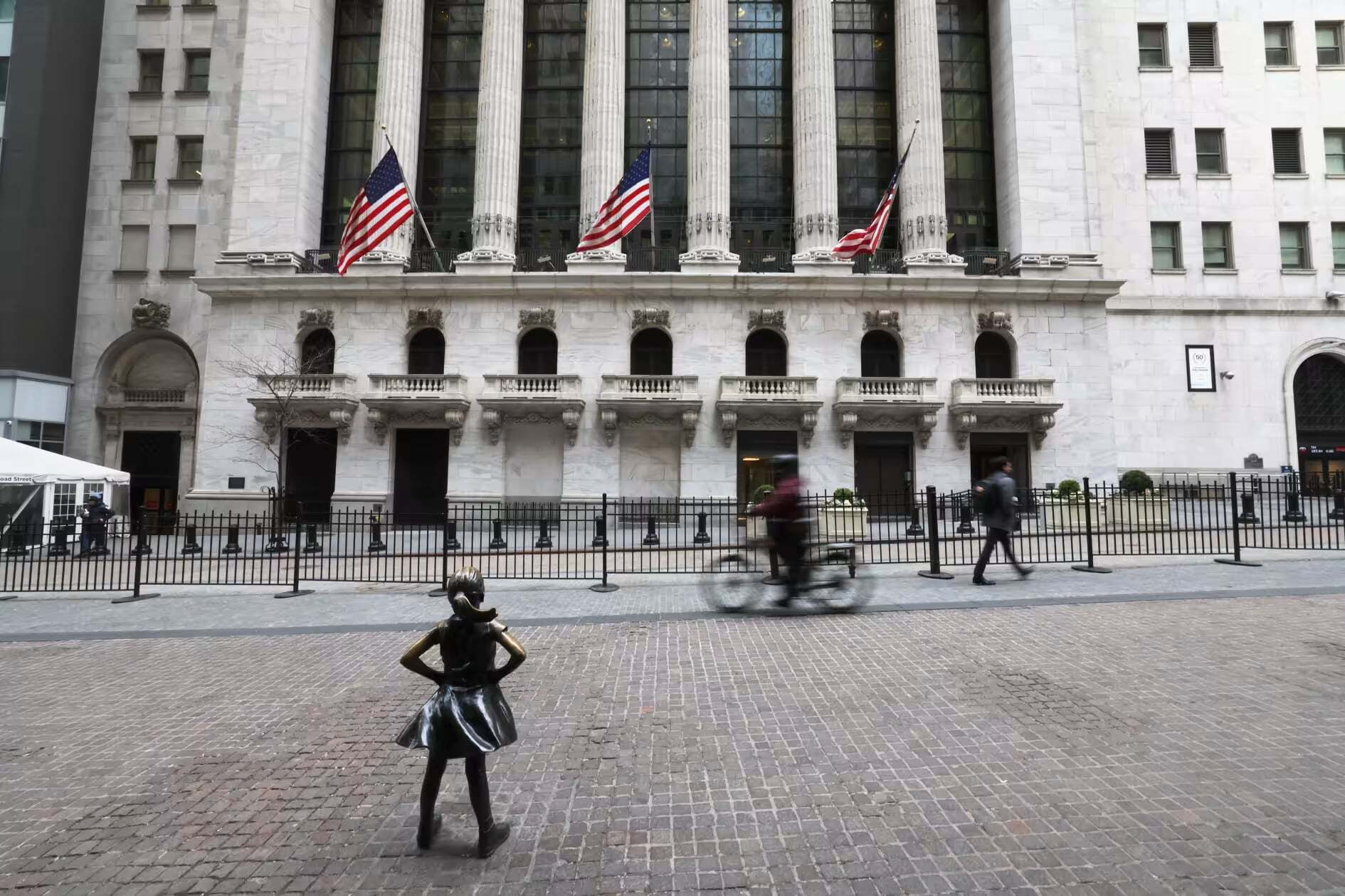
Well, the stock market finally had its little come-to-Jesus moment, and surprise surprise—Big Tech’s sky-high valuations might not be as invincible as the AI fanboys thought.
The S&P 500 dropped over 1% on Thursday, and the tech-heavy Nasdaq got slapped down nearly 2%.
The usual suspects—Nvidia, Tesla, Amazon, Meta—led the way south, while Google barely managed to keep its head above water.
Franklin Templeton’s Chris Galipeau pretty much said what most of us have been thinking: the market’s priced for perfection, and any hiccup—like surging layoffs or God forbid, disappointing earnings—could tank this whole house of cards.
And with the government still shut down and no reliable data coming out, Wall Street is flying blind.
Of course, everyone’s now crossing their fingers that Nvidia saves the AI fairy tale with its earnings later this month.
But if the only thing holding this market up is tech hype and duct tape, we might want to brace for more than just a bump in the road.
STOCKS 2 WATCH
↘️ Opendoor: Shares plunged around 20% premarket after the online home-selling platform reported a sharp drop—over 33%—in sales, citing a strategic pivot following viral exposure.
↘️ Block: The fintech firm behind Cash App and Square missed quarterly expectations, sending shares down 14% before the market opened.
↘️ Take-Two Interactive Software: Despite raising its full-year outlook, the repeated delay of Grand Theft Auto VI weighed on investor sentiment, with shares slipping during after-hours trading.
↘️ DraftKings: The sports-betting platform cut its full-year revenue forecast, even as it expands into new states and announced a multiyear partnership with ESPN. Shares dropped roughly 8.5% premarket.
↗️ Tesla: The EV giant gained over 1% in early trading after shareholders backed Elon Musk’s massive $1 trillion pay plan, though opinions were split on potential investments into his AI venture, xAI.
↗️ Affirm: The buy-now-pay-later firm popped in early trading as it delivered better-than-expected quarterly results.
↗️ Monster Beverage: Strong demand for its sugar-free product line helped the energy drink maker beat expectations, lifting shares in after-hours action.
↗️ Airbnb, Expedia: Travel sentiment improved across the board, with Airbnb noting stronger booking confidence despite higher tax costs. Expedia also lifted its annual outlook. Both stocks rose in extended trade.
Fact of the Week
The U.S. generates only about a quarter of world GDP yet makes up roughly 60% of global stock market value—thanks to mega-cap tech cash machines, deep capital markets, relentless buybacks, a rule-of-law valuation premium, and “safe-haven” dollar flows—so even a “global” index fund is secretly America-heavy and rises or falls with U.S. sentiment.
ECONOMY
U.S. Services Sector Picks Up Speed Despite Shutdown, Tariff Worries

U.S. services activity rebounded in October, with the ISM Services PMI rising to 52.4—the strongest reading since February—signaling renewed growth despite mounting concerns over the government shutdown and tariffs.
New orders surged to their highest level in a year, and business activity expanded, even as employment continued to shrink slightly.
Inflation pressures also reemerged, with the prices index hitting its highest point since 2022.
Survey respondents pointed to tariffs driving up costs, particularly in manufacturing and utilities, and warned that ongoing political uncertainty could delay projects and hurt 2026 business plans.
The rebound contrasts with recent weakness in the labor market and rising layoff announcements, suggesting a mixed picture for the broader economy.
The services sector, which makes up over two-thirds of U.S. economic activity, has remained relatively resilient even as other areas show signs of strain.
ECONOMIC HEADLINES
📉 Despite a recent tech stock selloff, investors continue to back the AI trade, though hopes for a Fed rate cut in December are increasingly central to that optimism.
🧠 An economist slammed a viral chart linking AI and job losses as misleading, arguing that falling job openings reflect hiring success—not AI-driven displacement.
💊 Novo Nordisk and Eli Lilly struck a deal with the Trump administration allowing Medicare to cover weight-loss drugs in exchange for lower pricing and tariff exemptions.
🍔 Restaurant chains are seeing declining sales as lower-income consumers cut back, with fast-food outlets like McDonald’s hit harder than full-service establishments.
🛑 Job losses are mounting and hiring is slowing, hammering employment-related stocks like ADP, Kelly Services, and Paycom amid concerns of a weakening labor market.
⚠️ Paycom stock fell 12% after reporting solid earnings, as analysts grow increasingly cautious about labor market uncertainty impacting its employee-based pricing model.
🌐 Dutch chipmaker Nexperia, owned by a Chinese firm, got caught in U.S.-China trade tensions, disrupting global auto supply chains and prompting EU intervention.
📘 With official economic data delayed, the Federal Reserve is relying more heavily on the Beige Book, which recent research shows is effective in short-term recession forecasting.
✈️ Airline stocks dipped as United, American, and Delta began cutting flights in response to FAA directives tied to the ongoing government shutdown.
Trivia
What does a positive TIPS yield most directly represent?
A. Expected inflation over the next decade
B. Real (inflation-adjusted) yield investors earn above CPI
C. Nominal yield minus growth rate of GDP
D. Fed policy rate next year
E. Liquidity premium in Treasuries
Scroll for the answer
BUSINESS
First Brands Seeks $600 Million Lifeline to Avert Liquidation as Creditors Close In
Bankrupt auto-parts maker First Brands is racing to secure court approval for a crucial $600 million loan, warning that without the cash it will be forced to shut down operations entirely.
During a high-stakes bankruptcy hearing Thursday, the company reached tentative settlements with key creditors, including Evolution Credit Partners and Raistone, while continuing negotiations with others.
The financing is the second part of a $1.1 billion debtor-in-possession loan, half of which was approved earlier, and is seen as vital to keeping the company afloat.
“Without the DIP, it’s frankly game over,” First Brands’ attorney told the court.
The company filed for Chapter 11 in September amid over $10 billion in debt, accounting irregularities, and allegations of fraud and self-enrichment by founder Patrick James, who resigned last month.
Federal prosecutors are now investigating whether the firm misused off-balance-sheet debt and double-pledged receivables, raising the stakes as the court weighs whether the company can avoid collapse.
Answer
What does a positive TIPS yield most directly represent?
B. Real (inflation-adjusted) yield investors earn above CPI
Treasury Inflation-Protected Securities pay a real yield; principal is indexed to inflation.
A positive TIPS yield means investors are earning that real rate before any inflation adjustment—useful for valuing risk assets via real discount rates.