If the AI hype train derails, recession risk rises

Dear Friend,
While you were elbow-deep in turkey and pretending not to check your portfolio, Asia decided to throw a full-blown market rave—SoftBank made money again (yes, really), chip stocks popped, and South Korea’s market put on its dancing shoes.
Meanwhile, Germany’s clinging to Puma like it’s their last chance at cardio, and China’s real estate sector is…still creatively redefining “solvency.”
Back home, AI is doing all the economic heavy lifting—because who needs job growth when your portfolio’s printing gains from server farms and GPU fairy dust?
Keep reading this week’s Insider Report for the rest of the drama, delusion, and data centers.
Jeremy Blossom
Editor in Chief, Everlasting Wealth
MARKETS
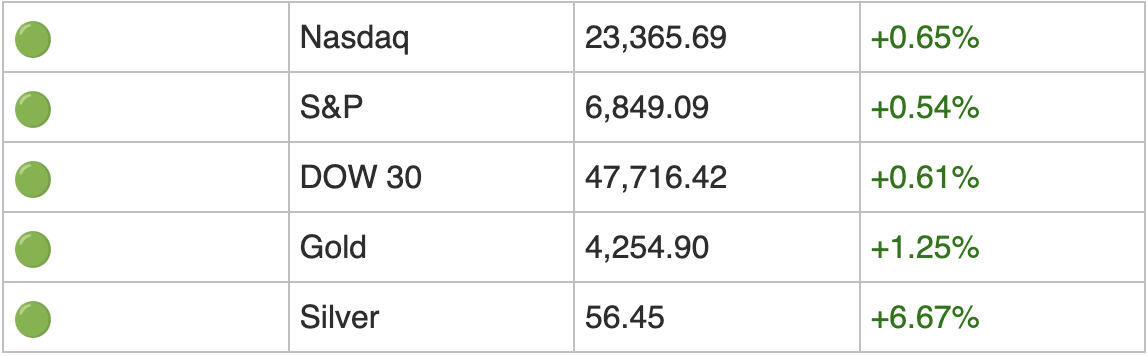
MARKET HEADLINES
🛍️ Black Friday data has become crucial for markets as the Fed looks to alternative indicators amid disrupted economic reports, potentially influencing rate cuts.
💽 Stocks like Western Digital, Newmont, and Merck have defied the AI selloff and continued climbing, suggesting value opportunities beyond the usual tech suspects.
📈 Bitcoin’s surge to $91,500 and tech gains have pushed the Nasdaq toward its best Thanksgiving week since 2008, reviving optimism across markets.
🧠 Nvidia’s recent stock dip may be a buying opportunity, as analysts remain bullish amid high GPU demand and competition from Alphabet’s AI push.
✈️ Airline stocks need a strong holiday travel season to maintain 2025 gains, as a government shutdown and early November traffic declines raise red flags.
👵 China’s aging population is becoming a major economic force, with older consumers driving a “silver economy” boom in health, wellness, and tech spending.
🎉 Investor fears of an AI bubble have eased as broader market optimism and expected Fed rate cuts boost stocks in the best Thanksgiving week in over a decade.
🔁 The AI trade is evolving as investor interest rotates from Nvidia to Alphabet-linked plays, with the broader market adapting to new winners across sectors.
💼 Cathie Wood’s ARK doubled down on Alphabet, Meta, and Coinbase while shedding AMD and Palantir, betting on long-term AI and crypto growth.
⚠️ S&P downgraded Tether’s reserve quality, citing risky asset exposure, sparking renewed concerns over its dollar peg and potential gains for rival stablecoins.
Wall Street Takes a Turkey Break While AI Stocks Gobble Up Gains Abroad
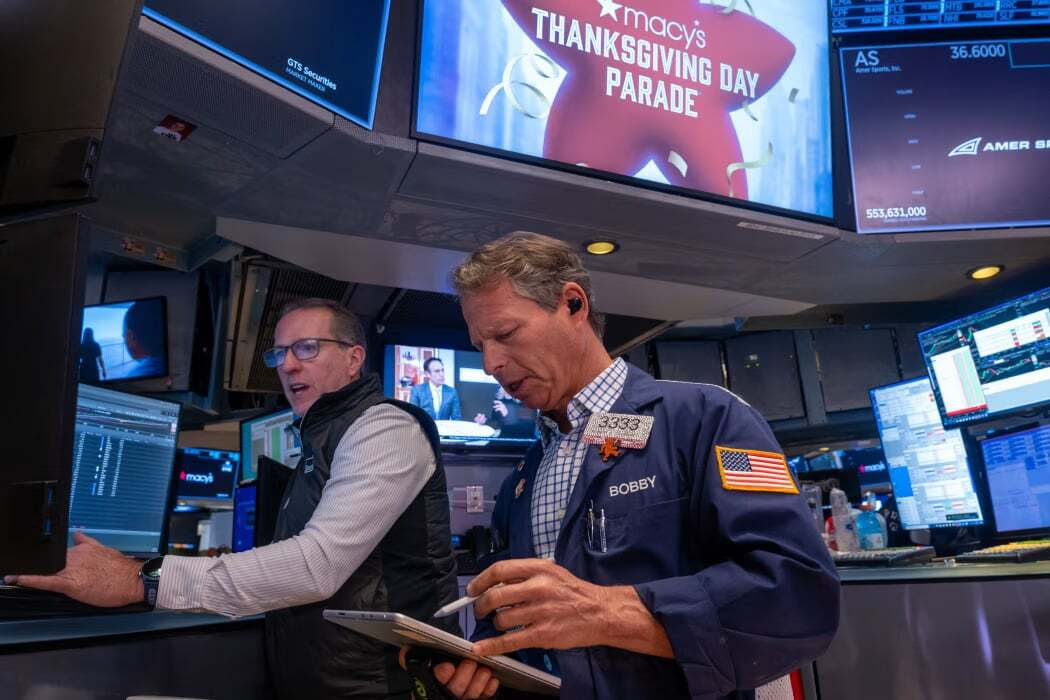
So while our markets were snoozing for Thanksgiving, the global tech crowd kept the party rolling—especially over in Asia, where Japan’s SoftBank finally remembered how to make money again.
Chip stocks in Tokyo popped like fireworks, and even South Korea’s market is dancing like it’s 1999.
Apparently, the Biden admin trying to play matchmaker between Japan and China didn’t hurt either—because nothing screams “stable” like trusting Beijing.
Meanwhile in China, one of the last real estate companies not to implode is now asking for a little more time on a $282 million IOU. Color me shocked.
Over in Europe, Germany got excited because some Chinese sportswear giant might buy Puma (guess they need to run from their own economy).
Back home, Wall Street’s been on a four-day sugar high thanks to rumors the Fed might actually cut rates soon—because what’s a little inflation when the stock market needs a boost?
STOCKS 2 WATCH
↗️ Urban Outfitters: The fashion and home décor retailer impressed with quarterly earnings that surpassed forecasts, driven by strong performance from its core brand. Shares surged 17% before market open.
↘️ HP: The tech giant behind PCs and printers is set to trim up to 10% of its workforce while pushing deeper into AI investments. However, its annual EPS outlook came in below analyst expectations, sending shares down over 5% premarket.
↗️ Autodesk: The digital design software company boosted its full-year outlook, sparking a 7% jump in shares before the opening bell.
↘️ Li Auto: Facing mounting pressure in China’s competitive EV space, the hybrid carmaker reported its first net loss in three years. Its U.S.-listed shares dropped more than 1% in early trading.
↗️ Dell: After raising its full-year forecast and projecting AI server shipments to more than double, the computer and software company saw shares climb nearly 5% in premarket action.
↘️ Workday: Despite lifting its annual guidance, the HR software provider saw its stock dip 5.5% ahead of market open.
↗️ Robinhood: The trading platform’s new partnership with Susquehanna International to expand into prediction markets gave shares a 1.5% lift before the bell.
↗️ Miami International: As part of its joint initiative with Robinhood, the exchange operator is selling its MIAXdx unit to support expansion into prediction markets. Shares traded higher in offhours.
Fact of the Week
The U.S. Treasury yield curve turning inverted (short rates above long rates) has preceded every post-1950s recession, yet equities often rally during the inversion because earnings stay okay and liquidity persists—it’s the later re-steepening as growth rolls over and credit tightens that tends to ding stocks, so the “all-clear” curve un-inverting can be the real jump scare.
ECONOMY
America’s Economy Is Now a One-Trick Pony—And That Trick Is AI
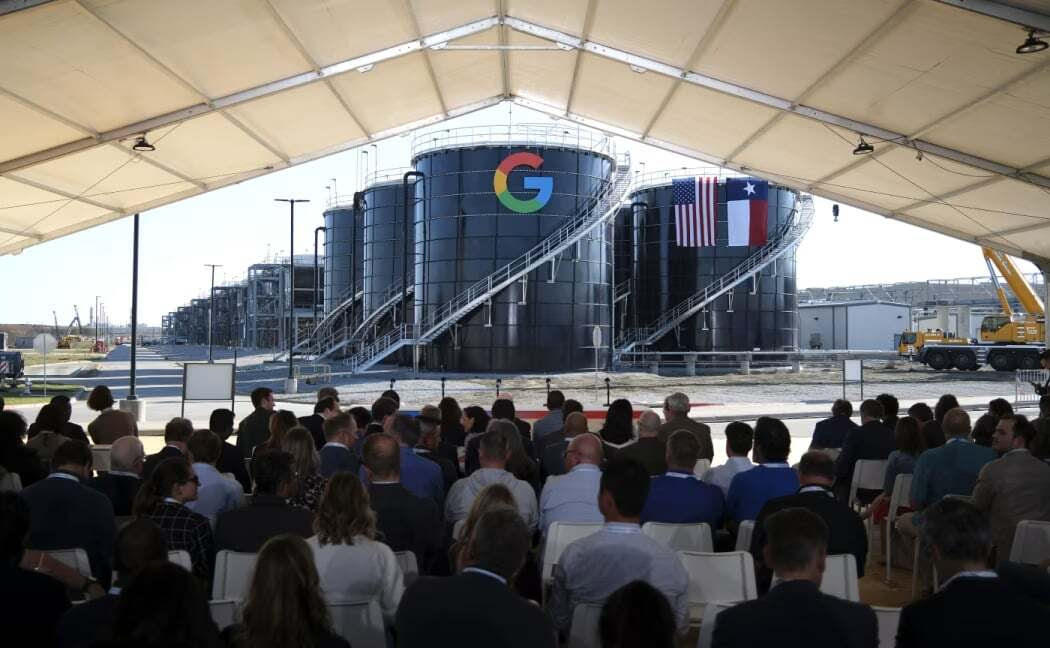
So apparently the entire U.S. economy is now riding shotgun with the AI hype train.
According to the experts, AI-related spending—mostly from the Big Four (Microsoft, Amazon, Google, and Meta)—is doing all the heavy lifting for GDP growth.
Without it, we’d basically already be in a recession.
Job creation? Slowing.
Private investment? Flatlined—unless it involves a data center the size of a football stadium.
We’re pouring billions into AI chips and data farms, but don’t get too excited—these things don’t hire your average Joe.
Meanwhile, Americans are spending more because their AI stock portfolios are up—because nothing screams “economic stability” like a wealth effect bubble.
If this AI gravy train crashes, the market tanks, people stop spending, and voilà—we’re staring down a recession.
But hey, at least our economic future rests in the hands of tech monopolies and imported microchips.
What could possibly go wrong?
Economic Headlines
💰 The Federal Reserve’s massive losses may soon turn to profits, potentially easing pressure on the Treasury and boosting future payments to the government.
📉 Crypto firm ALT5 Sigma, linked to the Trump family, ousted its top executives amid legal troubles and a sharp stock decline tied to falling token prices.
💸 High earners over 50 will lose a key tax break as catch-up 401(k) contributions shift to Roth accounts in 2026, but the long-term benefits of tax-free growth remain.
🪑 Home furnishing stocks are slumping as inflation, weak housing demand, and the rise of cheap online “dupes” challenge even upscale retailers like Williams-Sonoma.
📉 The Fed’s Beige Book shows slowing job growth and soft consumer spending, reinforcing expectations for a possible December rate cut.
🎲 The rise of sports betting and prediction markets is raising red flags for lenders, with subprime borrowers increasingly at risk of financial distress.
🗓️ Wall Street remains split over ending quarterly earnings reports, with some praising long-term focus and others warning of reduced transparency and higher volatility.
🤖 Regulators are struggling to keep pace with the breakneck evolution of AI markets, risking outdated enforcement in an era where dominance can shift overnight.
⚖️ The Fed remains divided ahead of its December meeting, as weak labor signals and mixed inflation data leave room for both hawkish and dovish interpretations.
🪙 Central banks are gradually reducing reliance on the U.S. dollar in favor of gold, euros, and yuan, signaling a shift toward a multipolar reserve system.
Trivia
Which U.S. Treasury communication often moves long-end yields by signaling the size and mix of upcoming debt issuance?
A. FOMC dot plot
B. Beige Book
C. Nonfarm Payrolls
D. Quarterly Refunding Announcement (QRA)
E. CPI report
Scroll for the answer
Maersk Bails on Electric Truck Deal—Because Saving the Planet Wasn’t on Sale

Woke trucking drama alert: Swedish EV startup Einride is suing logistics behemoth Maersk for ditching a 300-truck deal to roll out battery-powered big rigs across California, Illinois, and New Jersey.
The two companies were all smiles in 2022, bragging about how green and virtuous this massive electric fleet would be—until Maersk pulled the plug last year, citing late deliveries and unpaid vendors.
Nothing says “eco-hero” like ghosting your supplier and blaming them on the way out.
Einride’s calling BS and suing for damages, claiming they hired folks and bought equipment based on Maersk’s promises.
Maersk’s defense? Essentially, “We wanted clean trucks, just not if we had to pay for them.” Shocker.
Also worth noting—Trump rolled back a bunch of EV-friendly regs this year, so the corporate climate crowd suddenly lost their religion when it stopped being taxpayer-subsidized.
Turns out, saving the Earth is cool… unless it hits your bottom line.
Answer
Which U.S. Treasury communication often moves long-end yields by signaling the size and mix of upcoming debt issuance?
D. Quarterly Refunding Announcement (QRA)
The QRA lays out how much the Treasury will raise and in which maturities (bills, notes, bonds, TIPS), so shifts in planned supply—like larger long-bond auctions or more reliance on bills—can recalibrate term premia, curve shape, and asset allocations across the market in advance of the actual auctions.