Economic recessions are inevitable events that deeply impact businesses, governments, and individuals. However, they rarely happen without warning. By analyzing key indicators and understanding historical patterns, we can better anticipate when and why a recession might occur.
In this post, we’ll break down some crucial economic indicators and patterns that have historically preceded recessions. We’ll look at data from the Conference Board’s Leading Economic Indicators (LEI), unemployment rates, and discuss the pivotal role of economic shocks in triggering downturns.
Leading Economic Indicators: A Fragile Economy
The Leading Economic Indicators (LEI), tracked by the Conference Board, are an essential tool used to predict the future direction of the economy. This index measures several components, including employment, manufacturing orders, and financial market trends. It has historically been a reliable indicator of when recessions might occur.
In the chart above, the LEI data spans from 1960 to August 2024. A clear pattern emerges: before every recession (indicated by the gray shaded areas), there’s a sharp decline in the Leading Economic Indicators. Each downturn in LEI typically signals economic instability, a precursor to recessions.
The Role of Economic Shocks in Triggering Recessions
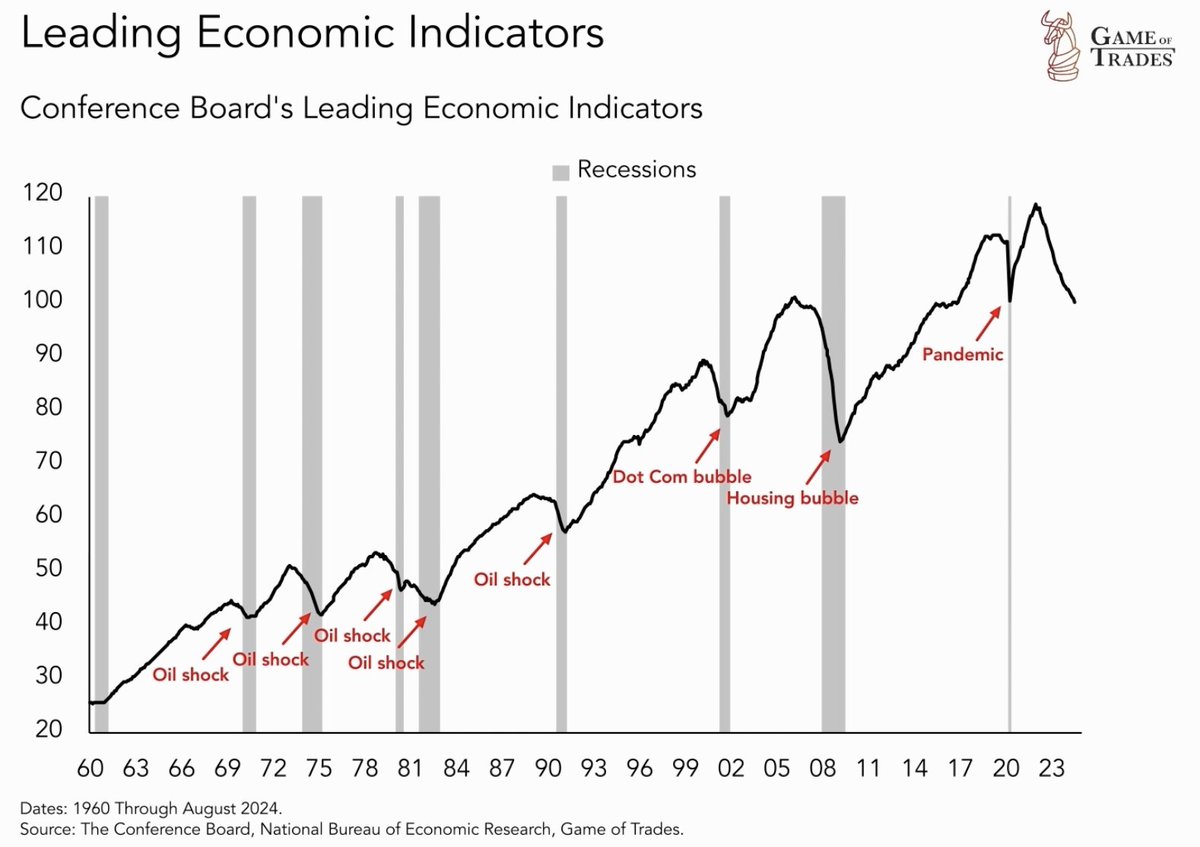
While the LEI points to economic fragility, it is often a specific shock that fully triggers a recession. Since 1960, every recession has been caused by an abrupt and significant economic event, such as:
-
Oil Shocks: During the 1970s and 1980s, oil price surges, due to geopolitical tensions, led to sharp declines in economic activity.
-
Dot-Com Bubble: In the early 2000s, the collapse of technology stocks resulted in a sharp contraction of the economy.
-
Housing Bubble: In 2007-2008, the subprime mortgage crisis caused a severe financial crisis, resulting in the Great Recession.
-
Pandemic: In 2020, the global COVID-19 pandemic led to the fastest and sharpest economic downturn in modern history.
Currently, while the LEI shows a clear decline, the key missing ingredient for a full-blown recession is a definitive economic shock. Historically, recessions don’t just happen because of a slowing economy — they are almost always set off by a dramatic event that pushes the economy over the edge.
Unemployment Rate: A Weaker Labor Market as a Sign of Recession
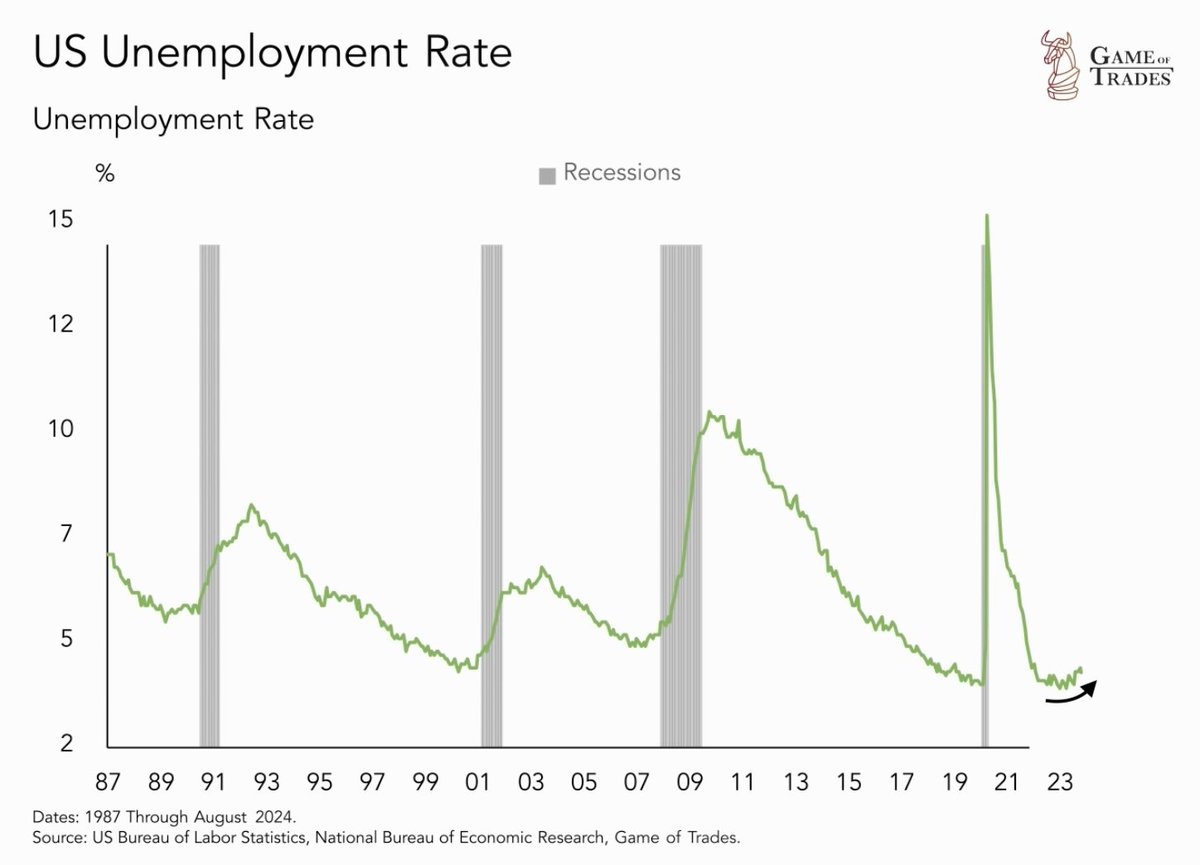
The U.S. unemployment rate is another significant indicator of economic health. As the graph above illustrates, unemployment typically spikes during recessions. For example:
-
In the early 1990s recession, unemployment rose significantly as the economy contracted.
-
Following the collapse of the Dot-Com bubble in the early 2000s, unemployment also climbed.
-
During the 2008 financial crisis, the unemployment rate shot up to around 10%.
-
In 2020, due to the pandemic, unemployment reached unprecedented levels, peaking at over 14%.
Right now, we see the unemployment rate starting to tick upward after a period of record lows. This is a concerning sign that the labor market is weakening — a crucial indicator that the economy may be heading towards a recession.
The Fragility of the Current Economy
As shown in the most recent LEI chart, the indicators have been in decline for several months. This type of sustained drop typically precedes recessions. While we haven’t seen a major economic shock yet, the decline suggests that the economy is fragile and vulnerable.
Historically, every recession has followed a definitive shock, such as the ones previously mentioned. Currently, the global economy faces potential risks, such as inflationary pressures, geopolitical instability, and potential energy shortages, all of which could act as a future shock to the system.
Conclusion: Are We Heading Toward a Recession?
So, what does all of this data tell us? The economy is undoubtedly in a fragile state, with leading indicators pointing downward and the labor market beginning to weaken. However, without a major economic shock, we haven’t seen the final push that historically triggers a recession.
It’s important to remain vigilant and keep a close eye on both leading indicators and any potential shocks that could disrupt the economy. Understanding these patterns can help us better anticipate the timing and severity of a future economic downturn, and plan accordingly.
As we continue into 2024, the economic landscape remains precarious. While we can’t predict the future with certainty, history shows us that the combination of declining indicators and an unexpected shock could be the recipe for the next recession.
Jeremy Blossom, Senior Analyst, Everlasting Wealth