
Dear Friend,
Trump’s second-term agenda is all about high-risk, high-reward—tariffs to shake up trade and tax cuts to boost your wallet.
But don’t get too comfy; inflation and deficits might crash the party.
Meanwhile, luxury brands are testing our patience with sky-high prices and low-quality goods, and wealthy retirees are learning why a fat retirement fund beats a paid-off mortgage any day.
Let’s unpack all of this in this week’s Everlasting Wealth Insider Report—keep reading!
Jeremy Blossom
Editor in Chief, Everlasting Wealth
MARKET HEADLINES
🌟 Trump’s Win Fuels Debt Concerns, But the Dollar Stays Strong. Despite market jitters about ballooning deficits under a second Trump presidency, the dollar isn’t sweating it. Treasury yields spiked as investors dumped bonds—10-year yields jumped to 4.5%, up from under 3.8% in September. Yet, the WSJ Dollar Index climbed 2%, signaling confidence in the U.S. currency.
🐳 Polymarket Whale Cashes in $85M on Trump Bet. A massive Polymarket trader turned an $85M profit betting on Trump’s victory. This “whale,” linked to 11 accounts, initially faced $3M in unrealized losses but doubled down as the odds turned in his favor. French regulators are now eyeing Polymarket to ensure everything’s above board.
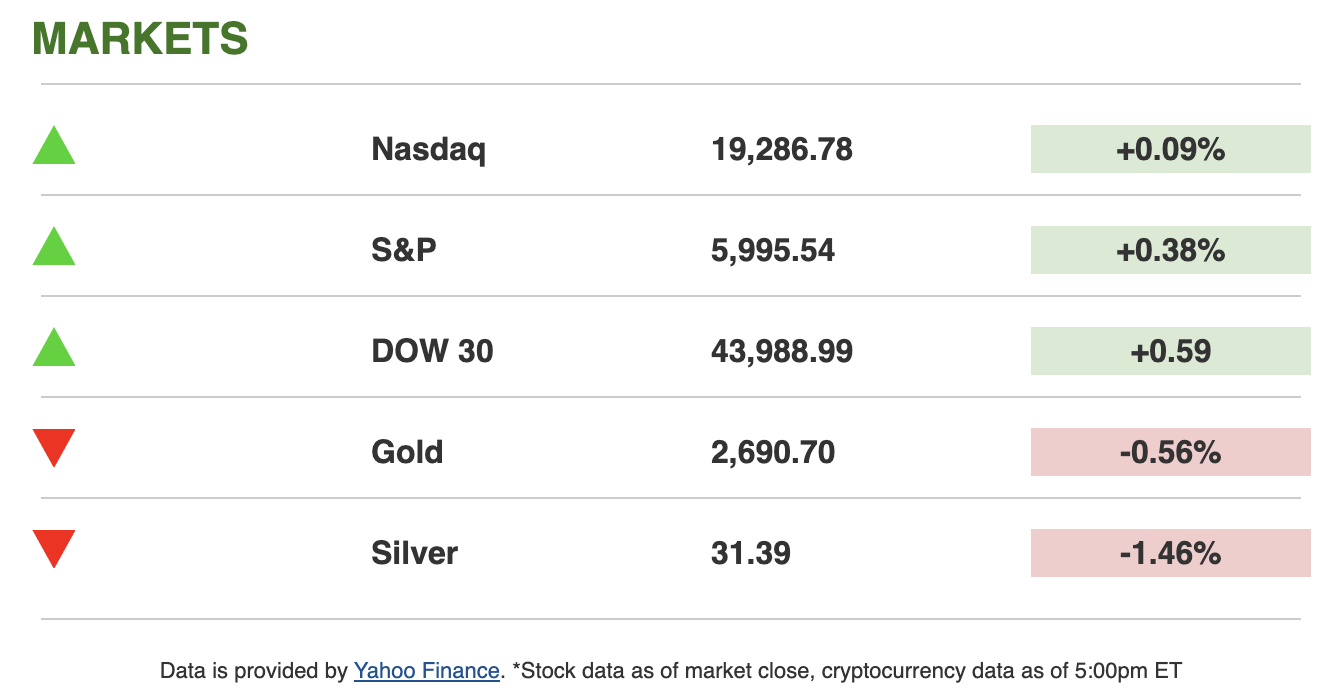
🤯 Stock Market Hits “Crazy Town” Valuations. The Trump bump sent stocks soaring, with the S&P 500 nearing the low 6,000s. But Stifel’s Barry Bannister warns: this is mania territory. He predicts a 13% drop within a year, even as short-term gains make the market feel invincible. “Bull markets die on euphoria,” he says.
🚀 Bitcoin Set to Skyrocket 60% by Next Spring. Bitcoin smashed past $75K post-election, and analysts at Ned Davis Research see it hitting $121K by April. It’s riding a bullish technical breakout, but they’ll keep a close eye on key support levels to manage risk. If it drops below $73K, this party could end early.
🤖 Nvidia Becomes World’s Most Valuable Company. Nvidia’s stock hit a record high, pushing its valuation to a jaw-dropping $3.58 trillion—leapfrogging Apple. Analysts see it cracking $4T soon, fueled by AI demand. Nvidia is now the king of tech, but the real question is: how much higher can it go?
Wall Street Cheers Trump’s Win with Record-Setting Rally
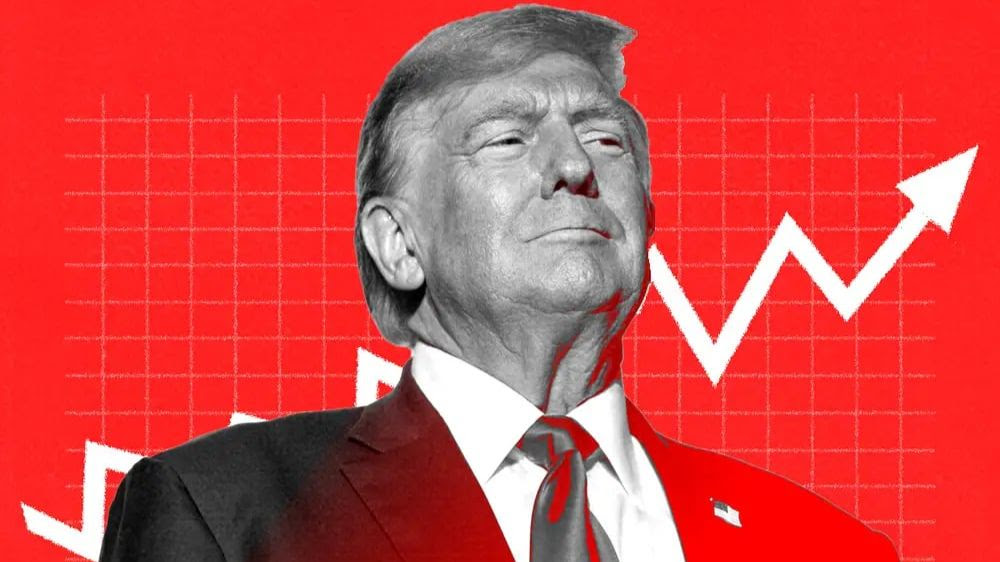
Trump’s re-election sent the stock market into a euphoric frenzy, with the Dow skyrocketing over 1,500 points and Bitcoin smashing past $75,000.
Investors are betting big on another round of deregulation and tax cuts, with banks and tech stocks surging like it’s 2017 all over again.
Even Tesla shot up 15%, as markets embraced Musk’s Trump bromance. Sure, bond yields are ticking up, hinting at inflation worries, but the mood is pure champagne and confetti.
Traders are now watching the Fed, hoping for one last rate cut before policy shifts.
For now, it seems Wall Street is basking in a Trump glow-up, convinced that this rally is just getting started.
STOCKS TO WATCH
↘️ Trump Media & Technology: The parent of Truth Social continues to face pressure, with shares recently down 4% in premarket trading, extending Thursday’s 23% drop.
↘️ Pinterest: Despite surpassing Wall Street expectations last quarter, the social-media company warned of increased operating expenses, causing shares to fall premarket.
↘️ Alibaba, PDD, JD, and NIO: U.S.-listed Chinese stocks declined after Beijing provided an $837 billion aid package to local governments but stopped short of introducing major fiscal stimulus.
↘️ Airbnb: Although quarterly revenue grew due to strong travel demand in North America, the stock reversed its initial gains and fell in premarket trading.
🔎 Nvidia and Sherwin-Williams: Both companies will join the Dow Jones Industrial Average, replacing Intel and Dow, effective Friday.
↗️ Rivian: Shares climbed premarket as the electric-vehicle maker reaffirmed its goal to achieve its first gross profit by year’s end, despite production challenges caused by a parts shortage.
This Day in the Markets
🚗📉 On this day in 2021, Tesla’s stock plunged over 6% after CEO Elon Musk ran a Twitter poll asking followers if he should sell 10% of his Tesla holdings, sparking concerns about insider selling.
STOCK PICK OF THE WEEK
Weiss Research
Cracking AI’s Biggest Challenge: The Two Stocks Leading the Next Revolution
AI has exploded ever since ChatGPT set the world on fire near the end of 2022.
Numerous companies with connections to artificial intelligence have seen their stocks soar.
That includes Nvidia, the poster boy of AI.
Its stock has skyrocketed 716% since ChatGPT’s debut.
But here’s the thing …
While everyone’s still counting their money from this first AI boom …
Nvidia and countless others have moved on to the next stage.
That includes Big Tech, which is currently making a series of peculiar investments in a few strange companies.
This has nothing to do with tech.
At least on the surface …
Yet, these strange investments could be the early ripples of a massive wave …
Without them, ChatGPT could stop operating …
Amazon, Google, Microsoft and more could see profits drop drastically.
In fact, Elon Musk says these investments are critical when it comes to solving the number one problem facing AI.
Now, Silicon Valley legend Michael Robinson has identified two companies that could play a significant role in the solution.
Their stocks just may be the key to AI 2.0.
Find out more about these two companies today.
ECONOMY
Trump’s Economic Play: High Stakes, Big Potential
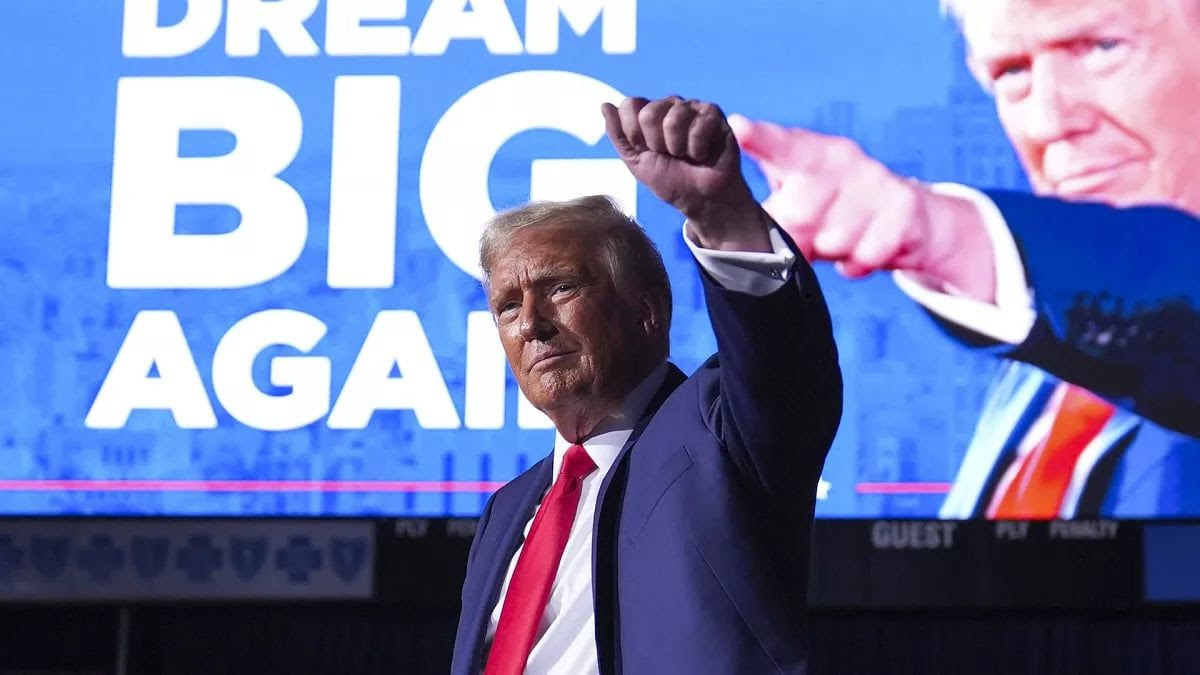
Trump’s second term is shaping up to be a bold sequel—tariffs to hit China where it hurts and tax cuts to keep businesses thriving.
Sure, economists are already crying about inflation and deficits, but here’s the kicker: those tariffs could actually push other countries to play fair.
Plus, lower taxes? That’s more money for middle-class folks to spend on Main Street. Of course, it’s not all sunshine and rainbows.
Bigger deficits and higher interest rates might come knocking, but hey, sometimes you’ve gotta break a few eggs to make an economic omelet.
If Trump can thread the needle, we could see growth that not only benefits Wall Street but actually helps everyday Americans.
ECONOMY HEADLINES
📈 Trump’s new tariffs are expected to push consumer prices higher, trigger inflation, and force the Federal Reserve into raising interest rates to stabilize the economy, which could lead to significantly higher costs for mortgages, loans, and other types of borrowing.
🏦 The Federal Reserve faces mounting uncertainty as Trump’s policies and economic volatility cast doubt on future rate cuts, leaving markets anxious about its next moves.
🔥 With inflation risks rising under Trump’s tariffs and policy interventions, the Federal Reserve faces a challenging balancing act, all while concerns grow over its independence from political influence.
🏘️ Missoula’s escalating housing crisis, marked by rising homelessness and unaffordable rents, serves as a stark warning for Western cities struggling to balance development with the need for affordable housing.
🌍 Global CEOs are on edge as Trump’s sweeping tariff proposals threaten to upend supply chains, drive up costs, and disrupt international trade dynamics.
BUSINESS
The High Cost of “Exclusivity”: Are Luxury Brands Losing Their Spark?
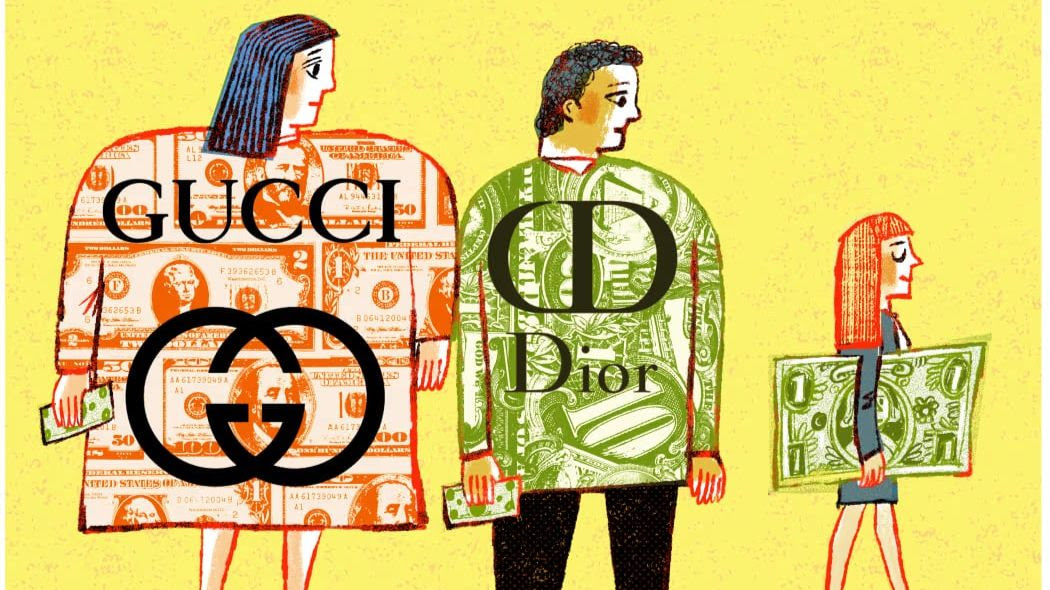
Turns out, paying $1,000 for a T-shirt doesn’t feel quite as special anymore.
Luxury brands have jacked up prices by 60% since 2019, but here’s the kicker: quality hasn’t kept up.
Customers are starting to feel like they’re being played, and it’s showing in the numbers—Gucci’s sales just took a 25% nosedive.
Sure, brands like Hermès are still raking it in, but overall, shoppers are grumbling.
Social media is full of angry posts about overpriced handbags and shoes that are more status symbol than substance.
The big question: Can these brands keep charging sky-high prices without delivering something truly special?
Right now, it seems like they’re betting on the illusion of exclusivity, but the cracks are starting to show.
RETIREMENT
Why Your Retirement Fund Should Come Before Crushing All Debt
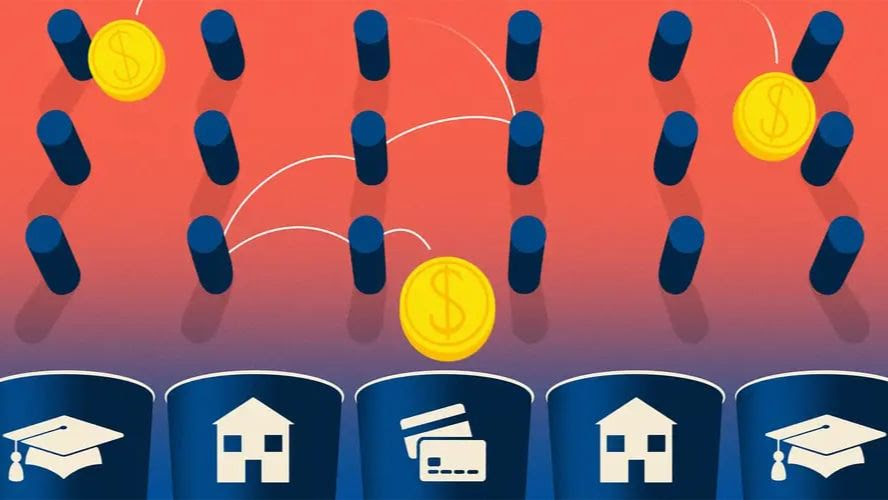
For retirees, the instinct to clear all debts before hanging up their work boots is strong—but not always smart.
As one financial planner points out, focusing solely on paying off debts like mortgages could leave you cash-poor in your golden years.
High-interest credit card debt? Sure, knock it out fast. But a low-interest mortgage? Let it ride while your retirement savings grow.
With inflation and rising costs, having a robust nest egg is crucial. Investing in retirement accounts beats funneling extra cash into an illiquid asset like a house.
Bottom line: You can’t eat a paid-off home, but a well-funded retirement account can keep you comfortable.
Trivia
Which unusual economic indicator has been historically used to predict U.S. economic downturns?
A. Lipstick Sales Index
B. Hemline Index
C. Big Mac Index
D. Men’s Underwear Index
E. Champagne Sales Index
Scroll for the answer
TAXES
How the Ultra-Rich Dodge State Taxes Without Leaving Town

Think you need to move to Florida to avoid sky-high state taxes? Think again.
Wealthy business owners are turning to ING trusts—fancy legal tools that let you cash out on your business in tax-haven states like Nevada or Delaware while still sipping lattes in high-tax states.
Here’s the trick: put your shares in a trust, sell them tax-free at the state level, and let the money grow untouched by local tax collectors.
Sure, setting up one of these trusts is complicated, but with baby boomer entrepreneurs looking to cash out, this strategy is about to explode.
For the rich, it’s like threading a needle—with a gold-plated thread.
Answer
Which unusual economic indicator has been historically used to predict U.S. economic downturns?
D. Men’s Underwear Index
The “Men’s Underwear Index” was popularized by former Federal Reserve Chairman Alan Greenspan.
It suggests that men’s underwear sales tend to be stable, but during economic downturns, men may delay buying new underwear as a way to cut costs.
This subtle shift in consumer behavior can serve as an unconventional yet insightful indicator of economic stress.
While not foolproof, it highlights how small, everyday decisions reflect broader economic trends.