
Dear Friend,
Big banks are making a killing on Wall Street, but regional banks? Not so much.
Loan growth is the weakest since 2008, and businesses are turning to private lenders instead—so either the economy isn’t as strong as it looks, or banks just aren’t what they used to be.
Meanwhile, Trump’s latest tariff push has steelmakers cheering and importers sweating, wind energy is running out of, well, wind, and Social Security doomsayers are back at it again.
Oh, and when it comes to taxes, sometimes paying more now actually saves you later—because, of course, the IRS always finds a way.
Here’s what’s inside this edition of the Everlasting Wealth Insider Report.
Jeremy Blossom
Editor in Chief, Everlasting Wealth
MARKET HEADLINES
🛢️ Chevron missed earnings expectations as oil prices and refining margins weakened, while uncertainty looms over its Hess acquisition and Venezuela operations.
💰 Bitcoin and XRP held steady despite Trump’s new tariff threats, while gold surged to record highs as investors sought safe-haven assets.
🌎 Markets remain on edge as Trump’s looming tariffs on Mexico and Canada threaten supply chains, inflation, and global trade stability.
🚗 Tesla stock is stuck in a trading range, with investors waiting for clearer signs on the rollout of its highly anticipated robotaxi service.
📉 Despite a booming economy, concerns over Trump’s trade policies, labor shortages, and inflation raise fears that a long-avoided recession could finally hit in 2025.
Wall Street Booms, But Banks Can’t Get Anyone to Borrow
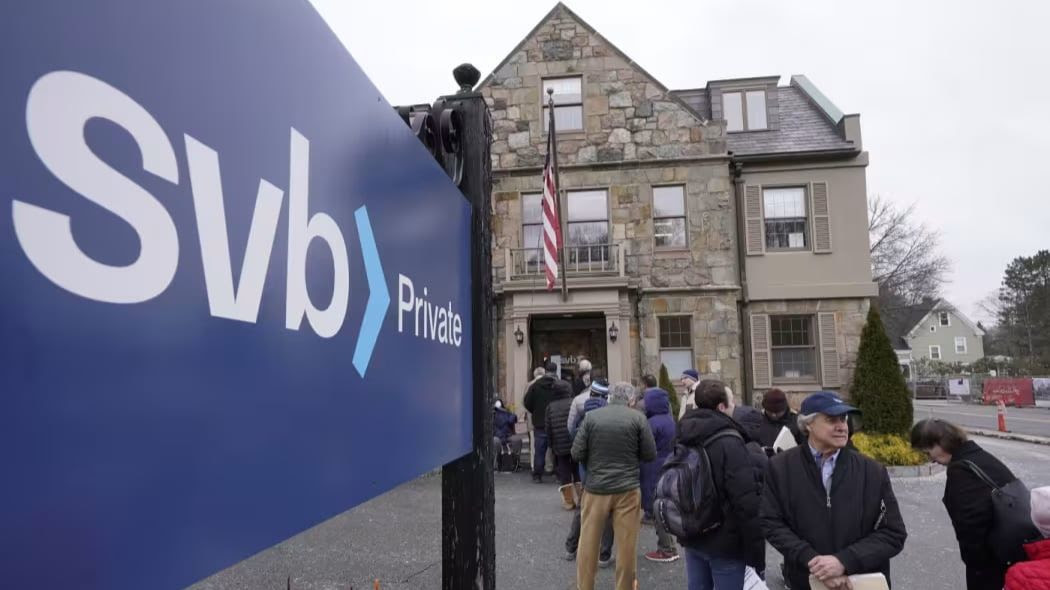
Big banks are raking in cash from Wall Street’s trading and investment boom, but regional banks? They’re stuck in neutral.
Despite falling interest rates, hopes for deregulation, and lower inflation, businesses just aren’t borrowing like they should be.
In fact, loan growth in 2024 was barely 2.7%—the weakest since the 2008 financial crisis.
Regional banks are feeling it the hardest, with commercial real estate loans drying up and businesses tapping private lenders instead of traditional banks.
Even JPMorgan, the biggest of the big, saw a decline in business loans.
If banks can’t get lending back on track, it raises a big question: Is the economy weaker than it looks, or are banks just losing their relevance?
Either way, something’s got to give.
STOCKS TO WATCH
↘️ Walgreens Boots Alliance: The pharmacy chain’s stock tumbled nearly 10% in premarket trading after announcing the suspension of its quarterly dividend. The move comes as part of a cash-preservation strategy amid litigation expenses and restructuring efforts.
↗️ Vertex Pharmaceuticals: Shares surged almost 10% after-hours following the FDA’s approval of Journavx, the company’s new oral non-opioid pain medication.
↗️ Visa: The credit card giant exceeded earnings and revenue expectations, crediting strong consumer spending during the holiday season. Shares climbed 2% before the market opened.
↗️ Intel: Despite issuing a bleak outlook, the semiconductor company reported a smaller-than-expected dip in quarterly sales. The stock advanced nearly 2% in premarket trading.
This Day in the Markets
📈 On this day in 1998, Exxon surpassed General Electric to become the most valuable U.S. company, reaching a market capitalization of over $246 billion, as rising oil prices and strong global energy demand underscored the dominance of the petroleum industry in the late 1990s, while GE, once a symbol of American industrial strength, saw its valuation slip amid shifting economic conditions and changing investor sentiment.
STOCK PICK OF THE WEEK
Weiss Research
Bitcoin at $150K? This “Crypto Guru” Says There’s a Better Bet
Juan Villaverde may be America’s top crypto expert.
With an uncanny knack for nailing big turns in the market.
Back in October, with Bitcoin sitting at just $68,000 … he predicted that crypto was about to go on a huge run.
In fact, even with the presidential race still hanging in the balance, Juan said Nov. 5 was going to be a huge day for crypto.
And Bitcoin was going to hit $100,000 before the end of the year.
Sure enough, Bitcoin took off on the exact day Juan said it would.
It’s up more than 40% since the election … surpassing $100,000 on Dec. 8 .…
Now Juan believes it could hit $150,000 … or higher in 2025.
“We are entering what could be the biggest bull run in crypto’s history,” Juan said in this recent interview.
But, you’ll really want to hear what Juan has to say in the fifth minute of this exclusive sit-down.
He warns folks not to rush out and buy Bitcoin.
Instead, there’s another coin he thinks could do even better.
And this may be the best way to take advantage of this huge bull market.
ECONOMY
Trump’s 25% Tariff Plan—A Game Changer for Trade?

With Trump pushing for 25% tariffs on Mexico and Canada, the usual crowd is predicting chaos—higher grocery prices, supply chain disruptions, and pricier energy.
Meanwhile, U.S. steelmakers are thrilled, hoping these tariffs will finally level the playing field.
Automakers and Wall Street are bracing for impact, while economists debate whether certain industries—like oil—might get exemptions.
And let’s not forget China, which could face an extra 10% tariff on its exports, including consumer electronics.
Whether this is a brilliant move to boost American industry or just the next chapter in Trump’s trade battles, one thing’s clear: the days of cheap, consequence-free imports may be over.
ECONOMY HEADLINES
🌎 Markets remain unsettled as Trump’s looming tariffs on Canada and Mexico spark inflation fears, though investors hope for last-minute negotiations.
💵 Despite economic uncertainty, the bond market remains surprisingly calm, with investors betting that tariffs won’t trigger a major inflation spike.
💳 Visa’s profits rose 5% as strong consumer spending persisted, though earnings slightly missed analyst expectations.
📊 The Fed’s preferred inflation gauge is expected to show stubborn price pressures, reinforcing the decision to pause interest rate cuts.
🚂 Railroad stocks continue to climb despite tariff threats, as investors believe complex supply chains will prevent major disruptions.
BUSINESS
Orsted Dumps CEO as Wind Energy Hits a Trump-Sized Wall
Denmark’s Orsted just ousted its CEO, as the wind industry struggles with rising costs, supply-chain messes, and—of course—Trump’s no-nonsense stance on wind energy.
The company took a $1.7 billion hit on U.S. projects, with delays piling up and costs skyrocketing.
Meanwhile, Trump has slammed the brakes on new offshore wind leases, putting the industry in an even tougher spot.
Orsted’s new CEO, Rasmus Errboe, inherits a sinking ship, and unless wind companies figure out how to survive without government handouts and wishful thinking, this “green revolution” might be running out of air.
Maybe it’s time to invest in something that actually works—like oil, gas, and nuclear.
RETIREMENT
Social Security Panic? Don’t Rush to Claim Just Yet

The usual fearmongers are sounding the alarm about Social Security’s finances, blaming Trump’s tax-cut proposals for supposedly accelerating its depletion.
But let’s be real—Congress won’t let benefits vanish, especially for retirees and near-retirees.
The real problem? A system that’s been mismanaged for decades, with both parties kicking the can down the road.
While claiming early (at 62) might seem like a smart move, waiting until 70 means bigger, inflation-protected checks—something few other investments offer.
Unless you absolutely need the money, panicking over politics won’t do your retirement any favors.
Washington will find a way to patch the system—just don’t expect it to be pretty.
Trivia
Which industry in the U.S. adds over $3 trillion to the economy annually, making it the largest by GDP share and providing jobs for roughly 15% of the workforce?
A. Manufacturing
B. Financial Services
C. Healthcare & Social Assistance
D. Professional & Business Services
E. Retail Trade
Scroll for the answer
TAXES
Why Paying More Taxes Now Could Save You Big Later

Most people think the goal is to pay as little tax as possible, but in some cases, paying more today could mean paying a lot less over time.
With tax rates currently historically low, smart retirees and high earners are looking at strategies like Roth IRA conversions, accelerating investment income, and spreading out withdrawals to avoid getting hit with higher taxes down the road—especially as required minimum distributions (RMDs) from traditional retirement accounts start kicking in.
Plus, with Social Security taxes, Medicare surcharges, and future tax hikes looming, waiting too long could leave you paying way more than you expected.
Bottom line? A little tax pain now might save you from a financial gut punch later.
Answer
Which industry in the U.S. adds over $3 trillion to the economy annually, making it the largest by GDP share and providing jobs for roughly 15% of the workforce
B. Financial Services
The financial services industry is the largest sector in the U.S. economy, contributing over $3 trillion to the GDP annually and employing around 15% of the workforce.
This sector includes banking, insurance, investment firms, and real estate, serving as a backbone for economic activity by facilitating capital flow, credit availability, and risk management.
The industry’s strength is bolstered by Wall Street, global financial institutions, and a robust regulatory framework that supports innovation and stability.