Stocks are rising but for all the wrong reasons

Dear Friend,
So much for that September rate cut—July inflation just crashed the party with a 0.9% pop, the biggest spike in over three years.
Rate-cut hopes? Nuked. Small-cap stocks? Smacked.
Deere’s even coughing up $600M in tariffs this year, and Wall Street’s starting to feel that queasy “uh-oh” energy again.
Meanwhile, Americans aren’t moving (literally), Ford’s hyping a $30K electric truck with zero prototypes, and the S&P somehow still eked out a record close—thanks, Big Tech.
But if this rally keeps running on fumes and Fed denial, buckle up.
Keep reading this edition of the Everlasting Wealth Insider Report for the full story behind the headlines.
Jeremy Blossom
Editor in Chief, Everlasting Wealth
MARKETS
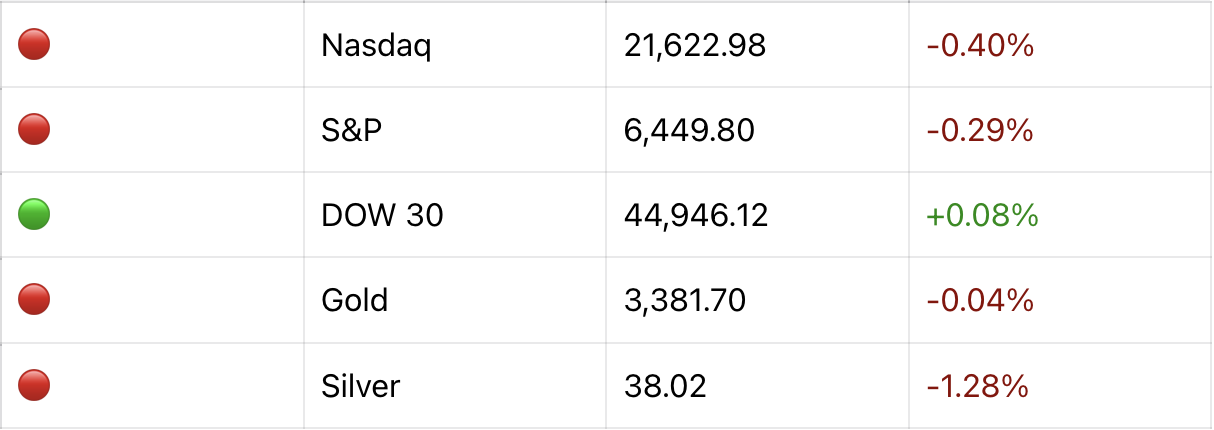
MARKET HEADLINES
💉 UnitedHealth stock soared after Buffett’s Berkshire revealed a $1.6 billion stake, but the company still faces serious challenges, including DOJ investigations and political pressure.
🧾 Buffett’s recent investments, including UnitedHealth and steelmaker Nucor, show selective buying—but his massive $344 billion cash reserve signals few true bargains in the current market.
🛢️ Trump’s Alaska summit with Putin could swing oil prices drastically, depending on whether talks lead to peace in Ukraine or harsher sanctions on Russia.
🧬 Buffett’s mystery investment was confirmed as UnitedHealth, part of a broader shift that included cutting Apple and Bank of America stakes while buying homebuilders and chipmakers.
🧯 Despite weak economic justification, Trump’s political pressure may push the Fed to deliver multiple rate cuts this year, exposing Powell to accusations of bowing to influence.
🧓 Trump touted improvements to Social Security, but experts warn the agency faces accelerated insolvency unless Congress acts to fix its finances by 2033.
💊 Big Pharma is bypassing pharmacy middlemen with direct-to-consumer drug sales, driven by weight-loss drugs and pressure from the Trump administration to cut U.S. prices.
🛍️ JD.com beat earnings expectations, easing concerns over its food-delivery unit and helping lift Chinese tech stocks amid ongoing tariff and margin worries.
💹 Despite big-name fund investments, Nvidia shares stayed flat as the stock consolidates ahead of earnings, with optimism from Tepper and Soros backing AI momentum.
📉 Goldman Sachs recommends using cheap put options to hedge against market downside, as record highs and low volatility mask rising economic and political risks.
Hot Inflation Throws Cold Water on Rate Cut Hopes—and Small-Cap Stocks
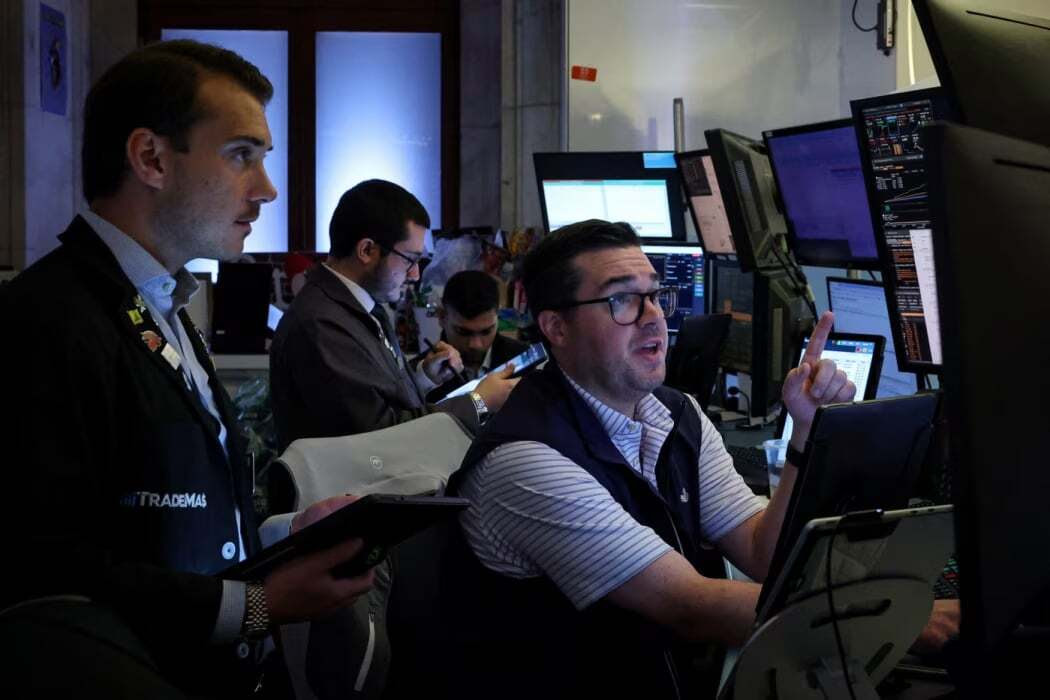
So much for that cozy September rate cut—July’s wholesale inflation came in hot, up 0.9%, the biggest jump in over three years.
That little surprise nuked any talk of a 50-point cut, with Schwab’s strategist flat-out saying, “not gonna happen.”
Small-cap stocks, which had just started to crawl back into the spotlight, got smacked hard—Russell 2000 dropped 1.2% after a good run earlier in the week.
Big Tech and the financial giants came to the rescue, with Amazon, Schwab, and JPMorgan dragging the S&P 500 to a barely-there record close.
But let’s be real—tariffs, inflation fears, and skittish Fed officials are starting to spook the market again.
Even Deere took a hit after saying it’ll pay $600 million in tariffs this year.
Meanwhile, Trump’s team is trying to turn a handshake with the EU into an actual trade deal.
Stocks may still be climbing, but this rally’s starting to feel like it’s running on fumes and hope.
STOCKS 2 WATCH
↗️ Intel: Shares of the chipmaker rose 4.5% in premarket trading, extending Thursday’s gains, amid reports that the Trump administration is in talks to potentially take an ownership stake in the company.
🔎 Rivian: The EV manufacturer revealed that changes to federal fuel economy standards have caused a $100 million delay in revenue tied to regulatory credits.
↘️ Applied Materials: The maker of semiconductor manufacturing equipment issued a weaker outlook, forecasting a decline in both profit and revenue for the upcoming quarter. Shares tumbled 14% before the bell.
↗️ UnitedHealth: The health insurance giant jumped 13% in after-hours trading after Warren Buffett’s Berkshire Hathaway revealed a new position in the company last quarter, while trimming its large stake in Apple. Apple shares were mostly flat.
Fact of the Week
U.S. consumers are such a powerful economic force that their collective spending makes up nearly 30% of total global consumption—meaning that while Americans make up just over 4% of the world’s population, they drive almost a third of the planet’s demand for goods and services!
ECONOMY
The American Dream’s in Gridlock—Nobody’s Moving, and It’s Costing Us

Turns out, the most mobile country on Earth is now stuck in neutral. Americans aren’t buying homes, they’re not switching jobs, and they’re definitely not relocating for new opportunities.
Thanks to a frozen housing market, sky-high mortgage rates, and dual-income households, people are staying put—even if their homes or jobs no longer fit.
The result? Families can’t upgrade, empty-nesters can’t downsize, and companies can’t fill roles that require someone to move.
The so-called “golden handcuffs”—like low-rate mortgages or generous post-Covid comp packages—are keeping workers chained to their current gigs.
Employers have slashed relocation benefits, and folks are too nervous to give up financial security for what now feels like a risky leap.
It’s not just a lifestyle problem—it’s dragging down productivity, wages, and the broader economy.
The American spirit of hustle and mobility?
It’s parked in the driveway for the foreseeable future.
ECONOMIC HEADLINES
🏥 Early retirees face surging ACA healthcare premiums—up 15% or more—as federal subsidies expire, forcing them to plan carefully to manage taxable income and qualify for aid.
🎂 On Social Security’s 90th anniversary, Trump touted improvements and protection of benefits, but critics warn his policies could hasten insolvency and open the door to privatization.
🛒 Retail sales data is critical for Fed rate decisions, and a “just right” July report could support expected cuts without signaling major economic weakness.
💸 A Fed rate cut may not lower 10-year Treasury yields unless recession fears rise—limiting potential savings on mortgages and long-term government borrowing.
💊 Eli Lilly is hiking European drug prices—by up to 170%—to offset Trump’s pressure to cut U.S. prices, potentially raising international benchmarks that influence domestic caps.
📈 U.S. wholesale inflation surged 0.9% in July, the fastest since 2022, driven by rising services costs and early tariff impacts—raising concerns about price pressures ahead.
🇺🇸 Tariffs may not fuel runaway inflation as feared—instead, they could cool consumer demand and justify Fed rate cuts by rebalancing economic pressure points.
🏛️ Despite weak justification, Trump’s pressure and market momentum are likely to force the Fed into multiple rate cuts this year—even if inflation remains sticky.
📉 Deutsche Bank is betting against 10-year Treasuries, arguing bond markets have overestimated how much the Fed will cut rates given solid economic fundamentals.
🪙 Treasury Secretary Bessent is calling for steep rate cuts, but futures markets remain cautious, expecting only modest moves amid sticky inflation and labor uncertainty.
Trivia
What does an inverted yield curve typically signal about the U.S. economy?
A. Rising inflation
B. Strong economic growth
C. Imminent interest rate hikes
D. Potential economic recession
E. Stock market overvaluation
Scroll for the answer
BUSINESS
Ford’s EV Hail Mary: Channel Elon, Reboot the Model T, Hope for the Best

Ford’s hoping its “next Model T moment” doesn’t end up being just another PowerPoint presentation.
EV chief Doug Field—who’s basically been everywhere from Segway to Tesla to Apple—is now leading Ford’s push to build a $30,000 electric pickup by 2027.
The strategy? Slash costs with clever engineering, overhaul century-old manufacturing methods, and maybe borrow a few pages (or entire chapters) from Elon Musk’s playbook.
There’s no actual truck yet, just hype, videos, and a lot of buzzwords like “first principles thinking.”
Investors yawned, probably because the 2027 timeline feels like a lifetime away in EV land.
Meanwhile, Ford’s losing billions on EVs and scaling back on bigger electric models because batteries are just too pricey.
Still, Field’s betting that smaller batteries, fewer parts, and Tesla-style mega-castings can finally get Ford in the affordable EV game.
Musk may be off chasing robot fantasies—but Ford’s just trying not to be left in the dust.
Answer
What does an inverted yield curve typically signal about the U.S. economy?
D. Potential economic recession
An inverted yield curve occurs when short-term Treasury yields exceed long-term yields—most commonly, the 2-year yield rising above the 10-year yield.
This inversion defies the usual upward-sloping yield curve and is widely viewed as a warning sign of an upcoming recession.
It suggests that investors expect slower growth and lower interest rates in the future.
Historically, yield curve inversions have preceded nearly every U.S. recession over the past several decades, making them a closely watched indicator by economists and market participants.