ADP data shows 40,000 small-business jobs gone, signaling Main Street’s growing pain

Dear Friend,
Bitcoin’s back above $120K and partying like it’s 2021—all because the job market tripped over its shoelaces and the government has shut down.
Apparently, bad news is the new buy signal, and Wall Street’s throwing cash at crypto, stocks, and anything else that screams “risk-on.”
Meanwhile, Buffett just handed Occidental $9.7 billion like it’s lunch money, and small businesses are bleeding jobs while big corporations keep chugging along.
Keep reading this week’s Insider Report—it’s getting spicy.
Jeremy Blossom
Editor in Chief, Everlasting Wealth
MARKETS
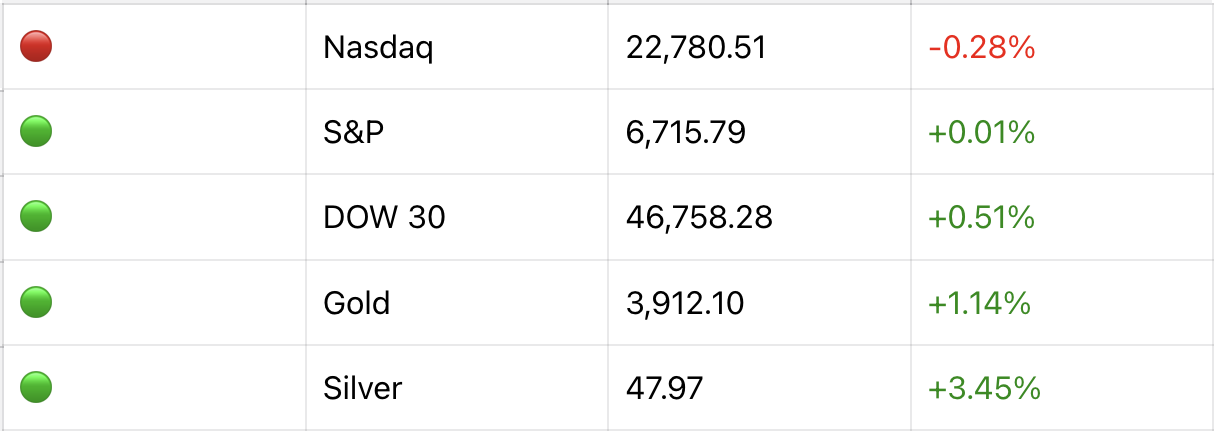
MARKET HEADLINES
🚗 Tesla stock rebounded after record EV deliveries, while a $1 trillion pay vote for Elon Musk looms amid backlash from shareholder groups and analysts predicting it will pass.
💸 Coinbase stock surged after an upgrade from Rothschild & Co Redburn, citing its growing revenue diversification beyond trading fees and deeper institutional adoption of crypto.
🤖 Nvidia shares rose despite reports of delayed UAE chip sales, buoyed by expanding AI partnerships—like one with Fujitsu—and continued AI market dominance.
⚛️ Quantum Computing stock could rise another 86%, according to a bullish analyst who sees early leadership, strong earnings, and rapid quantum sector growth justifying investor excitement.
🚫 Applied Materials and peers fell as new U.S. export restrictions are expected to slash hundreds of millions in China-related revenue, highlighting ongoing U.S.-China chip tensions.
🧠 Elon Musk’s AI hardware dreams at Tesla face stiff competition from Sam Altman’s OpenAI, but Nvidia stands to benefit no matter who wins the race for AI dominance.
✈️ Boeing’s delay of its 777X jet to 2027 could hit earnings, though investors remain optimistic after a 23% year-to-date stock gain under new leadership.
🇰🇷 South Korea’s stock market keeps rallying—up nearly 60% in 2025—as investors prioritize AI growth and corporate governance reform over Trump’s tariff threats.
🐻 Short sellers like Muddy Waters and Blue Orca persist in a tough bull market, betting on overvalued stocks and surviving via selective, activist-driven strategies.
📊 Despite a turbulent year, Q3 brought welcome market stability, with moderate volatility and broad participation boosting investor confidence heading into the historically strong fourth quarter.
Bitcoin Blasts Past $120K Because Nothing Says “Safe Haven” Like Weak Jobs and Washington Chaos

Bitcoin just jumped back above $120,000 and is closing in on its all-time high from August—because apparently, soft job numbers and a government shutdown are bullish now.
The crypto crowd’s loving that weaker-than-expected ADP jobs report, which has Wall Street betting the Fed will cut rates at the end of the month.
Cheaper money means risk-on, baby.
Ethereum, Solana, and XRP all joined the rally too, because why not?
Stocks are also at record highs, and nobody seems too worried about the clown show in D.C. slowing things down.
So while the real economy cools off, investors are throwing cash at Bitcoin like it’s 2021 all over again.
Remember: bad news is good news—at least until it isn’t.
STOCKS 2 WATCH
↗️ Hitachi: The Japanese tech and industrial conglomerate soared 10% in Tokyo trading after reaching a preliminary agreement to assist OpenAI in building out its AI infrastructure.
↘️ Applied Materials: Shares of the semiconductor equipment supplier dropped about 4% premarket after the company warned that new U.S. export restrictions could slash $710 million from its revenue due to limits on sales to China.
🔎 Chevron: A fire broke out overnight at its El Segundo refinery in Los Angeles, a key West Coast facility. While the blaze has been mostly contained, oil markets reacted with WTI crude futures climbing.
🔎 Nvidia: The chip leader’s AI chip deal with the United Arab Emirates is reportedly in limbo, according to The Wall Street Journal, despite being signed five months ago and backed by U.S. investment promises.
Fact of the Week
The U.S. shale revolution transformed America from the world’s biggest oil importer into a top energy exporter within just over a decade, reshaping global energy markets, reducing reliance on foreign oil, and giving Washington new geopolitical leverage every time barrels flow out of Texas and North Dakota.
ECONOMY
U.S. Sheds 32,000 Jobs in September—Labor Market Hits the Brakes

Well, the ADP report just threw a bucket of cold water on the whole “soft landing” fantasy—turns out the U.S. lost 32,000 private-sector jobs in September.
Economists were expecting a gain of 45,000, so they were only off by, oh, 77,000.
The biggest hit came from leisure and hospitality—down 19,000—which tells you all you need to know about how the average American is feeling right now.
Small businesses got crushed, dropping 40,000 jobs, while big corporations somehow added 33,000.
So once again, Wall Street’s still feasting while Main Street gets squeezed.
With the official BLS jobs report possibly delayed by the government shutdown, this ADP miss is what we’ve got—and it’s not pretty.
No wonder the Fed’s cutting rates. Too bad that won’t bring back jobs at your local diner.
Economic Headlines
💵 AutoZone’s VP sold $12 million in shares after the company missed earnings for the fifth straight quarter, as tariffs and LIFO charges continue to pressure profits.
🏠 Economists say mortgage rates need to drop to 5.5% or lower to revive U.S. home sales, with affordability and psychological thresholds keeping buyers on the sidelines.
🤖 Despite fears of job losses, new research shows AI isn’t currently driving the labor market slowdown, with most disruption still in its early stages.
💸 The U.S. dollar continues to slide amid the government shutdown and Fed rate cuts, with concerns mounting over economic data gaps and central bank independence.
📈 Stocks keep hitting record highs despite the government shutdown, as weak job data fuels hopes for more Fed rate cuts and markets look past political turmoil.
🏥 The government shutdown could double ACA premiums in 2026 and end expanded Medicare telehealth access, though Medicaid and employer insurance remain largely unaffected.
🌾 Trump’s tariffs are hitting U.S. farmers hard, with lost market share to Brazil and Argentina prompting talk of a multibillion-dollar bailout and trade talks with China.
⚡ Lithium Americas stock soared after the U.S. government took a 5% stake tied to a $435M loan, part of a broader push to secure domestic battery supply chains.
💊 Pharma stocks rallied after Pfizer’s tariff-free drug deal with Trump, but long-term sector headwinds like patent cliffs and Medicaid exposure cloud the outlook.
📊 With federal data on hold due to the shutdown, Wall Street is counting on Q3 bank earnings to anchor market expectations amid a data desert and economic uncertainty.
Trivia
Which type of bond is issued by state or local governments and often offers tax advantages to investors?
A. Treasury Bond
B. Corporate Bond
C. Zero-Coupon Bond
D. Municipal Bond
E. Convertible Bond
Scroll for the answer
BUSINESS
Buffett Bails Out Occidental—Again—While Doubling Down on Fossil Fuels
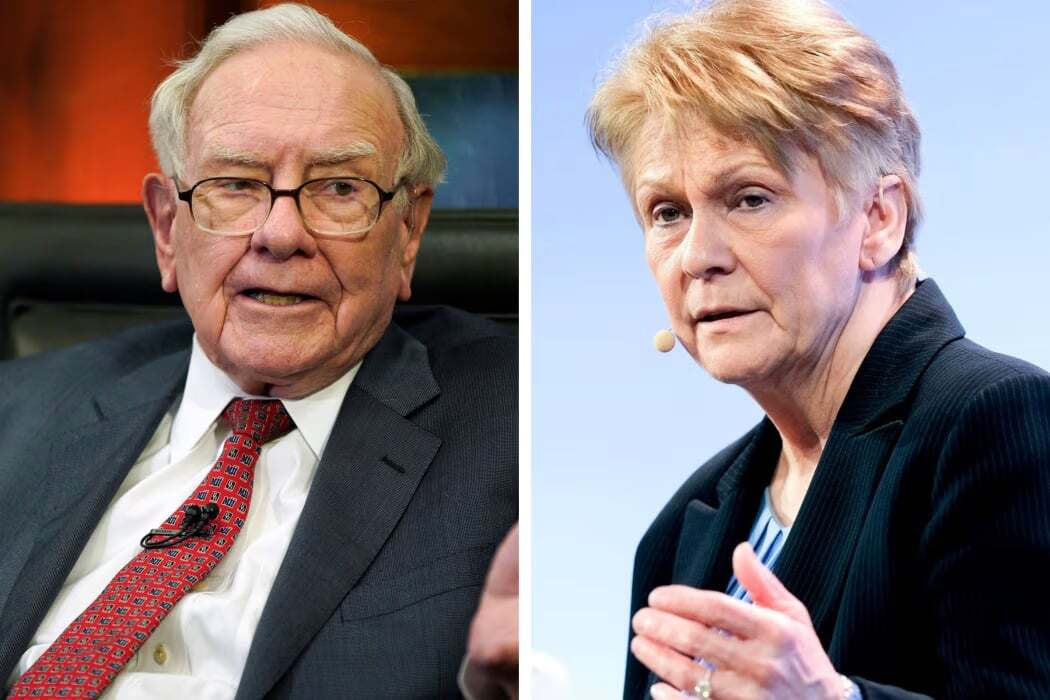
Warren Buffett just cut a $9.7 billion check to Occidental Petroleum to buy its OxyChem petrochemicals business—and once again, he’s bailing out Vicki Hollub’s debt-heavy fossil-fuel empire.
Occidental’s been bingeing on oil assets for years (thanks to previous cash from Buffett), but that debt pile has gotten heavier than a barrel of crude.
Now with oil prices back near $60, they’re offloading OxyChem to pay down debt and double down on Texas oilfields.
Wall Street didn’t love it—Occidental’s stock dropped 7% on the news—but Buffett’s getting a prime asset and more control, now owning 27% of the company.
Some call it smart; others say they’re dumping a profitable chemical biz during a down cycle.
Either way, it’s clear.
Hollub’s all-in on oil, and Buffett’s not just backing her—he’s betting the house on old-school energy sticking around.
So much for the green transition.
Answer
Which type of bond is issued by state or local governments and often offers tax advantages to investors?
D. Municipal Bond
Municipal bonds, or “munis,” are debt securities issued by state, city, or local governments to finance public projects like schools, highways, and infrastructure.
One of their key advantages is that the interest income is often exempt from federal income taxes, and in some cases, from state and local taxes as well.
This makes them particularly attractive to investors in higher tax brackets.
While generally considered lower risk than corporate bonds, muni bonds may still carry credit and interest rate risk.