Hot GDP, strong hiring, and rising inflation threaten Wall Street’s easy-money fantasy

Dear Friend,
Wall Street just threw its third tantrum in a row—because apparently the economy isn’t collapsing fast enough for another Fed handout.
GDP’s up, jobless claims are down, and durable goods are flying (literally), but investors wanted doom and gloom, not a sturdy landing.
Meanwhile, Powell’s playing Twister with interest rates, CarMax crashed harder than your cousin’s Camry, and crypto bros are betting the rent on 100x “perps” like it’s Vegas on the blockchain.
Keep reading this week’s Insider Report for the rest of the madness.
Jeremy Blossom
Editor in Chief, Everlasting Wealth
MARKETS
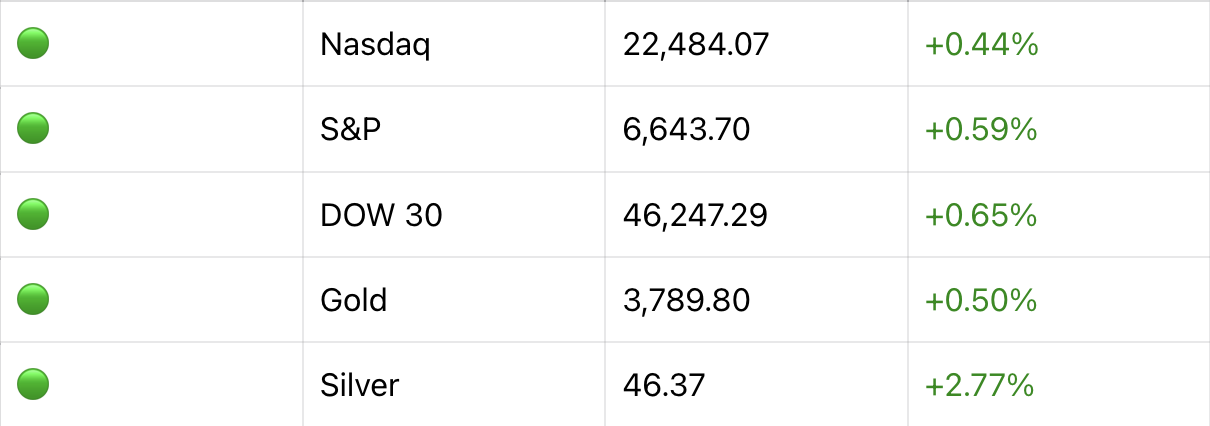
MARKET HEADLINES
🪑 Wayfair, RH, and Williams-Sonoma stocks fell after Trump imposed steep tariffs on imported furniture, pressuring retailers dependent on Asian supply chains.
⚒️ Freeport-McMoRan stock plunged after a deadly mine accident in Indonesia disrupted global copper supply, sparking analyst downgrades and market uncertainty.
🎨 Sherwin-Williams extended its longest losing streak in decades as weak DIY demand, tariff costs, and valuation concerns weighed on investor confidence.
🚗 CarMax shares crashed 20% after a major earnings miss and falling used-car prices signaled weakness in the auto retail sector.
🤖 Alibaba stock surged as it unveiled a trillion-parameter AI model, expanded global cloud services, and gained renewed support from Beijing.
🚀 Tesla received a Wall Street-high $600 price target from Wedbush, driven by optimism over its AI, autonomous vehicles, and humanoid robotics roadmap.
💻 Nvidia stock slipped amid skepticism about AI market sustainability and circular investments, despite long-term optimism from Wall Street.
⚠️ Stocks fell for a third straight day as Fed rate cut doubts and new Trump tariffs rattled markets, testing investors’ long-term resolve.
🛒 Amazon agreed to a $2.5 billion FTC settlement over deceptive Prime practices, with refunds on the way for millions of affected customers.
🪙 Bitcoin, Ether, and Solana dropped further amid crypto market deleveraging and inflation fears that could delay more Fed rate cuts.
Wall Street Has a Panic Attack Because the Economy Isn’t Collapsing Yet
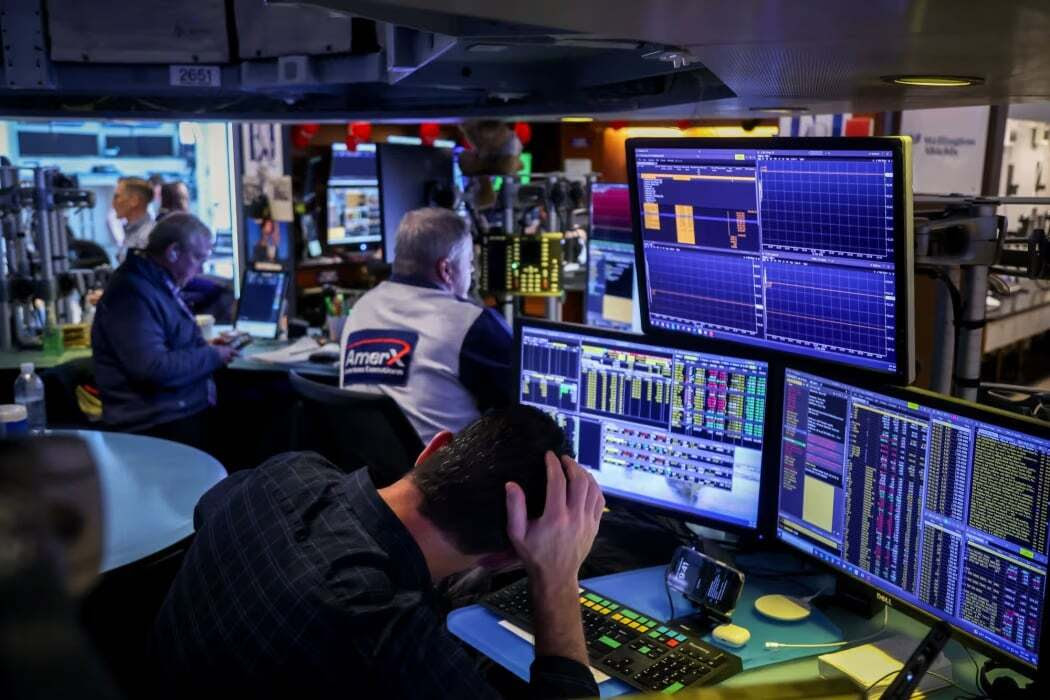
Stocks just dropped for a third straight day, and Wall Street’s throwing a fit because—get this—the economy might not be in a free fall.
GDP growth was revised up to 3.8%, jobless claims dropped, and durable goods (especially aircraft) jumped, but investors are apparently disappointed we’re not crashing fast enough to justify more rate cuts.
Oracle’s stock tanked again—guess shouting “AI!” can’t hide the fact it’s wildly overpriced.
Meanwhile, CarMax face-planted 20% as used car buyers are finally tapping out, thanks to tariffs, shaky credit, and common sense.
So now we’re stuck in this weird place where solid data spooks traders who want a soft economy so Powell keeps handing out free money.
Friday’s inflation report could pour more cold water on that fantasy if it comes in too hot.
AI dreams vs. inflation reality—and no one seems happy either way.
STOCKS 2 WATCH
↘️ Daimler Truck, Traton: The German commercial-vehicle manufacturers saw shares decline after the U.S. announced a 25% tariff on heavy truck imports, impacting models produced in their Mexican plants. The new tariffs are set to begin Wednesday.
↘️ Sumitomo Pharma, Otsuka, CSL: Pharmaceutical firms with significant U.S. exposure slid in overseas trading after new tariffs were unveiled targeting branded and patented drugs.
↘️ Williams-Sonoma, Wayfair, RH: Home-goods and furniture retailers took a hit in after-hours trading following the announcement of tariffs on imported items like upholstered furniture and kitchen cabinetry.
🔎 Costco: The warehouse giant reported improved earnings and sales, but missed expectations on same-store sales growth, even as extended hours began to show early success.
↗️ Intel: Shares of the chipmaker rose for a fourth consecutive session after reports surfaced that CEO Lip-Bu Tan is in talks with Apple, TSMC, and others about potential partnerships or investment deals.
↗️ Six Flags: The theme park operator gained 2% in off-hours trading after an activist investor reportedly began pushing for a sale or spinoff of its real estate assets to unlock shareholder value.
Fact of the Week
The U.S. Treasury market, valued at over $27 trillion, is so vast and influential that it’s often called the “world’s risk-free benchmark,” meaning everything from mortgage rates in Kansas to bond yields in Europe takes its cue from how investors feel about Uncle Sam’s IOUs!
ECONOMY
Powell Says Rates Are ‘Modestly Restrictive’—Translation: Cuts Are Coming (Probably)
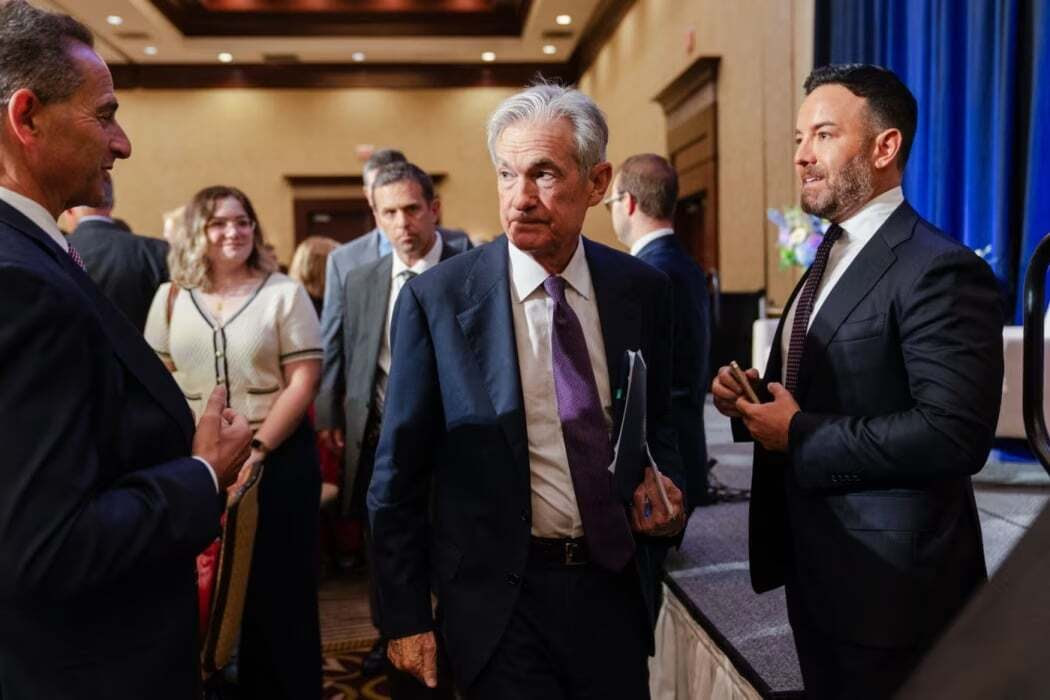
Jerome Powell’s out here threading the political needle again—calling rates “modestly restrictive” and leaving the door wide open for more cuts without fully committing (classic Fed speak).
After last week’s rate cut, he basically said, “Hey, we’re watching the labor market now,” since job growth has been cooling off like leftovers in the fridge.
Powell’s trying to balance inflation still hovering near 3% and a softening labor market while pretending the Fed isn’t under a political microscope.
Trump’s team, of course, says the Fed’s dragging its feet after botching inflation years ago—and they’re not being subtle about wanting more aggressive cuts.
Powell didn’t name names, but he defended the Fed’s actions post-2008 and 2020, saying the U.S. economy’s doing better than most… which isn’t a high bar these days.
Unless the data goes haywire, expect more cuts this year—but Powell’s walking a tightrope with one eye on Wall Street and the other dodging political knives.
Economic Headlines
💊 Eli Lilly and Pfizer stocks rose despite Trump’s threat of 100% tariffs on imported branded drugs, as investors saw it as more political posturing than immediate disruption.
⚛️ Fermi’s $550 million IPO aims to fund a massive AI-powered energy project—including the “Donald J. Trump Generating Plant”—to provide nuclear, gas, and solar power to data centers by 2038.
🧱 Trump announced sweeping new tariffs—100% on imported branded drugs, 50% on cabinetry, 30% on furniture, and 25% on heavy trucks—to push manufacturing back to the U.S. under national security claims.
🪨 Lithium Americas stock surged 23% on speculation the U.S. government may take a stake in its Thacker Pass project in exchange for loan support, offering a potential lifeline for U.S. battery supply chains.
📉 Fed Governor Stephen Miran called for aggressive rate cuts, citing declining immigration and falling population growth as reasons to drop interest rates by up to 2 percentage points.
💳 Trump’s new Gold Card visa offers fast-track U.S. residency in exchange for a $1 million donation—but legal, tax, and visa-cap hurdles may limit its appeal to wealthy foreigners.
🏛️ The Trump administration warned of permanent federal layoffs if a government shutdown occurs, escalating tensions with Democrats but leaving markets largely unfazed.
📊 Stronger-than-expected U.S. economic data is dimming hopes for more Fed rate cuts, with GDP and jobless claims showing strength that could reignite inflation worries.
🏠 Existing-home sales are headed for another weak year, but falling mortgage rates and increased inventory could help revive the housing market in late 2025 or early 2026.
📉 Markets are drifting amid Fed uncertainty, AI fatigue, and crypto declines—raising the risk that the next big move in stocks may be lower, not higher.
Trivia
Which event is widely considered the beginning of the Great Recession in the United States?
A. Collapse of Lehman Brothers
B. Dot-com Bubble Burst
C. Federal Reserve Rate Hike
D. Passage of the Dodd-Frank Act
E. Eurozone Debt Crisis
Scroll for the answer
BUSINESS
Bitcoin “Perps” Let You 100x Your Bet—Because What Could Possibly Go Wrong?
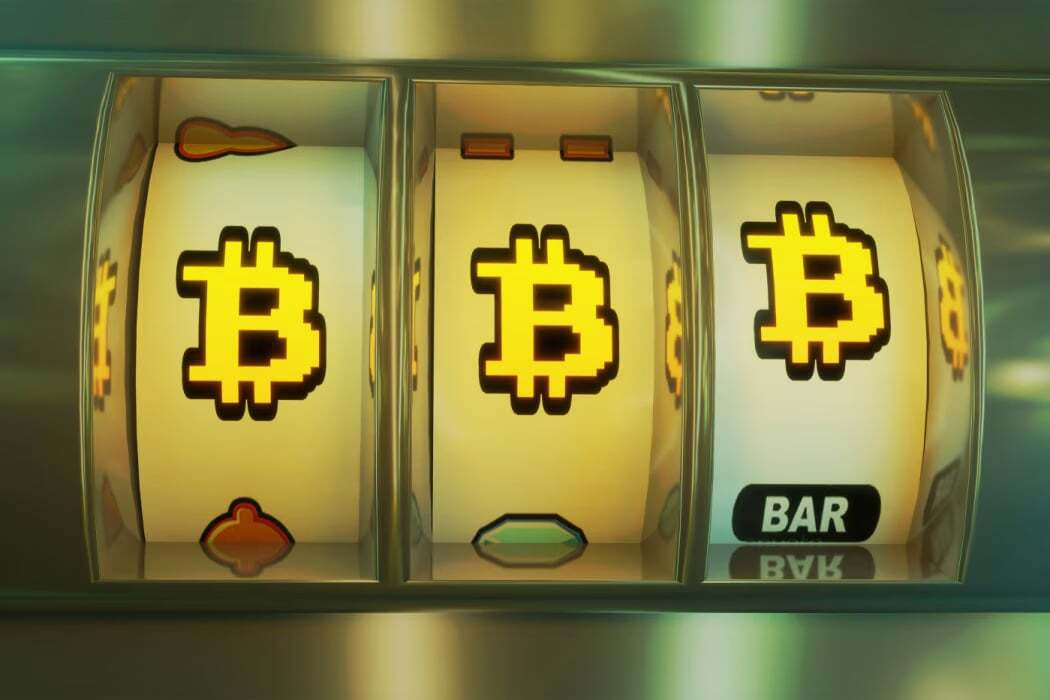
Wall Street’s gambling fever just hit another level—say hello to “perps,” the hottest new crypto bet where you can win (or lose) everything in minutes.
These perpetual futures let traders leverage their Bitcoin bets up to 100x—yes, 100 times your money.
So if Bitcoin goes up 10%, you double your cash. If it drops 10%, you’re toast. Simple, right?
These things now make up nearly 70% of all Bitcoin trading in 2025, because apparently nothing says “stable financial system” like legalized crypto slot machines.
Robinhood and Coinbase are racing to offer these things, with Wall Street cheering from the sidelines as retail traders dive in headfirst.
And of course, while the little guys gamble their rent money, the big firms just keep raking in the fees.
It’s “get rich or get wrecked” out here—and the house always wins.
Answer
Which event is widely considered the beginning of the Great Recession in the United States?
A. Collapse of Lehman Brothers
The collapse of Lehman Brothers on September 15, 2008, marked a pivotal moment that triggered the Great Recession, the most severe global financial crisis since the Great Depression.
Lehman, a major investment bank, filed for bankruptcy after failing to secure a bailout, setting off a cascade of panic in credit markets, a deep loss of confidence in financial institutions, and a sharp contraction in economic activity.
The aftermath included widespread job losses, home foreclosures, and the passage of large-scale federal stimulus and financial reform efforts.