
Dear Friend,
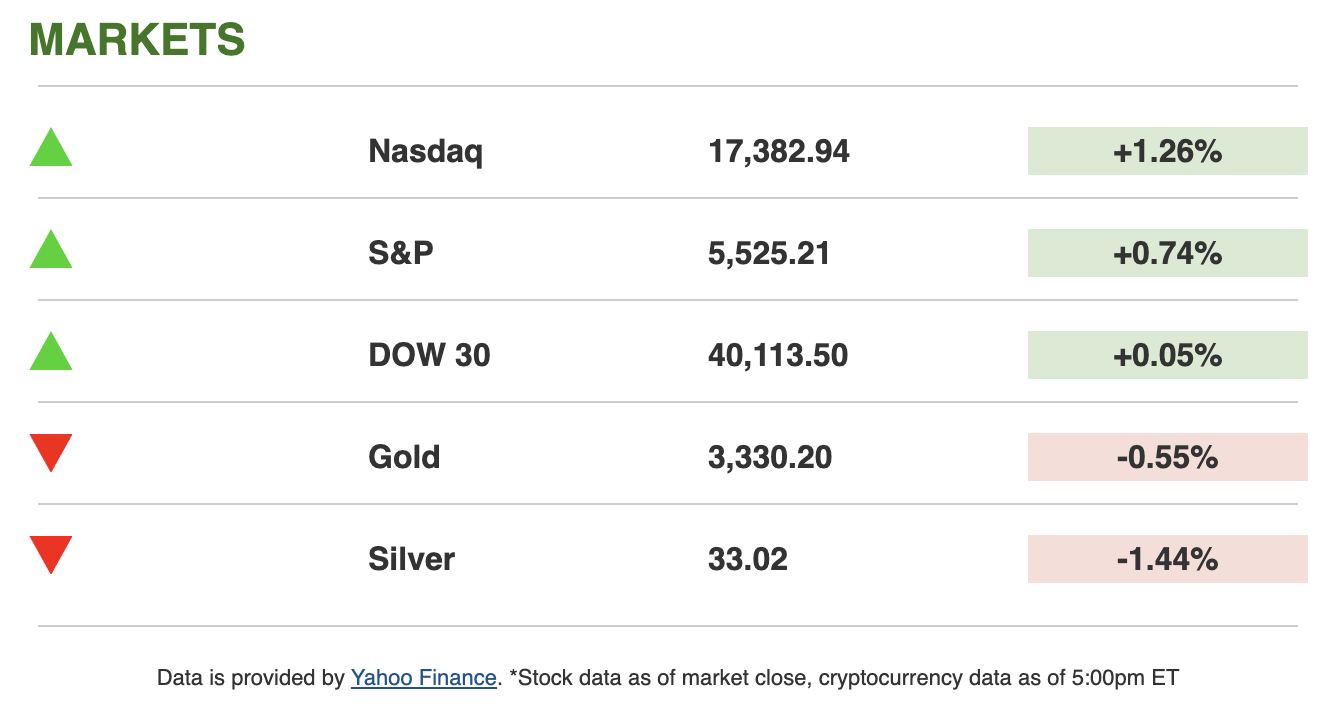
Markets just logged a three-day winning streak, with the Nasdaq popping over 5 percent this week as tech led the charge and investors cheered signs of progress on trade and rates.
Trump’s keeping the pressure on China—no deals yet, but the leverage game is strong.
And with the Fed sounding friendlier and tech earnings looking solid, Wall Street’s mood has shifted from doom to maybe-boom.
Meanwhile, Trump’s tariff playbook is all about precision—targeting goods, not services, where America still dominates.
And while the headlines warn of uncertainty, Mastercard’s numbers say otherwise: consumers are still swiping, traveling, and spending like it’s business as usual.
Let’s break it all down in this edition of the Everlasting Wealth Insider Report.
Jeremy Blossom
Editor in Chief, Everlasting Wealth
MARKET HEADLINES
💊 Bristol Myers beat earnings expectations but faces growth concerns due to patent expirations and weak drug trial results.
💻 Intel stock fell after issuing a weak forecast driven by tariff uncertainty despite strong Q1 earnings.
🚗 Tesla gained on promises of a low-cost model and robotaxis, but doubts linger about its ability to expand market share.
🌯 Chipotle reported its first sales decline since Covid, raising worries about its premium valuation amid weaker consumer demand.
🖥️ ServiceNow shares surged after strong earnings and guidance, positioning software as a safe haven in a volatile market.
♻️ Tariffs are driving up prices on new goods, boosting demand for secondhand items and benefiting resale stocks like ThredUp, The RealReal, and eBay.
🌐 Chinese stocks dropped as Beijing denied trade war negotiations, intensifying market fears over escalating tariffs.
💾 Micron stock rose following rival SK Hynix’s strong AI chip earnings, boosting hopes for HBM market growth.
💊 Eli Lilly soared after its new weight-loss pill showed strong trial results, posing a threat to Novo Nordisk.
📉 Texas Instruments jumped on strong earnings and outlook, though tariff risks could impact second-half performance.
Tech Powers a Comeback as Trade Optimism Lifts Wall Street
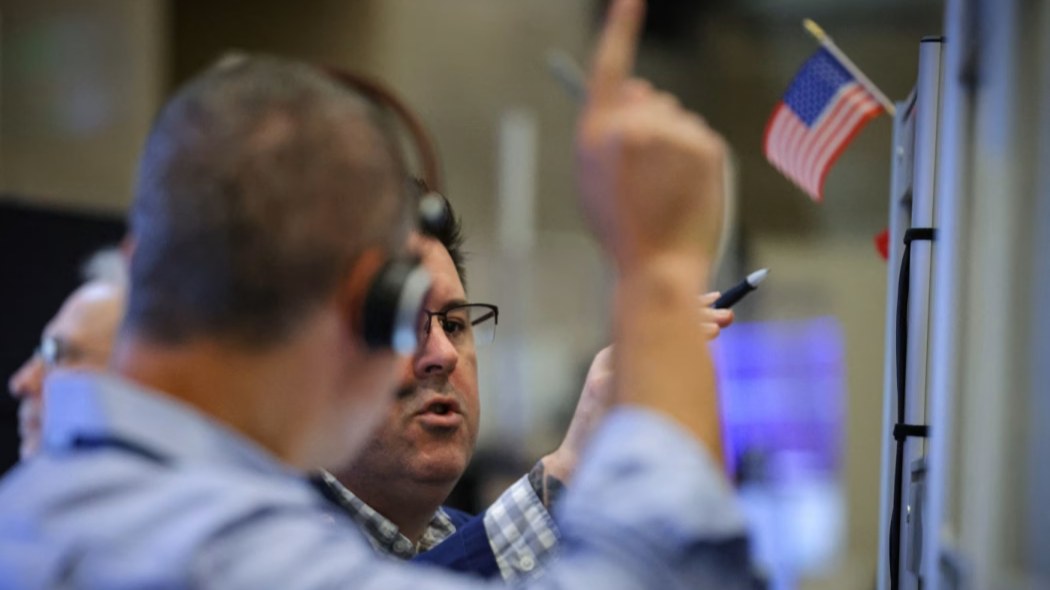
The markets just logged their third straight day of gains, with the Nasdaq surging over 5% this week as tech stocks took the driver’s seat and investors clung to hopes of trade breakthroughs and lower interest rates.
Despite limited progress on paper, Treasury Secretary Scott Bessent’s upbeat comments and the Fed’s softer tone were enough to spark a rally.
President Trump confirmed ongoing talks with China—no handshakes yet, but it’s clear he’s keeping the pressure on.
And let’s be honest, that’s exactly how you get leverage. Meanwhile, tech giants like Alphabet posted strong earnings, calming fears that tariffs would crush corporate profits.
The S&P 500 officially bounced out of correction territory, and even though volatility is still high, the mood has shifted from panic to possibility.
Tariffs may sting a bit, but if they lead to better trade deals and a stronger America, investors are starting to believe it might just be worth the ride.
STOCKS TO WATCH
↘️ IBM (IBM): Despite posting better-than-expected quarterly results, the tech giant’s warning about macro uncertainty slowing enterprise spending sent shares tumbling 6.6%.
↘️ Procter & Gamble (PG): The consumer goods titan behind brands like Tide and Pampers lowered its annual outlook, citing a volatile global and consumer landscape. Shares dropped 3.7%.
↗️ Merck (MRK): The pharma giant revised its 2025 adjusted earnings down due to newly imposed tariffs, but shares still managed to close 1.4% higher as losses were quickly pared.
↗️ Tesla (TSLA): While EU sales declined for the third straight month amid tariff worries and political noise around CEO Elon Musk, Tesla shares still rallied 3.5% as part of a broader tech surge in the “Magnificent Seven” group.
↗️ ServiceNow (NOW): Government efficiency initiatives have boosted demand for the software firm’s platform. Shares soared 15% on the back of strong optimism.
↘️ Fiserv (FI): The software provider missed on adjusted revenue, disappointing investors and triggering a sharp 19% drop in its stock.
This Day in the Markets
📉 On this day in 2010, Standard & Poor’s downgraded Greece’s sovereign credit rating to junk status, citing concerns over its ballooning debt and inability to meet fiscal targets; the downgrade triggered a sharp global market selloff and raised alarm about the stability of the Eurozone, as investors feared the potential for contagion to other heavily indebted European nations like Portugal, Spain, and Italy, eventually prompting a series of international bailouts and austerity measures.
ECONOMY
Why Trump’s Tariffs Skipped the $8.8 Trillion Services Sector
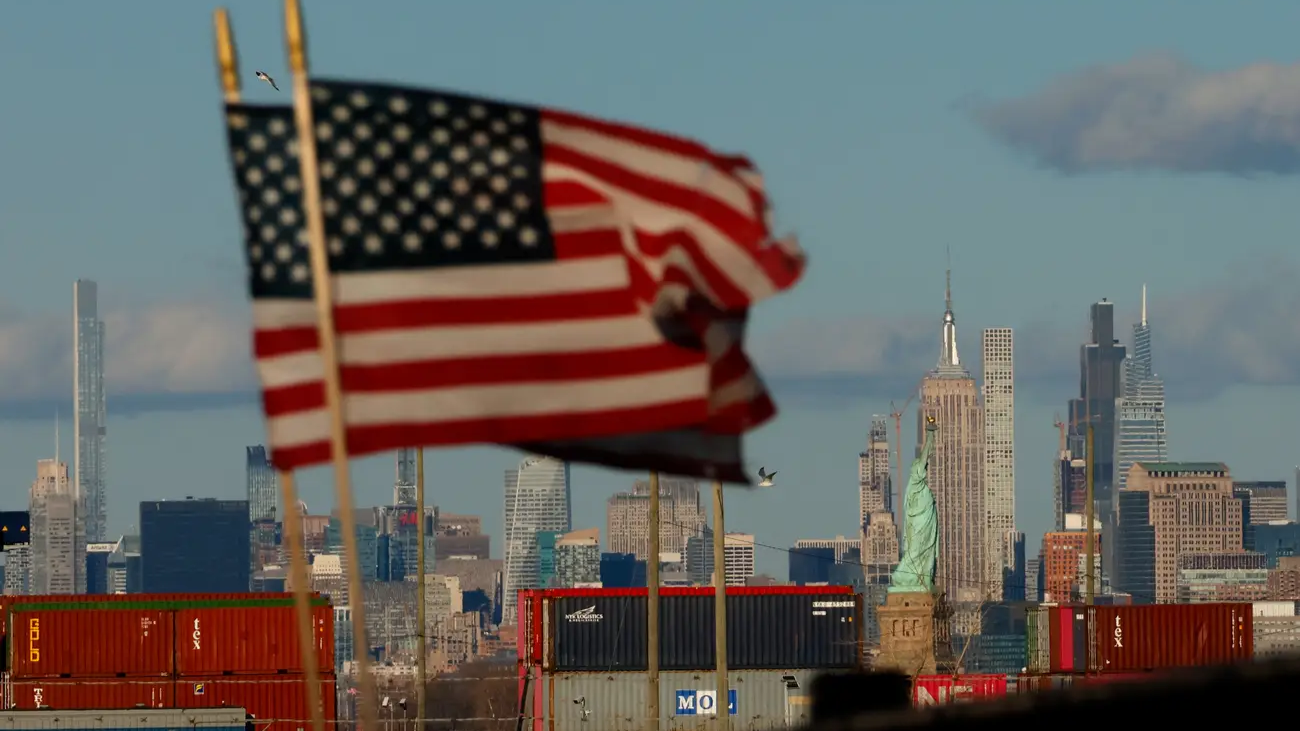
Trump’s tough tariff crackdown may have shaken up global trade in goods, but one massive part of the economy stayed untouched—services.
And that wasn’t an oversight.
With America running a $293 billion surplus in services, compared to a $1.2 trillion deficit in goods, there was no political or economic upside to slapping tariffs on sectors where we’re already winning.
Think finance, legal, education, tourism—these are areas where the U.S. dominates globally.
Targeting them would be like shooting ourselves in the foot just to say we pulled the trigger.
Plus, tariffs on services are nearly impossible to enforce—good luck taxing digital consulting or cross-border streaming.
And let’s be real: goods tariffs are a lot easier for voters to grasp and feel—nothing drives home the message of putting America first like making China pay more to flood our markets with cheap stuff.
Trump focused where the imbalance hurts, while protecting the sectors where America still leads the world. That’s not neglect—that’s strategy.
ECONOMY HEADLINES
🌈 Sensient Technologies could benefit from RFK Jr.’s proposed ban on synthetic dyes thanks to its strong position in natural food coloring.
🏦 Trump’s attacks on Fed Chair Powell may be more about creating a scapegoat than actually firing him.
🌍 IMF chief Kristalina Georgieva says economic uncertainty—not tariffs—is the biggest threat to global growth.
📉 Treasury Secretary Scott Bessent is leveraging regulations, issuance, and tax policy to drive down long-term U.S. bond yields.
🚁 Elon Musk’s claim that U.S. drones depend on China is overstated, especially for military-grade technology.
⚠️ The U.S. is looking more like an emerging market as Trump’s policies erode confidence in institutions like the Fed.
🚢 Cleveland Fed’s Beth Hammack is watching travel and shipping data to assess economic health amid tariff-induced uncertainty.
🎓 Trump’s war on elite university endowments, including funding freezes and tax threats, is shaking higher education’s financial foundations.
📉 Universities are under pressure to tap endowments and adapt to massive funding cuts and political scrutiny.
⚡ GE Vernova stock jumped after a strong earnings report and maintained guidance despite tariff headwinds.
Trivia
Which U.S. company emerged as a major beneficiary of the 2008 financial crisis, gaining dominance by acquiring failing competitors?
A. JPMorgan Chase
B. Citigroup
C. Goldman Sachs
D. Bank of America
E. Wells Fargo
Scroll for the answer
BUSINESS
Mastercard Holds Strong as Spending Defies Consumer Gloom

Despite all the noise about economic uncertainty, Mastercard’s business is holding steady thanks to one simple fact: people are still spending.
CEO Michael Miebach said at the World Economy Summit that while consumer confidence has dropped to its lowest level since 2021, the company’s data tells a very different story.
In March, spending was up 1.4%—not exactly a splurge, but certainly no sign of a pullback either.
Tariffs? Recession talk? A weakening dollar? None of it has slowed down the swipe-happy American consumer.
Miebach called today’s shoppers “empowered” and noted they’re still prioritizing travel and lifestyle purchases.
Bottom line: Mastercard’s transaction volume is staying strong, and for now, the spending engine that fuels its revenue shows no signs of stalling.
Answer
Which U.S. company emerged as a major beneficiary of the 2008 financial crisis, gaining dominance by acquiring failing competitors?
A. JPMorgan Chase
JPMorgan Chase significantly expanded its size and influence during the 2008 financial crisis by acquiring distressed institutions. Most notably, it took over Bear Stearns in a government-assisted deal and later acquired Washington Mutual after its collapse—the largest bank failure in U.S. history.
These acquisitions allowed JPMorgan to grow its asset base, customer reach, and investment banking capabilities, ultimately helping it emerge as the largest bank in the U.S. by total assets. While other banks like Citigroup and Bank of America suffered heavy losses and required government bailouts, JPMorgan managed to remain profitable and strengthen its position during the turmoil.