
Dear Friend,
Despite Tesla shedding nearly $800 billion in market value, retail investors are standing firm—and in some cases, buying more.
They’re betting big on Elon Musk’s long-term vision, from AI to autonomous driving, regardless of short-term noise.
Meanwhile, Trump is tackling the housing crisis with a bold plan to use federal land for millions of new homes—a move that cuts red tape without bloating the federal budget.
And as Tesla pushes global expansion, it’s running into the same growing pains that once challenged Ford and GM.
The EV race isn’t just about scale—it’s about adaptability, and the winners may be the ones who play smart, not just big.
Let’s dive into this edition of the Everlasting Wealth Insider Report.
Jeremy Blossom
Editor in Chief, Everlasting Wealth
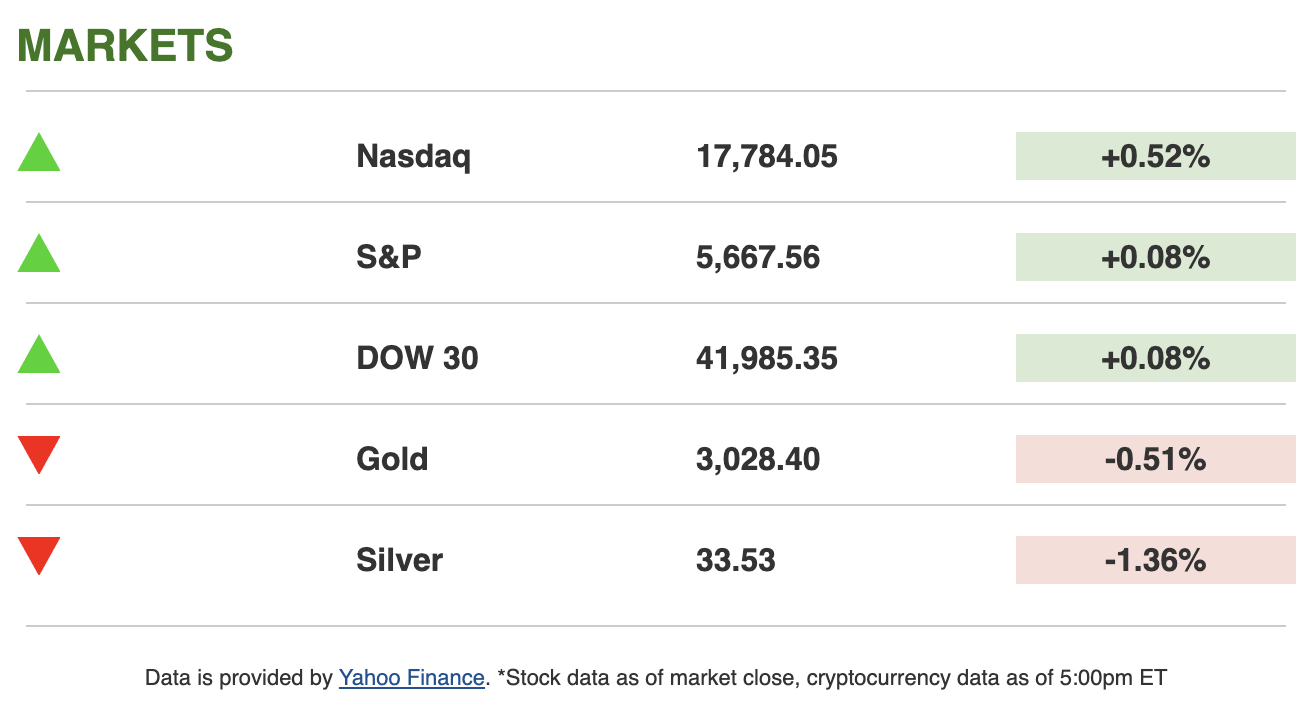
MARKET HEADLINES
📉 NIO stock tumbles after missing revenue targets and offering weak delivery guidance, worrying EV investors.
🧊 Quantum computing stocks sink as Nvidia’s underwhelming event and poor earnings from sector players deflate hype.
🚗 Tesla stock slides toward a ninth straight weekly loss as owners trade in vehicles and brand concerns intensify.
🔻 XRP slips despite positive legal news, as traders wait for catalysts like ETF approval or U.S. crypto stockpile moves.
📈 Managed futures ETFs gain attention as a potential hedge while stocks fall, but come with complexity and high fees.
⚠️ CK Hutchison’s stock could soar if its $19B ports sale goes through, but China’s disapproval adds political risk.
🏦 Wall Street banks face dimming outlooks as trade war uncertainty and slowing M&A weigh on earnings projections.
🛳️ Carnival earnings will test consumer confidence, with signs of slowing travel demand putting pressure on the sector.
💸 MicroStrategy’s new preferred stock ‘Strife’ may yield over 10%, but high risk has investors demanding steep discounts.
🇮🇳 Indian stocks recover slightly after a correction, with financials and power sectors drawing renewed investor interest.
Retail Faith in Tesla Stays Strong as Stock Sinks — Investors Bet on Tech, Not Turmoil
Despite Tesla shedding nearly $800 billion in market value since December, many retail investors are holding the line—and even doubling down.
Business Insider spoke to three individual investors who brushed off the selloff as an overreaction, citing long-term confidence in Elon Musk’s leadership and the company’s ambitions in AI, robotics, and autonomous driving.
One investor said he bought $10,000 worth of shares during the dip, while another put in $24,000 last week, both calling Musk a visionary whose political involvement doesn’t deter their confidence.
While concerns around EV sales linger, these investors are more focused on the upside of Tesla’s future tech.
As one put it bluntly: “Tesla stock is down 50%, and that’s a chance to make money.”
STOCKS TO WATCH
↘️ IAG (UK:IAG): The parent of British Airways saw its shares fall after a power outage shut down London’s Heathrow Airport, a key hub. Other airline stocks, including Air France-KLM, EasyJet, and Lufthansa, also declined.
↘️ Nike (NKE): The athletic apparel giant warned that its sales decline is set to worsen as it continues discounting to move excess inventory. Shares slipped in premarket trading.
↘️ FedEx (FDX): Shares dropped after the shipping giant cut its full-year outlook, pointing to weaker business-to-business demand and ongoing economic uncertainty.
↘️ Micron Technology (MU): Despite topping Wall Street expectations with its latest results, the memory-chip maker’s stock edged lower in premarket trading.
🔎 Carnival (CCL): The cruise line operator is set to report earnings Friday morning. With travel demand under the microscope following Delta’s guidance cut, investors are on edge.
This Day in the Markets
📈 On this day in 2020, the S&P 500 hit its pandemic low, closing at 2,237 after weeks of steep losses driven by COVID-19 fears and global shutdowns; however, this marked a turning point as unprecedented Federal Reserve action—including near-zero interest rates and unlimited quantitative easing—combined with massive government stimulus, sparked a dramatic recovery that launched one of the fastest and most powerful bull markets in U.S. history, with equities rebounding sharply in the months that followed.
ECONOMY
Trump’s Housing Plan: Opening Federal Land Could Unlock Millions of New Homes
The Trump administration is launching a task force to explore using federal land to help fix America’s housing shortage—an idea that could bring 3 to 4 million new homes to the market.
With the federal government owning over 640 million acres of land, much of it in the West, the goal is to lease or transfer suitable parcels to local governments and nonprofits to build affordable housing.
States like Nevada and Utah—where housing demand and federal land overlap—could see the biggest impact.
Of course, there will be challenges: local zoning, infrastructure needs, and NIMBY resistance are all real hurdles.
But Trump’s approach cuts through the usual red tape with a market-based strategy that doesn’t rely on more government spending.
It’s a bold swing at a problem Washington has talked about for decades—and if it works, it could mark one of the largest housing expansions in modern history.
ECONOMY HEADLINES
🚘 Tesla stock heads for a ninth straight weekly decline as record numbers of owners trade in their vehicles, raising concerns about the brand’s political polarization and waning consumer appeal.
💵 Foreign buyers, led by Canada, are dumping long-term U.S. Treasuries, signaling concerns over sanctions and a broader shift toward gold amid ongoing de-dollarization efforts.
🏭 Trump’s upcoming reciprocal tariff plan aims to level global trade and incentivize U.S. manufacturing, but experts warn implementation could be chaotic and economically disruptive.
⚠️ Commerce Secretary Howard Lutnick’s public endorsement of Tesla stock raises alarm over potential ethics violations and blurring of public and private interests.
📚 Trump signs an executive order to dismantle the Education Department, shifting authority to states while cutting staff and targeting diversity and inclusion programs.
🏗️ America’s push to reshore manufacturing is set to boost industrial stocks like Eaton, GE Vernova, and Rockwell Automation despite short-term economic uncertainty.
🍁 In response to Trump’s tariffs and insults, Canadians are boycotting U.S. goods and travel while rallying around homegrown apps and products in a surge of national pride.
📈 Amid a market drop, megacap stocks like Eli Lilly, Visa, and Salesforce are emerging as strong buys due to their resilient growth, low short interest, and solid fundamentals.
🏡 Existing-home sales jumped unexpectedly in February, but economists warn the rebound may be short-lived as seasonal factors and weak pending sales data cloud the outlook.
🍷 The EU delays retaliatory tariffs on U.S. goods until mid-April, hoping to buy time for negotiations and avoid escalating the transatlantic trade war.
Trivia
Which U.S. state has the largest economy by gross state product (GSP)?
A. New York
B. Florida
C. Texas
D. Illinois
E. California
Scroll for the answer
BUSINESS
Tesla’s Global Gamble Hits a Pothole: Why Building a Worldwide Auto Empire Is No Easy Ride
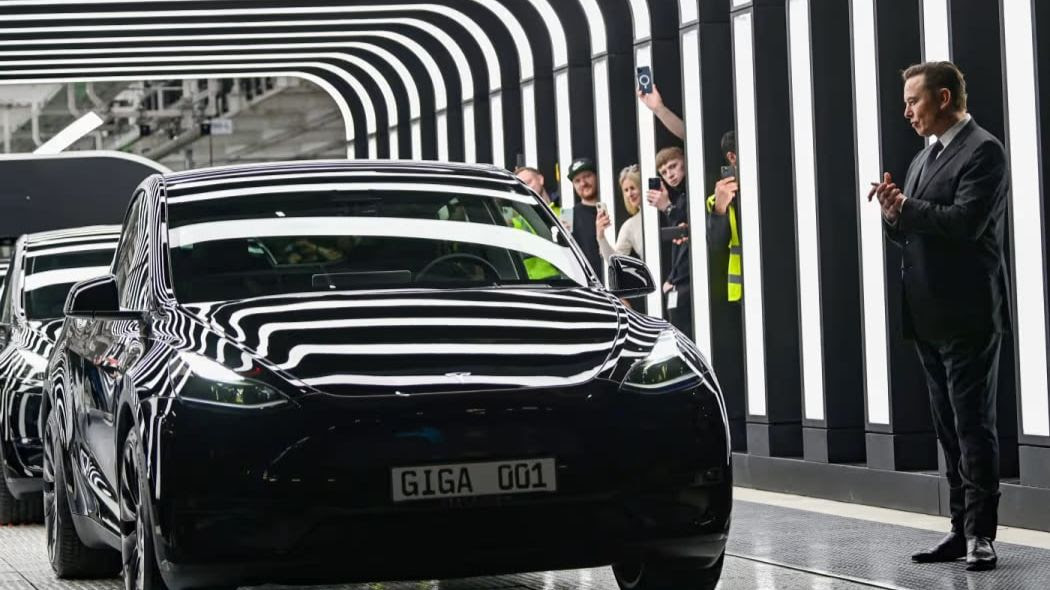
Tesla’s attempt to build a global auto empire—once hailed as visionary—has hit rough terrain, echoing century-old struggles faced by giants like Ford and GM.
While Elon Musk’s electric carmaker has achieved impressive global revenue distribution, its recent 50% stock plunge and European sales slump—partly fueled by Musk’s polarizing role in the Trump administration—highlight the steep price of trying to be everything, everywhere.
Add in protectionist policies, varying EV adoption rates, and rising competition from localized players like Renault and Toyota, and the challenges mount.
Stellantis, born from a megamerger meant to mimic GM’s historic multi-brand model, is also facing headwinds, with soft sales and bloated portfolios of underperforming brands like Chrysler and Lancia.
History shows global scale often buckles under the weight of fragmented consumer preferences, logistical complexity, and political risk.
While shared platforms and smart partnerships offer hope, the EV revolution may not crown one global winner—but instead reward nimble, regionally focused contenders.
Answer
Which U.S. state has the largest economy by gross state product (GSP)?
E. California
California has the largest state economy in the U.S., with a gross state product (GSP) exceeding $4 trillion, making it not only the biggest in the nation but also one of the largest subnational economies in the world—comparable to that of major countries like Germany or Japan.
This is driven by its diverse economic base, including technology (Silicon Valley), entertainment (Hollywood), agriculture, manufacturing, and international trade.
Texas and New York follow in second and third place, respectively, with strong performances in energy, finance, and business services.
Florida and Illinois have sizable economies but do not come close to California’s scale.