
Dear Friend,
City slickers are trading overpriced apartments for rural sunsets, with Millennials and Gen Z flocking to small towns.
But don’t expect a Hallmark movie—housing prices are creeping up, and finding a decent latte?
Good luck! Meanwhile, Guardian Bikes is pedaling uphill in its quest to bring bike manufacturing back to the U.S., proving “Made in America” is as tough as it is patriotic.
Oh, and if you’ve got a New Year’s baby, Prudential wants to jumpstart their retirement with a $150 head start—though they’ll still need another $1.88 million to coast through retirement.
Let’s dive into this week’s headlines in the Insider Report!
Jeremy Blossom
Editor in Chief, Everlasting Wealth
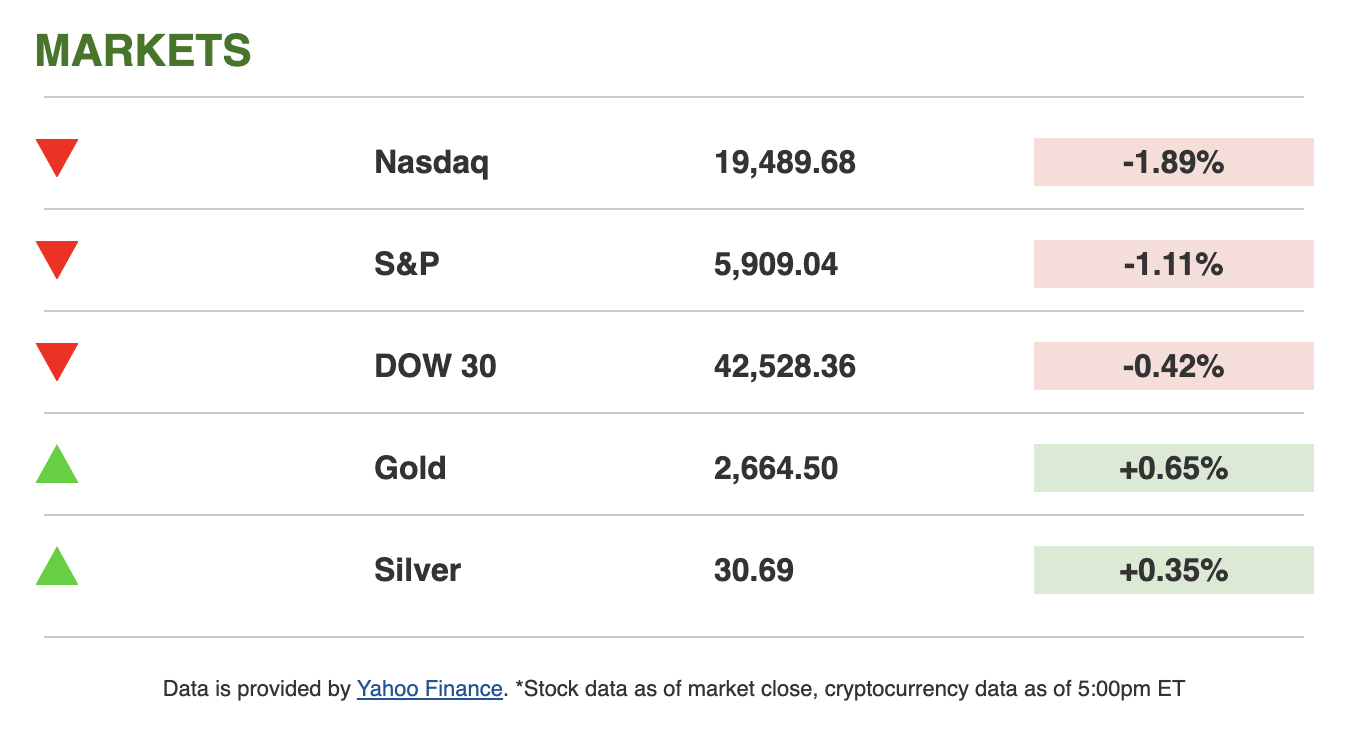
MARKET HEADLINES
📈 Stocks Surge Amid Major Announcements: Nvidia’s unveiling of advanced gaming GPUs powered by Blackwell architecture, partnerships with Uber on autonomous driving, and Micron’s key role in memory supply, alongside FuboTV’s Disney merger and Inari Medical’s acquisition by Stryker, drove significant stock market movements on Tuesday.
🤖 Nvidia’s Dominance Continues in 2025: Nvidia’s unmatched leadership in AI-driven GPU technology, supported by surging demand for cloud AI, multimodal models, and advancements in data center infrastructure, is expected to drive an extraordinary 112% revenue growth, cementing its pivotal role in the AI revolution.
🚗 Tesla Gains Bulls with Robotaxis and AI Expansion: Tesla’s launch of its affordable Model 2, ambitious plans for a partially unsupervised Full Self-Driving system, and upcoming robotaxi services have led analysts to predict strong 2025 growth, despite fluctuating margins and competition in the EV market.
📺 FuboTV’s 250% Stock Surge from Disney Deal: FuboTV’s merger with Disney’s Hulu + Live TV, creating a new sports streaming giant with over 6 million subscribers, has sparked a massive stock rally and is expected to redefine the sports streaming market amid cord-cutting trends.
🌍 Eurasia Group Warns of Global Instability: The consultancy warns that geopolitical risks, a shift toward a G-Zero world lacking leadership, and heightened U.S.-China tensions, alongside rising nationalism and rogue state activity, mark an era as perilous as the early Cold War, threatening global economic and security stability.
2025 Investment Playbook: Navigating Trumpenomics and Market Shifts

With Trump back in the White House, 2025 presents a mix of opportunities and challenges for investors as tax cuts, deregulation, and trade policies take center stage.
Experts recommend diversifying into midcap and small-cap stocks, poised to gain from policy shifts, while AI-related companies remain a hot ticket across infrastructure and applications.
On the bond front, high-yield options, mortgage-backed securities, and shorter-term bonds look attractive amid expected rate cuts.
Inflation, driven by tariffs, labor constraints, and deficit spending, remains a concern, adding to market volatility as investors brace for slower stock growth after years of big gains.
Real estate, value stocks, and sectors tied to deregulation and dealmaking also show promise.
In this evolving landscape, a balanced portfolio with a focus on adaptability is key to staying ahead.
STOCKS TO WATCH
↗️ Uber: The ride-hailing company announced a collaboration with Nvidia to develop autonomous-driving technology, leading to a 3% rise in premarket trading and building on its previous session’s gains.
↗️ Nvidia: CEO Jensen Huang showcased a variety of new AI products at a Las Vegas tech event. Nvidia’s shares gained 1% in premarket trading, continuing their upward momentum from Monday. Other chipmakers like Micron and Marvell also saw gains.
🔎 Inari Medical and Stryker: Medical-technology company Inari surged 20% after Stryker agreed to acquire it in a $4.9 billion deal. However, Stryker’s shares dipped 1% in premarket trading.
↘️ Tencent and CATL: Chinese firms faced declines after being designated as military-related by the Pentagon. Tencent dropped 7.3% in Hong Kong, while CATL, a Tesla battery supplier, fell 2.8% in mainland China.
This Day in the Markets
📈 On this day in 2021, the Nasdaq Composite reached a significant milestone, closing above the 13,000 level for the first time in its history. It finished the session at 13,067.48, driven by strong performance in technology stocks and optimism around economic recovery amid the rollout of COVID-19 vaccines. This record highlighted the resilience of tech-heavy stocks during the pandemic and growing investor confidence in the sector’s future growth.
STOCK PICK OF THE WEEK
Brownstone Research
Wall Street’s Best-Kept Secret for Retirement

Larry Benedict went 20 years on Wall Street without a single losing year…
His former hedge fund, Banyan Capital, was ranked in the top 1% in the entire world….
And he’s one of the few dozen people to earn the label “Market Wizard” (along with Ray Dalio and Paul Tudor Jones).
He’s proud to say that he helped generate hundreds of millions over the years for his hedge fund clients in every kind of market (including $95 million during the ’08 crash).
But his strategy flies directly in the face of everything your financial planner will tell you.
It has nothing to do with buy-and-hold.
It has nothing to do with diversifying your portfolio.
And it has nothing to do with tech stocks.
It’s easy to implement, and you don’t have to go out of your comfort zone to get started.
He recently aired a video explaining exactly how to do it.
You could have the chance to start making more money for your retirement right now.
ECONOMY
Country Roads Take Millennials Home

The urban exodus is shaking up America’s economy as Millennials and Gen Z ditch overpriced city apartments for rural bliss—well, sort of.
Driven by remote work and unaffordable urban housing, young professionals are flocking to small towns like Dawson County, Georgia, where the dream of bigger houses and open spaces beckons.
Rural counties have seen nearly 40% growth in young adults since 2020, flipping the script on decades of urban migration.
But the transition isn’t all sunsets and chickens.
Rising housing prices and the realities of isolation are giving newcomers a “Yellowstone”-style wake-up call. Still, with cheaper homes and fewer restrictions, these small-town arrivals are reshaping rural economies.
Just don’t ask them where to find a decent latte.
ECONOMY HEADLINES
📉 White-Collar Unemployment Stretches Longer: White-collar workers, especially in tech, media, and law, are facing prolonged job searches due to slowed hiring, rising productivity demands, and economic shifts that have reshaped labor market dynamics post-pandemic, forcing many to switch industries or accept part-time roles.
💰 Trump Tariffs, Not Trudeau, Shape Canadian Dollar Trends: Despite Prime Minister Trudeau’s pending resignation, the Canadian dollar’s movement reflects U.S. tariff uncertainty under President-elect Trump, as markets brace for potential economic disruptions to Canada’s export-reliant economy.
🔧 Biden Blocks U.S. Steel Sale to Protect National Security: President Biden rejected a $14 billion Nippon Steel acquisition of U.S. Steel, prioritizing domestic industry and union jobs despite objections from national security advisers and the risk of straining U.S.-Japan relations.
💳 Borrowers Struggle Amid Pandemic Financial Hangover: Americans, especially lower-income groups, are grappling with mounting debts and rising delinquencies after pandemic-era financial relief ended, reversing gains in credit scores and forcing many to seek credit consolidation or restructured loans.
⚖️ Trump and Democrats Eye Permanent Debt-Ceiling Fix: As the U.S. approaches its debt limit, President-elect Trump’s openness to a long-term resolution aligns with Democratic goals to neutralize the debt ceiling as a recurring political weapon, setting the stage for high-stakes bipartisan negotiations.
BUSINESS
Pedaling Toward Made-in-America: Bikes and the Battle with Chinese Parts
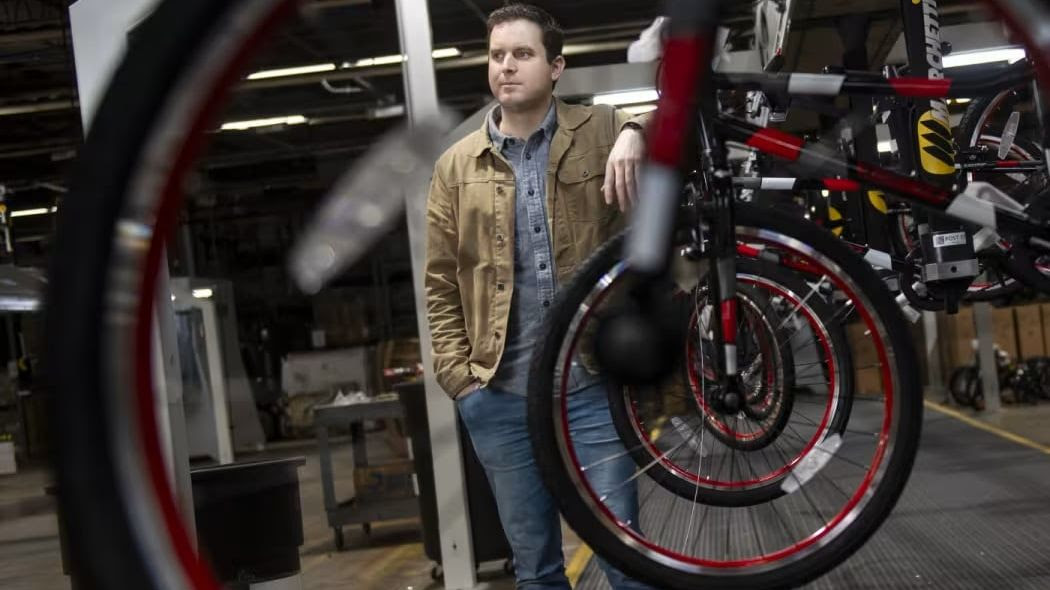
Guardian Bikes is proving that “Made in America” isn’t impossible, but it’s a steep uphill climb.
After moving production from China to Indiana in 2022, the company still sources 90% of its parts from overseas, as decades of Chinese dominance in bike manufacturing make reshoring a challenge.
Founder Brian Riley is banking on Trump’s tariffs and proposed tax cuts to make U.S.-made components competitive, while Guardian ramps up efforts to produce its own frames and push suppliers to set up shop nearby.
The factory now builds 2,700 bikes a day, but high labor costs and a lack of domestic parts suppliers make the road bumpy.
While many competitors dodge tariffs by shifting to countries like Vietnam, Guardian is betting big on American-made innovation, proving that patriotism is pricey but could pay off in the long run.
RETIREMENT
Beta Babies Get a Jump-Start on the 22nd Century

Prudential is planting seeds for Generation Beta’s retirement before they can even crawl.
With their Beta Baby Bonus, parents of babies born on January 1, 2025, can claim $150 to kickstart retirement savings, potentially growing to $100,000 by age 70 if invested wisely.
Their new report, Generation Beta: Redefining Life, Longevity, and Retirement, paints a futuristic picture: longer lifespans, jobs that don’t yet exist, and an estimated $1.88 million needed for a comfortable retirement.
It’s a savvy move from Prudential, but $150 is more of a symbolic gesture than a solution.
Most parents are already worried about their own retirement, let alone their newborns’.
Still, it’s a stark reminder that the next generation may face even steeper financial hurdles, with retirement looking less like a finish line and more like an evolving concept.
For families already struggling to save, the message is clear: the earlier you start planning, the better.
After all, a $1.88 million goal isn’t going to hit itself.
Trivia
Which U.S. economic indicator provides a comprehensive look at the health of the labor market by measuring the percentage of the civilian workforce that is unemployed and actively seeking work?
A. Labor Force Participation Rate
B. Unemployment Rate
C. Job Openings and Labor Turnover Survey (JOLTS)
D. Nonfarm Payroll Report
E. Employment Cost Index
Scroll for the answer
TAXES
Tax Super Bowl 2025: What Trump’s Return Means for Your Wallet
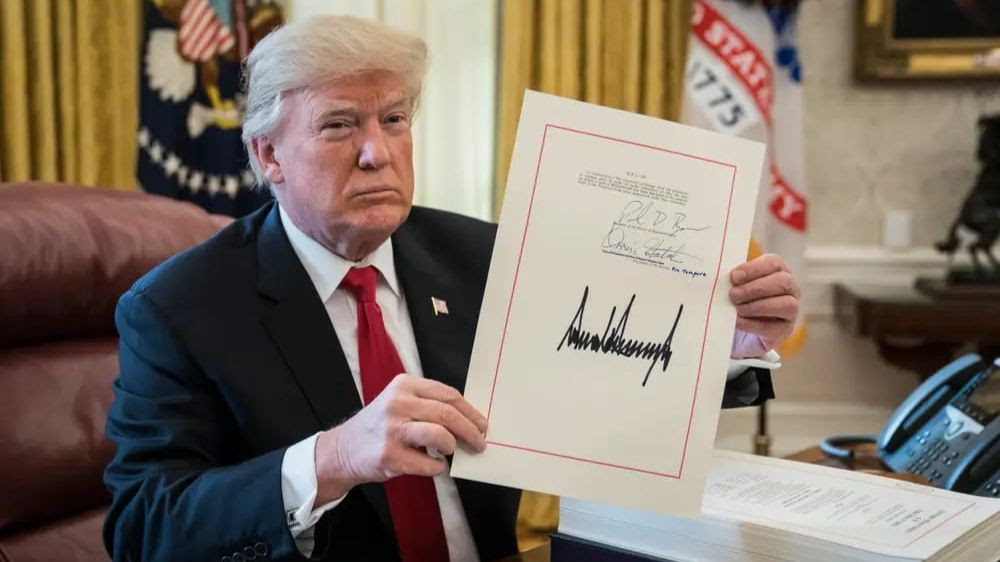
With Trump’s 2017 Tax Cuts and Jobs Act (TCJA) set to expire, 2025 is shaping up to be a whirlwind for American taxpayers.
Trump aims to extend low tax rates and even add perks like eliminating taxes on tips and Social Security, though experts warn these could be logistical headaches.
High-income earners in blue states may see a raise in the SALT cap, but the $10,000 deduction limit might remain, leaving residents of high-tax states in limbo.
Families could feel a pinch if the doubled child tax credit reverts to $1,000, though some Republicans are pushing for a bump to $5,000.
Meanwhile, EV drivers should act fast—the Biden-era $7,500 electric vehicle credit could be scrapped under the new administration.
Overall, the focus remains on keeping taxes low for most Americans, but as policy details unfold, the year promises plenty of financial twists and turns.
Answer
Which U.S. economic indicator provides a comprehensive look at the health of the labor market by measuring the percentage of the civilian workforce that is unemployed and actively seeking work?
B. Unemployment Rate
The Unemployment Rate represents the percentage of the civilian labor force that is unemployed and actively seeking employment.
It is a key indicator of labor market conditions and overall economic health.
A rising unemployment rate often signals economic distress, while a declining rate suggests improvements in the job market and economic stability.
Policymakers and economists use this data to design and evaluate labor and fiscal policies.